By Jean Kelly Widner
Adoption gave me a family. It also gave me questions I carried in silence for decades.
What happens when the story you’re told doesn’t match the one you feel in your bones? For many adoptees, the answer is complicated. We’re celebrated and forgotten. Loved and left. We grow up in homes that feel safe—while quietly longing for faces that look like ours.
The Adoption Paradox is a deeply honest exploration of what adoption truly means—for the adoptee, the birth parent, and the adoptive parent. I’ve woven my own story with those of others who’ve lived through the experience from all sides. Together, they reveal a shared truth: adoption is not just about finding a home. It’s about identity, loss, love, and the ongoing search for self.
I invite readers to go beyond the narrative of gratitude and instead hold space for the complexity adoption brings. In creating this book, I spent three years working with two researchers to assemble extensive research on adoption’s impacts on everyone involved. I then interviewed nearly one hundred individuals from the adoption constellation to tell stories from adoptees/adopted adults, birth/first parents and adoptive parents. I’m not anti-adoption, but I am pro-truth. Following is an excerpt from the book.
I think that’s just part of being adopted: finding peace in your story while knowing that you will still move through the impact of adoption for your lifetime.
~ Isaac Etter
A paradox means you have opposite and dual realities. Adoptees are loved, rejected, celebrated, abandoned, made to feel special, and made to feel less than. They are often both grateful and angry. They are different from everyone else, and yet the same. Regardless of the backstory or the upbringing, they know a reality which contradicts itself.
To understand the paradox, it is best to understand some history. Adopted children have been stolen, sold, loved, wanted, abused, made into indentured servants, used as farm hands, and graced with wealth, education, and opportunities their native birth families never could have afforded them.
In the modern era, many adoptees love their families and feel wanted, safe, and cared for. However, they never see their faces and features mirrored back to them. There will always be differences in appearance, mannerisms, interests, and aptitudes between themselves and their raising family. Depending upon the circumstances, they will not know or have access to their genetic medical information and many other vital and identifying facts about themselves.
Many people do not realize that when an adoption takes place, the original birth certificate (OBC) often becomes a sealed, secreted, and “unofficial document.” A new birth certificate is issued showing the names of the adopting parents on a child’s birth certificate as though they had them naturally. This only happens in adoption.
The practice of sealing original birth records has far-reaching consequences. It denies the children and adults of adoption access to their identity, as well as their medical history and the birthright of their heritage. It also treats birth parents as though they do not, or never did, exist. This is dehumanizing. Society treats them largely with confusion, disdain, or martyrdom for their selflessness, then all is sunshine and celebrations for the new family.
The public narrative around the practice has most often been dominated by adoptive parents. The average person is still informed about adoption only through beautiful stories in the media, or “the pastor down the street who has taken in all of those foster kids,” and “they’re such a great family.”
All sides deserve their say. Adoptees, birth parents, and adoptive parents each have unique points of view. Complicating these connections are the complex emotions behind these very different lived experiences. Adopted adults’ feelings vary. For some, their adoption experience was nothing less than fantastic and they see no ethical, emotional, or moral questions for the practice. Others wish to see it abolished. Their views are as vast as the stars. Some resent the idea that they should listen to anyone’s opinion who is not also an adoptee. Others want to interact with the constellation of different ideas and experiences because they find healing in those revelations.
Birth parents also have a wide variety of influences coming from the generation in which they relinquished and their individual circumstances. Some find acceptance that their decision was correct for them at that time. Others emerge years later to realize they were coerced or treated unethically by bad actors. Some become activists for change while others bear the yoke of their shame forever. They, too, have widely different opinions on how adoption ought to be conducted, if at all. Like adoptees, they wish to be heard for themselves and with their own voices.
Validating and hearing this often unheard-from constellation is essential. They tell stories from their inspirational, angry, triumphant, troubled, and grateful voices—in their words.
Adoptees
Kate~
I feel so incredibly lucky. My parents gave me so many opportunities that I would have never had from my biological mother. I used to think she didn’t want me, and that hurt. But later, I learned she hadn’t had a very stable or happy childhood. When she knew she was pregnant, and my father wasn’t going to be in the picture, she did what she thought was best.
Tina~
I don’t want to say my parents are reluctant to discuss adoption, but they feel that once that took place, it pretty much ended the whole chapter. Once I became adopted by them, everything was fine. There was no need to go digging into the past. There was no need to find out health-related things. You know you’re going to die anyway, so who cares.
When I told my parents I was reunited and found by my biological sister. My dad said, “Well, it sounds like you had a better life with us. It sounds like your mom was messed up.”
Yeah, I would be messed up, too, if I had to give up my baby.
Terri~
Day in and day out, I rode the fifty-two bus in West Philadelphia, and while on the bus, I looked at each woman seated and couldn’t help but wonder if I was looking at her. I thought every woman that looked like me was her. I couldn’t fathom what my dad would look like, but I could almost imagine my mom.
As my stop came, and it was time for me to exit, I felt tremendous sadness because I couldn’t help but feel like one of the ladies was her.
Susan~
My mom tried doing all these crazy things to “claim” me, instead of letting me be who I am and celebrating the person I am.
One of the biggest fights my mother and I had happened because she had short curly hair. She wanted me to have short curly hair, so she could claim me to the outside world. I can’t tell you how many home perms, trips to the beauty parlor I went through to get short curly hair. I grew to resent it. It became this big thing.
“You’re not keeping your hair up,” she would say.
“I hate curly hair. What are you doing to me?”
Abbey~
Even though I never questioned whether I was good enough for my birth parents, I felt like it was always a subconscious thought in my head. I always thought I had to be a certain way. I was always a perfectionist, and yeah, I believe part of that was probably because I was adopted. I’ve had issues with self-worth and being good enough for my parents.
Adoptees often feel their birth mothers did not want them, discarded, set aside, and unworthy of love. Many blame their birth mothers and are unable to move beyond what they have internalized as a physical rejection of them. Others remain solid in their belief, “adoption is awesome!” They feel loved and wanted, and report no adverse effects being separated from their original family.
Why do some feel that profound abandonment while others do not? What forces create this? Biology, environment, or something else?
Birth Parents
This book addresses birth parents rather than simply birth mothers because there are men who experience this too. Before a family is built, one is broken and dissolved. There is coercion and pressure brought to bear on birth mothers in particular, and a staggering load of personal judgment heaped upon them.
Whenever and however an unplanned pregnancy occurs, there are consequences. Prior to the late 1970s, an unmarried woman was rarely allowed to remain a single mother—the culture would not readily allow it. Closed adoptions dominated the process and there was much shame and secrecy surrounding any relinquishment of a baby.
In the modern era, women do and can raise children without a husband or partner. Some unmarried women will adopt a child independently. The culture has progressed, but this shaded history around the secrecy of adoption still has living and breathing suffering from its impact.
Currently, birth parents who relinquish a child usually do so because they, together or singly, cannot feasibly support it. Some will give up their baby because of addiction or criminal behavior and are unable to parent at that time. Women who become victims of a sexual attack will sometimes carry the baby to term and place it for adoption because of their religious beliefs.
Open adoptions try to minimize the emotional pain of relinquishment. In these arrangements, the birth parent(s) remain present in the child’s life even though the adoptive parents are the unquestionable caregivers and are solely, legally responsible for the child’s welfare. These arrangements are often complex for all involved and create their own set of unique emotional and mental health challenges. But some birth and adoptive parents make this work.
Regardless of the circumstances, birth parents always remember the child they gave up. Even if they come not to regret their decision, and some do believe it was ultimately the right choice, they are often traumatized by what happened.
Ellen~
You have to remember, it was 1973. Our world was changing and there was a lot of the old guard who still believed unwed mothers were garbage. I was treated like garbage by the women I worked with, by the nurses at the hospital, and by the doctors. I was left in the hallway screaming in pain.
When the nurse came out, she unceremoniously spread my knees, looked in, and said, “You’re not ready. We’ll come back when you are.” I remember screaming, and she said, “This is what you get for being an unwed tramp. I’m going back in there with this proper married woman to take care of her.”
That was burned into my brain. So, when that baby girl was taken from my arms, I don’t remember anything. I just remember being numb for months.
Ann~
It was like closing the book, but the memories were still there. You don’t forget the birthdays and the “this year he would be in kindergarten, and then first grade,” but I felt like I had to go on with life. I always knew I did the right thing because I gave somebody else life that couldn’t have life. So, I didn’t sit back and beat myself up, but the thoughts of those birthdays or wondering what he got for Christmas. Those thoughts always came up.
Mel~
That night after dinner at my parents’ home, we often sat in the TV room. I said, “I’ve got something to tell you.” They let me tell them the story of Candace and that she was pregnant. They were just the kind of parents you’d want because they simply said, “What can we do?” We had only dated a few months and had broken up several months before I learned she was pregnant. But she and her mother had decided they wanted to have the baby and give it up for adoption.
A lawyer was hired, and they took over. After that agreement had been reached, I was told not to reach out to her. I don’t know if that was the attorneys talking or Candy saying she didn’t want to hear from me. I wouldn’t even know if it was a boy or a girl.
Debi~
They contacted Catholic Charities and had me put away in a home. Being the summer of 1967, my mother lied and told her side of the family that I was in Italy with my father’s mother.
No one ever knew. It was my secret. I got sent away, came back in August, and went back to school. Nobody knew little Debi had a baby. From that day forth, every single year, my mother and I would get together on his birthday, so we could cry together.
Adoptive Parents
Very few couples choose to adopt without there being some sort of loss in their background. Couples who cannot conceive are often in deep emotional pain. Most have tried multiple times to get pregnant or keep a pregnancy and may have experienced multiple losses and what feels like endless heartache. Many have not fully, or even begun, to grieve.
Queer couples have faced open discrimination for centuries, which continues today. This has often been reflected in state laws on their ability to adopt or foster children, even though gay marriage has been legal in the US since 2015.
People wishing to adopt have many avenues available. Some contact state agencies or other non-profit organizations to help them. Others use the services of a lawyer or private adoption agencies. Some try to find birth mothers on their own via social media. There are even Apps to connect birth and prospective adopting parents.
National adoption statistics for 2022 report approximately one million willing couples are actively seeking to adopt a baby. This contrasts with only eighteen thousand domestically born babies who will be relinquished in any given year within the US. This level of disparity between the available supply of infants and the number of wanting parents has never existed since adoption records have been kept. The child welfare and infant adoption industry is now a multi-billion-dollar enterprise.
Gayle~
I called everyone. The state was more interested in you fostering and then getting your home study for the adoption process. I wasn’t interested in adopting a seven-year-old, as we already had two children naturally, but a pregnancy was too much for me physically, and we wanted a third child.
We got a call from Jewish Social Services. Their attorney who deals with adoption has this baby that’s coming quickly, and she needs someone to adopt who doesn’t care about race.
It was January. The baby was due February 14th. The birth mom had a woman who was going to adopt the baby, but she never did the home study and approval process. If you wait, then it’s even more expensive. You’re talking $30-$40,000.00 easy because they have to rush all the paperwork. Now here’s the mother with a baby, and she has nowhere for the baby to go.
We met at an Olive Garden in town and talked to her for about four hours. She asked us, “Are you equipped and able to raise a chocolate child?” Yes, she actually used that word.
They induced her on February 12th. She called from a local hospital. We walked into the room, and she said, “Here’s your chocolate boy!” I said, “Thank you!” That’s why he’s been chocolate boy ever since because his birth mom called him that.
My breast milk came in. I nursed him. From the minute I held him, I loved him. He completed our family.
I would say this to anyone thinking about adopting a baby or a child. Love it like it’s your own, because it is. You have to go into adoption knowing it’s yours until you die. No matter what they do, no matter their medical issues, no matter what. He is mine until I die. I never questioned it or would rethink it, ever.
Beth~
At the time, to go to other countries and other states for adoption was so huge in Utah . I was becoming biased against adoption agencies and some of the things my husband and I had experienced. Is there no feeling behind this? You’re just buying and selling children?
I hate to use the words human trafficking, but it almost felt that way. It was just like, “Oh, we just need to get these kids into a home, and we’ll make our money.” There are fees for this and fees for that. When really, those fees didn’t need to exist. I understand it’s a business, but it seems outrageously expensive.
Lee~
She’s her own person. That part is really exciting. There are two reasons why we’re on the planet, to love and be loved. Put that love to the ultimate test, it’s not about us. It’s about them. It’s not even about my journey. It’s about me creating a soft pillow for her to rest her head.
The Challenges of the Times
How this society treats unplanned-for children has consequences. As the US dismantles nationwide access to abortion, a gigantic social experiment is happening, and all are watching to see how these changes will unfold. Rescuing at-risk children will be needed indefinitely. Sadly, there will always be parents who cannot, or should not, raise children.
All regulations and laws on adoption need to be evaluated with the greatest care. Lives are at stake. This country needs to ask itself some hard questions. Are the safety nets, social services, and modern adoption practices we currently have capable of creating the society we most want, need, and deserve?
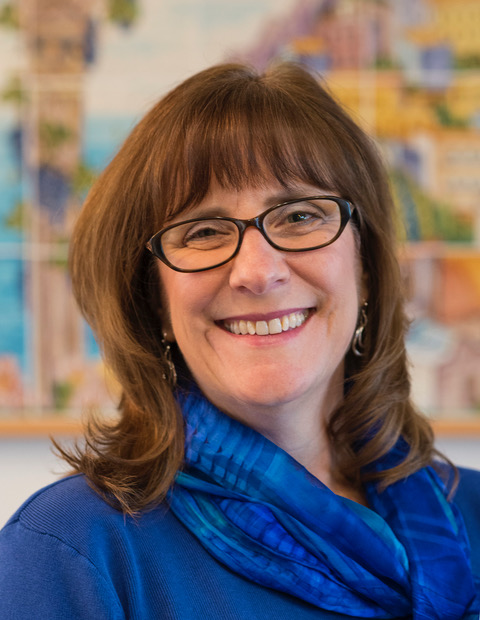
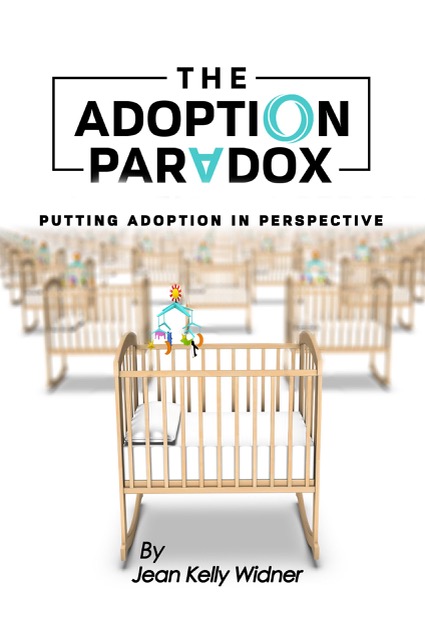
Jean Kelly Widner is the author of The Adoption Paradox: Putting Adoption into Perspective, a powerful exploration of the complex realities of adoption. Born in 1965 and adopted from birth in Washington State, Jean lives the paradox she writes about—experiencing both love and loss, belonging and separation. With a background as a marketing consultant and joint venture affiliate marketing expert, she and her husband have built and sold two successful e-commerce companies. She also owns a local news and storytelling blog in Boulder City, Nevada, where her love of writing continues to grow.
Visit the home page for more articles, and search by topic in the menu navigation bar.