By Carol La Hines
I was born in the early morning hours of March 6, at New York Hospital on Sixty-Ninth Street. I do not know how I came to be, whether my parents were in love, or whether (I suspect) their relationship was more transitory, transactional. I do not know the details of my mother’s pregnancy or labor, only that she was a girl in trouble, as they then put it, unmarried, her pregnancy a source of shame. I know nothing of myself, my roots, those generations that preceded me, from where they hail. I do not know my name, either surname or Christian name (or even whether one was conferred upon me). Such children frequently went by the designation Baby Girl or Baby Boy, no one having bothered to give them a name.
From the earliest age, I knew that I was adopted. I did not understand the import of the descriptor, the mechanics of human conception. And yet, I knew that it was something shameful, not to be spoken of; in my redemptive arc, so-called, I had been given a new name, a new life, a so-called better life, and was not to inquire further.
I had one friend, Rosanne, who was adopted like I. She was the only one with whom I could speak of it. She did not arrive by way of the Foundling Hospital, but from elsewhere, an ad hoc network of child rescuers.
I was told stories, but never the truth. I was told I was the daughter of first-generation Sicilian immigrants, but that was demonstrably untrue. I’d been reconstituted as their child, nunc pro tunc, as they say in the law, as if my prior self never existed.
I was born during the latter part of the Baby Scoop era, when millions of unwed mothers gave birth in secrecy, frequently unconscious. Many never saw their babies, it being too difficult to gaze upon them and then relinquish, aver that they would never see them again, severing the parental bond.
Not having a story, the particulars, does not stop one from imagining, from constructing a story from whole cloth. Where did I come from, from whom did I issue, whom do I resemble, questions of fundamental nature, of the substrate of the self.
When I was twelve, we received a letter from the adoption agency. It informed, matter-of-factly, that it was now possible to obtain non-identifying information about your child’s birthparents. The juxtaposition of your child and another parent’s name counter-intuitive. The lexicology of adoption is one of estrangement, of abruption, of the triumph of legal fictions over immutable, inconvenient facts.
My father—the one the Foundling Hospital had chosen for me—indicated his assent, and we mailed in the form.
Several weeks later, a letter arrived. It referred to the biological mother and the biological father, both in their early twenties, both too young to raise a child. The biological mother was described as blonde, blue-eyed, of Irish extraction; the father as brown-haired, brown-eyed, of Italian extraction. Both were interested in politics and sailing. The father served in the army but had been discharged for some unspecified reason. The mother had an older sister; the father had a brother. I was born via low forceps, weighing seven pounds, seven ounces.
I remember reappraising myself in real time, reconstituting myself from fragments. The law decreed that it was forbidden to know anything further, my story incendiary, apocryphal.
To know more would be to upset settled expectations, a calumny against the parents who raised me, not even their own, a betrayal. I risked disrupting the new life my biological mother had been promised, cleansed of the taint of unwed motherhood. Her new husband, her new family, likely knew nothing—did I want to selfishly impose myself on them? Promises had been made, assurances had been given, and I—privy to none of it—was expected to abide by them in perpetuity.
The letter informed me that I could join a newly-created state adoption registry; in the event my mother were looking for me—and only then—would we be matched.
If I wished to learn more, I could contact Alma, an adoptee rights organization, post office box Pennsylvania Station.
I joined Alma. Materials arrived in the mail in a SASE. Answers to frequently-asked questions. Guidelines for searching. In the nineteen eighties, pre-internet, the means of discovery were limited. The adoptee was relegated to libraries, to government archives and Mormon genealogical records.
Rosanne and I were united in our ontological quest, our desire to learn the truth about our origins. Sold a demonstrably counter-factual account, an adoptee tries, but cannot accept the subterfuge, what is patently untrue. The adoptive mother insists she is the real parent; the adoptive father insists he is the real parent; biological parents, it is insinuated, are lewd, irresponsible, possibly deranged. In the vernacular of child rescue, we are lucky. We are to be grateful, to express no dismay at having our entire histories, those of our forbears going back centuries, erased, effaced, our pasts excised.
We pored over the materials from Alma. One pamphlet informed that New York City maintained directories of every birth recorded. Not by fictitious name, alias, but by the name on the original birth certificate, the one that had been sealed, locked away, deemed an inconvenient truth ex officio. The pamphlet warned us to keep this knowledge secret; revealing it might alert the powers-that-be that adoptees had located some flaw in the system, that they were parlaying this knowledge to no good end.
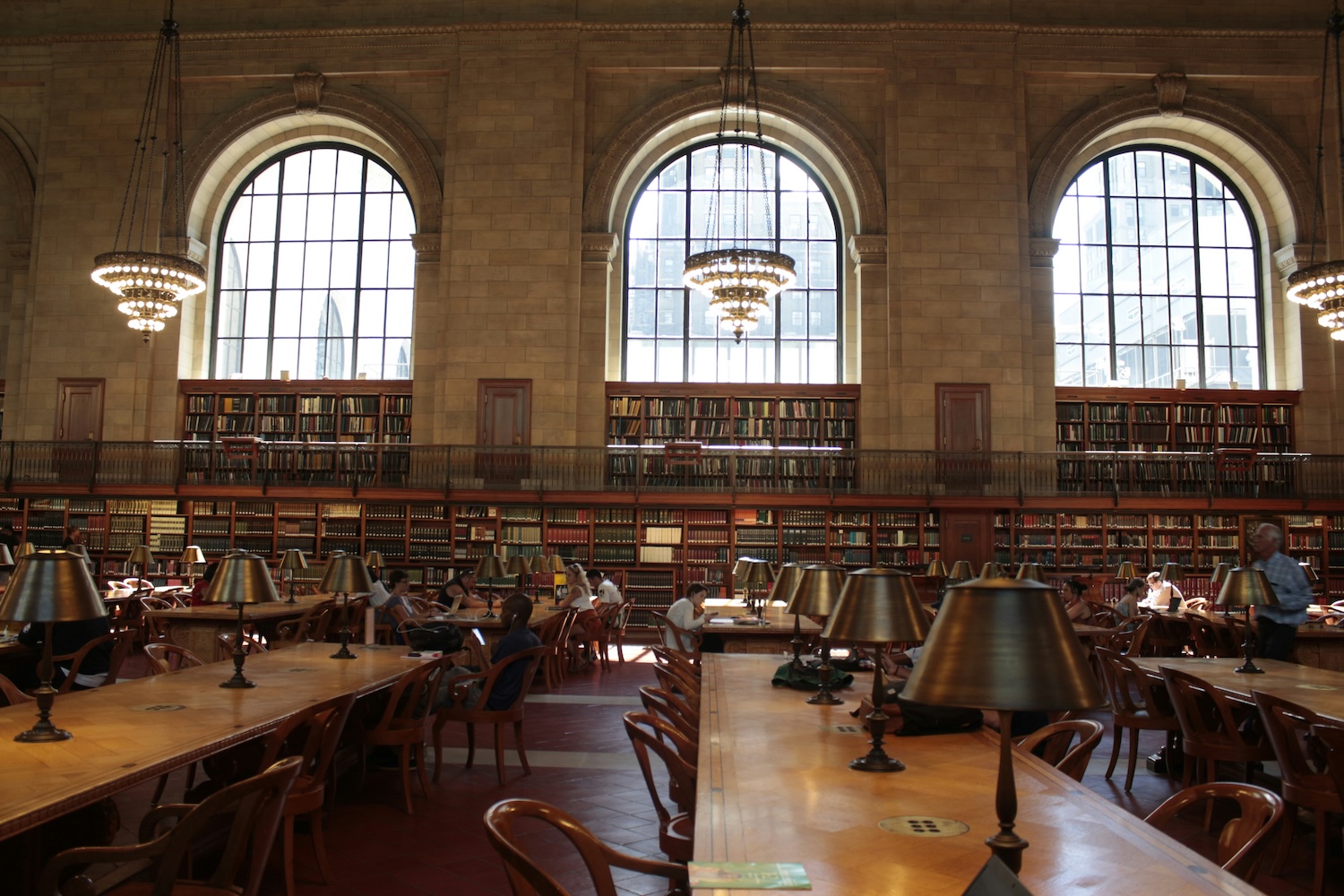
The birth directories were maintained in the main branch of the New York Public Library, on Fifth Avenue and Forty-Second Street, a neoclassical edifice flanked by marble lions dubbed Patience and Fortitude. Rosanne and I took the number 7 train from downtown Flushing to Forty-Second Street/Bryant Park, endeavoring to discover the truth about ourselves, our names, without which we could not proceed further. Without a name, we are provisional beings, afforded an interregnal existence.
Our mission felt vaguely illicit. Our parents—those the law recognized as our parents—would not approve. For them, it is a zero-sum game, a contest of affections, their insecurities mirroring ours. We are pale imitations of the children they could never have; they are stand-ins for our true parents.
We proceeded to the genealogy wing. Alma advised us to conduct ourselves as if we were performing genealogical research. I expected the librarian to question our story, but she did not, ushering us to a long research table. She returned with two volumes for each year, A through K and L through Z, organized alphabetically by surname. One row for each entry: surname, first name, mother’s surname, father’s surname, date and time of birth, birth certificate number. When an infant is adopted, his or her history, her name, is erased, the names of the adopted parents supplanting those of the natural parents, the law complicit in the falsehood. The adoptive parents have the imprimatur of the state; they are deemed the legal parents, nunc pro tunc, substituted for the parents-in-fact, an act of legal legerdemain. According to Alma, certain details remained unchanged when the birth certificate was amended, namely, the time and place of birth and the birth certificate number. The birth certificate numbers were unique; by finding the number, we would find ourselves.
We were overwhelmed, both emotionally and logistically. The work entailed scanning numbers, in no particular order, trying to find a match. It was akin to going through a phone directory randomly, searching for a number.
I began with the second volume, L through Z. I scanned the last column, the one listing birth certificate number, looking for a match. Two hours in, I’d scanned only half a dozen pages. And then, a miracle happened: I alighted upon the number. A surreal moment, one hovering in time, a suspended chord, irresolute. The rest of the information matched: my date of birth, place of birth New York Hospital. My name appeared in block letters:
ANNE ELIZABETH LAHINES
I remembered staring at it, disbelieving. After all the feints, diversions, I had finally arrived at the truth of the matter. A name. My name. It was the cipher that would help me unravel the entire story, the skeleton key to my existence.
Rosanne had not located her name—nor would she on several return trips. She was elated for me, albeit disappointed herself. Our paths diverged thereafter, riven by this disparity in fortune.
When I was twenty-one and in graduate school, I hired a private investigator. A year passed without any news. Then, a package arrived. Therein contained a cemetery deed for my grandfather, Arthur Dennis, for a plot in Rockville Center, Long Island; his last will and testament, naming his daughter Anne executrix; the obituary for my great-grandfather, also named Arthur Dennis, the editor of the business section of the New York Times; and a preliminary family tree, naming John, Dennis, and Eve LaHines as members of the preceding generation. I pored over this information, assimilating it, by the alchemy of words transmuted.
I had a dilemma, however: the investigator’s information did not match the non-identifying information provided by the Foundling Hospital. According to the latter, my mother was the younger of two sisters, born in 1945. Eve was born in 1947; Anne in 1945. I had no idea which was my mother.
Later, I will encounter others with similar stories of incomplete and altered information, too many for it to be considered a fluke. Perhaps the adoption agency’s means of thwarting us into the future, ensuring that we would never find our real families, were we to seek them out, or at least be stymied in our effort.
Eventually, I decided to write Anne. I wrote a long letter on lined paper, explaining that I believed her to be my mother. I wrote biological mother, coopting a phrase from the adoption lexicon, too afraid to refer to her as mother, shorn of adjectival descriptor. I wrote I feel I cannot understand myself if I do not know where I come from, a banal phrase that belied the extent of my existential conundrum. I sent it via US mail.
The adoptee, being rejected ab initio, sees rejection everywhere. My mother had never sought me out, at least to my knowledge; thus, I inferred that she did not wish to seek me out. I feared the repercussions the adoption agency warned about were I to renege on this pact: denial, disavowal, so-called secondary rejection.
A few weeks later, I received a call. The caller identified himself as John LaHines, Anne’s brother. My uncle. A week later, I was on the train to Greenwich, a journey on another timeline, an alternative storyline, the hypothetical life I might have had were I not adopted. The adoptee exists in this dichotomy, the disparity between the selves, the schism between the original self and the legal fiction created by adoption. The adoptee splits herself, compartmentalizes, there being no sane way to process the loss.
John spoke of their mother, whom he referred to as Vi. Vi used to burn their dinners. Vi was artistic, bookish, like me. The adoptee thinks herself sui generis because she has no referent, no point of comparison, no precursor.
I noticed a photo on the wall of a young woman in cap and gown. That’s your mother graduating from college, he informed me. I had never seen a picture of my own mother, the woman who incubated me, who formed me from flesh and bone. She was a teacher. I had a half-brother and sister, fraternal twins. Her husband had recently died, leaving her a widow. She was a survivor of breast cancer, age thirty-nine. My father was a friend, he said, a fellow college student. I revised the story again, nunc pro tunc. The story of my family. The story of my self.
The following spring, I would meet my mother; in time, I would be resorbed into my family of origin. I reasserted my right to my name, reverting to the name I was given at birth.
In the end, they were easy to trace, the name LaHines unique, a permutation, perhaps bastardization is a better term, of the Irish Lahinnes, a far more common name. I am related to every LaHines living in the United States, wherever found, connected by this error of transposition.