
By Drake Draven White
Fall had just set in, 1987. My family tree was shedding its leaves, though I didn’t know it then. I was only fourteen, standing at the edge of childhood, about to be pushed into a lifetime of questions that would shape me in ways I could not yet identify.
Truth didn’t come with gentleness—not with hands stroking my hair, not with the softness every child deserves when truth arrives. It came like lightning. It came like a storm, hurled from my mother’s mouth. Out of anger, out of frustration, out of a wound she never tended.
My sister had run away from home days before turning eighteen because she found out she was pregnant. I remember the chaos, the shouting, the way my mother’s voice carried rage like thunder. “She’s making the same mistake as me,” she screamed into the house, words meant for no one and everyone.
Confused, I stepped closer. “Wait,” I said, “I thought you and Dad were married when you got pregnant.”
She turned sharp, her face twisting with fury, and then the lightning came.
“YOU,” she spat, “YOU ARE MY MISTAKE. Your dad isn’t even your father. So while you believe you’re a daddy’s girl, you’re not.”
I stood there in disbelief, hollow and full at the same time, flooded by emotions I only now recognize as shock, grief, confusion, betrayal—all surging through my body like water that had broken through a dam. I just stood, staring at her, she unable to take the words back, me unable to return to the innocence of five minutes ago.
She kept talking but I only heard her words tearing me apart.
That night, I sifted through memory like a detective combing evidence at a crime scene. Every single moment, every interaction with “family,” every offhand comment, suddenly lit up with meaning. I was now a puzzle to solve but the pieces were missing.
I’d always suspected my mother’s infidelity. The inappropriate comments about other men, the way she flirted carelessly in front of me, the way my stomach would twist. Silently, I hated her for it. And because of that, I formed an unspoken alliance with the man I thought was my father, the one I bonded with in the shadows of her carelessness. To learn now that he was not my father at all left me doubled over by betrayal.
I didn’t speak of it for months. I asked no more questions I held inside the shame that nested inside my chest like a stone.
But silence can’t hold back questions forever. Eventually, the words clawed their way out. “Who is he?” I asked. “Where is he? Do I look like him?”
Each time, my mother gaslighted me.
You’ll never find him.
He didn’t want you.
He doesn’t exist to you.
I tried again and again, each question softer than the last, each one carefully worded as if kindness could open her locked doors. But it only enraged her further, until one day she unleashed her final blow.
“You can get out. If you don’t like it, leave. You won’t ever be shit anyway.”
I felt the words slice across my skin. I returned to my room, numb, and began to pack a small bag. If this was home, then I would rather have none. But she stopped me, her voice snapping like a whip.
“Nothing under this roof belongs to you. You’re lucky to have the clothes on your back.”
I left that morning. That was the day I walked into my becoming. The day I stepped out of a toxic wilderness without yet understanding the weight of my decision.
I was fifteen. I was struggling to hold onto an identity that had already been ripped away. I was a child, but no longer allowed to be one. Survival was my only language then. So I survived.
I carried the shame as though it were mine, not even realizing I was dragging my mother’s sins behind me like luggage packed with someone else’s secrets.
From that moment on, every decision I made carried the echo of her confession. I told myself: I will never put a child through what I went through. So I made choices, big ones, life-altering ones, from that place of fear and shame. I did not know it then, but each choice was another act of abandonment—abandoning myself, the child I still was, the girl who needed someone to love her unconditionally.
I built walls. I learned to leave before being left. I kept myself in pieces, believing wholeness was not meant for me.
And so the years passed. Decades, even.
It wasn’t until April 2025 that forgiveness cracked the stone I carried. Forgiveness for my mother. Forgiveness for the lies. Forgiveness for myself—for being a child who could not have known better.
Forgiveness for myself took the longest to arrive. It’s the hardest kind, the kind that asks you to look at your reflection without turning away. To see every version of yourself that tried, that broke, that hid, that hurt others to survive. I had to forgive not just the actions, but the ignorance, to forgive the girl who didn’t yet have language for trauma, who made promises she couldn’t keep because she was just trying to make sense of pain.
Forgiving myself became the key that unlocked forgiveness everywhere else. It softened me toward humanity, toward imperfection, toward my own mother even, who was, in her own way, a broken girl once too.
Self-forgiveness is a daily walk. It’s holding my own hand when shame resurfaces, whispering, “We know better now,” and that’s enough. forgiving others more quickly because when I stopped holding myself hostage, I no longer demanded that others pay for my pain. The space where resentment used to live became space for grace.
And when my birth certificate father passed, I forgave him, too. For the ways he failed me, and for the ways he tried, for the absence I felt, even when he was present.
At fifty-one, I’m finally grieving. Grieving those emotions that once had no names: shock, deep sorrow, anger, fear. I speak them aloud now. Naming them gives me power. Naming them separates me from the worthlessness I was taught to feel. Naming them anchors me in truth rather than illusion.
But before I could name them, I had to face the emotion that shadowed them all: shame.
The immense, unrelenting shame that never even belonged to me. I had carried it like a second skin, absorbing my mother’s guilt, society’s judgment, the whispers of “unwanted,” the feeling of being “other.”
I didn’t know who I was, only who I wasn’t. Conversations about myself felt like speaking in a foreign tongue. I never knew where to begin… what I was “made of,” what story to claim. I hated when people asked, “What are you?” as if I were a puzzle to be solved, as if my skin tone were a riddle they had the right to answer.
Every time, I wanted to shout: I’m a girl! I’m a freaking girl! Isn’t that enough? Isn’t my existence answer enough?
My skin tone had been a topic long before my truth came out. I learned to hear comparison in compliments, curiosity disguised as kindness. Too dark for some, too light for others to accept. Always somewhere in between, like a question mark made flesh. I didn’t realize I’d been carrying their projections as proof of my difference.
That unclaimed identity lived in my body, in the way I shrank in relationships, in the way I avoided family conversations, in the ways I carefully lived. tiptoeing my way through life, in the way I apologized for existing too loudly.
Now, I’m learning to see beauty in the in-between. I’m learning to unearth pride from beneath shame, to let my whole self, skin and all, tell its own story, written in the tones of every ancestor whose name I don’t yet know.
The betrayal is heavy. The abandonment is sharp. The neglect is a wound that reopens some mornings without warning. But now I know how to tend to it.
I am still fearful on this path. Healing is not a straight road, but a spiral. It brings me back to the same pain, but each time with a little more wisdom, a little more strength. I am determined to do the work. I am determined to gather each broken shard of myself and build again, piece by piece.
This time, I build with the wholeness of truth. This time, I hold no shame. This time, I cradle myself with compassion.
I walk hand in hand with the little girl inside me. The girl who was told she was a mistake. The girl who packed her bag only to have it snatched. The girl who stood frozen at fourteen, unable to process the hurricane that hit her. I tell her: I see you. I will not leave you. I will walk you home.
I cry with her when the grief rises. I hug her when the fear takes over. I hold her hand through the nights that still feel too long. And in return, she shows me how brave we have always been.
This is becoming.
Not the false becoming I was forced into at fifteen, but the real becoming… the rising from ashes, the reclamation of self.
I am building a life without lies. A life that does not start from shame, but from truth. A life where I no longer abandon myself, but stand by my own side.
And though I am still tender, though the healing is still unfolding, I know this: I am not a mistake. I never was.
I was love waiting to be revealed.
I am truth waiting to be spoken.
I was a child waiting to be held.
And now, finally, I am holding her.
Until I am whole again.
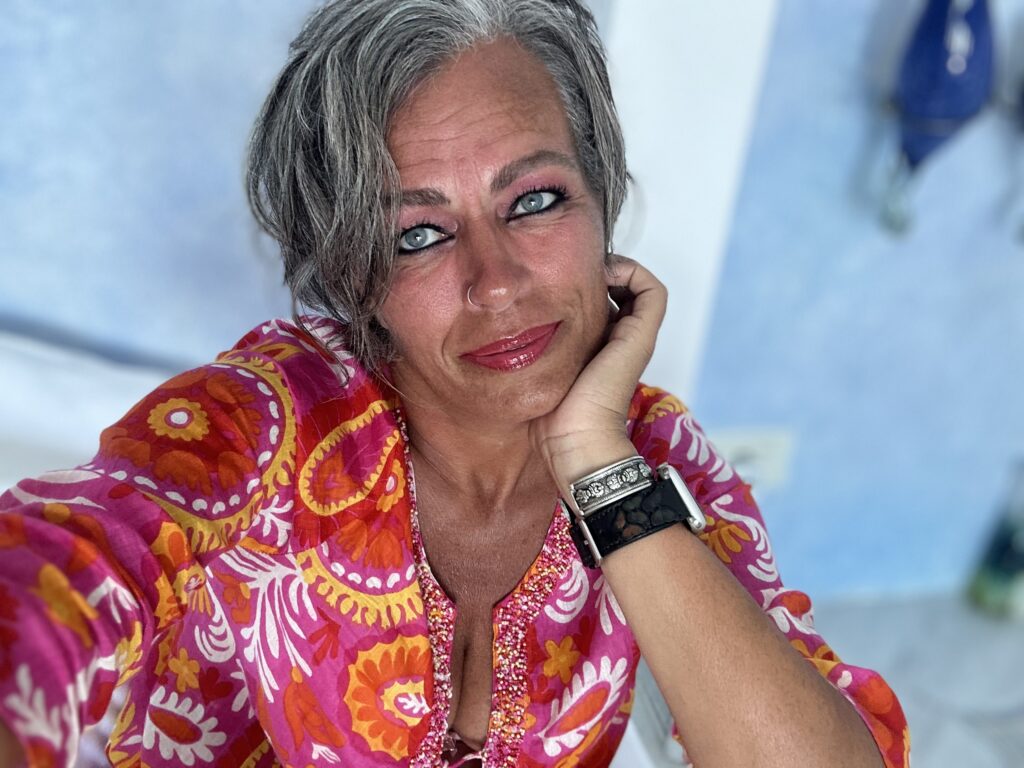
Drake is a writer in San Antonio, Texas eager to share her word and work. With a focus on relationships and healing, she aims to inspire and empower others through her experiences.
At age 14, her mother told her that her father was not her father, which caused pain and trauma, for her and the father who raised her (her birth certificate father). After finding out, her birth certificate father pulled out of her life and walked away. A year later she was kicked out of her home for asking questions about her biological father.
This has been a life-long healing journey, and Drake hopes her shared words encourage healing for others on their paths.