By Meredith Seung Mee Buse
It’s almost my birthday (sort of) and I’m turning 40, the same age my mother was when she had me (possibly). Happy maybe-birthday to me?
The reason all these statements are questions is because I can’t know whether anything listed in my South Korean adoption records is true.
Last weekend, I saw my adoptive mom for the first time in three years, since the visit when I asked for my files. She didn’t mention my upcoming 40th birthday. In the end, she sent a text but no gift.
In the three years since I started searching for my roots, I have become more immersed in the international adoptee community and learned about adoption as an economic system, rife with corruption, fraud and abuse.
Widespread abuses have been reported in documentaries and news articles, as well as by South Korea’s own Truth and Reconciliation Commission, which at the time of this writing has suspended its investigation, leaving hundreds of cases in limbo.
I was born in 1985, the year South Korean adoption peaked at almost 9,000 infants sent abroad. During that time, there’s evidence of children being kidnapped off the streets and families being told their babies had died and then being sent away.
Adoption agencies trawled maternity wards, gathering more than 60% of their supply from hospitals in 1988, and large amounts of cash changed hands. Agencies often paid hospitals illegally, and the amount of Western money offered in fees and donations for one baby represented more than 40% of the country’s per capita income at that time.
My adoption agency, the largest at the time, has been specifically cited for its egregious actions.
Not to mention that my documentation is internally inconsistent and further complicated by the Korean age system, which can record people as up to two years older than their biological age.
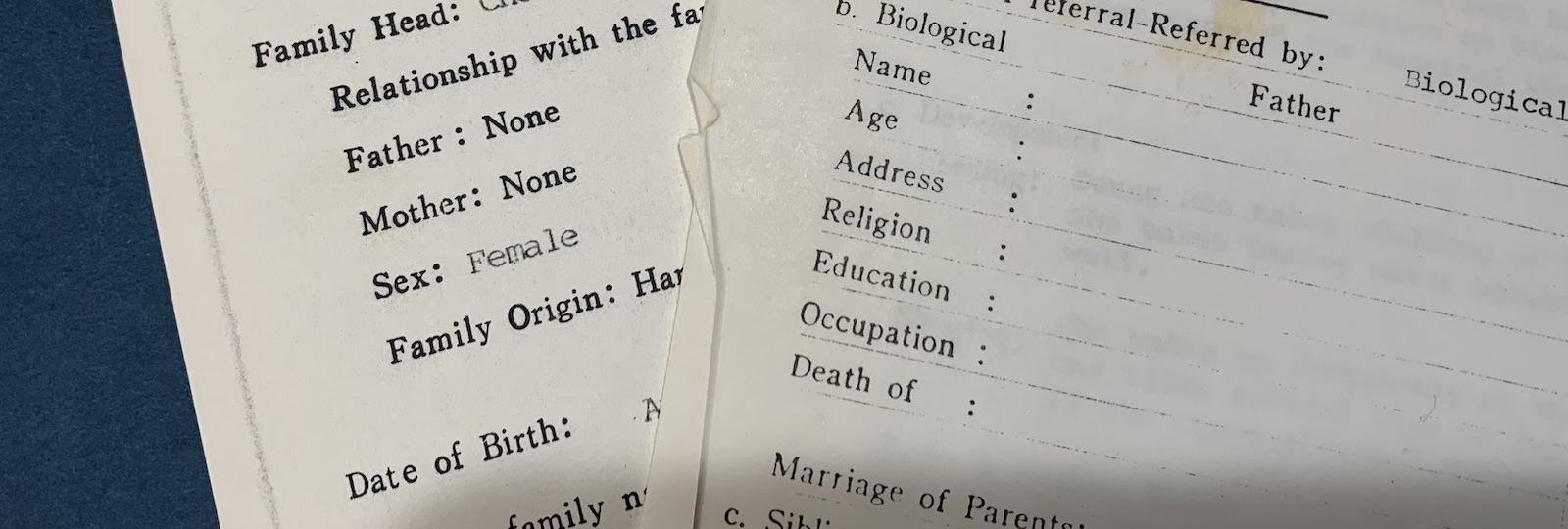
My “Social History” includes my mother’s first and last name and age when I was born as 40 but no information about my father. The information the adoption agency emailed me gives last names and ages for both parents, and says my mother was 41. And my orphan hojuk—the manufactured paperwork that made me adoptable to Western countries—offers no information about either parent, listing both my mother and father as “None.”
I searched for my biological family through official channels in South Korea. Though others with knowledge of the process were encouraged by the amount of information in my file and it appeared my birth mother was still alive and identifiable by her identification number, two certified letters from the adoption agency were “refused to receive.”
This could have meant anything: they had the wrong address, someone else at the address rejected the letters, or my mother misunderstood what they were or thought them a scam. But I took the rejection hard. I couldn’t avoid feeling that it mirrored the original rejection of my mother’s relinquishment.
Since then, the quality and efficiency of responses from the adoption agency have deteriorated as the pressure on them has ratcheted up. More adoptees are searching, with more awareness of the misinformation and abuses of the past. And the government has mandated the files for more than 200,000 Korean adoptees be moved to a central location, which seems certain to end in disaster.
When I requested they reach out to my mother again last summer, they responded by noting that their follow-up letter was “left in her mailbox.”
The uncertainty of the information in my files leaves me unsure of what, if anything, I can believe.
I will not know if the information in my files is true until someone who has authoritative knowledge about what happened can confirm. Someone like my mother—but the chance that I will ever meet her is miniscule and vanishing every day.
Or unless DNA evidence proves the file to be fabricated.
But the Korean government and the country’s National Center for the Rights of the Child won’t let me take the DNA test to leave my genetic information so my family can find me.
And why not?
Wait for it. . .
Because I have too much identifying information in my possibly fabricated adoption file.
Not enough information to find my Korean family. Too much information to be part of the DNA database that might connect me to them.
The veracity of my information is the Schrödinger’s cat of Korean American adoption—with no way to open the box.
From these uncertain origins, I may or may not exist.
And most days I do the best I can with that. Most days, I cling to this side of functional. I can laugh and joke, smile, go to work, and generally approximate a person.
But on this day, when I may or may not be turning the same age as my mother may or may not have been when she may or may not have willingly relinquished me, I am struggling.
That’s a lot of known unknowns and even more unknown unknowns to grapple with.
My heart is heavy.
~
Maybe searching for certainty is human. Even as I remain skeptical of my recorded birthday and whether my documents correctly list my mother’s name, much less her age, I wholeheartedly accept as truth the address of the place I was born.
Why?
Some of the reasons are rooted in logic: this is the only bit of information I can access that the social worker wouldn’t share with me at the file review. It was sent via back channels through the organizer of my homeland trip, which lends itself to authenticity.
Some reasons are rooted in feeling: I felt something, a sense of relief and peace when I visited that place, though it’s now just a nondescript four-story building at the top of a hill in Mapo-gu. But of course, this could just be the power of suggestion.
But mostly, I think I have accepted this tidbit as fact because—amid the shifting sands of my adopted identity—I need some certainty about something.
I need some bedrock of foundation upon which to rebuild who I am.
So I chose this.
I am a person. I was born.
Here.
And honestly, even if that last part is not true, I’m finally connecting with the fact that the first part is.
The more I think through the fallacy, shame and stigma of the stories I’ve told myself for so long—that I was abandoned, unwanted, unloved by my own mother—nothing makes those facts any more true than my mother’s name and age on the official paperwork or the address that appears nowhere.
They are all just stories: Stories we were told, stories we make up, stories we choose to believe.
~
In all the uncertainty, it’s easier to start with what I do know for sure.
I was born.
My mother bore me. She birthed me.
She gestated and carried me beneath her heart for as many months as it took for me to be born and survive.
Here, my adoptive mother’s voice pops up telling more stories. The babies from India tended to be sickly.
But the babies from South Korea were all perfectly healthy, beautiful babies: female preferred, Korean-Caucasian okay, Korean-Black, not so much.
How lucky that they were parting with all these babies.
~
But I know my mother literally, if not emotionally, cared for me as part of herself for nine months. Then pushed me bodily out into the world.
And that was an act of kindness, of love—which I know is true, even if nothing else can be.
I am a person.
I was born.
Perhaps that is the only bedrock, really. The only part of my origins I can truly take for granted.
Honestly, I would appreciate a little more existential padding. A few other things I could count on.
But that’s all I’ve got so far.
~
I am a person. I was born.
This, plus a limitless imagination.
Is that enough to build a life?
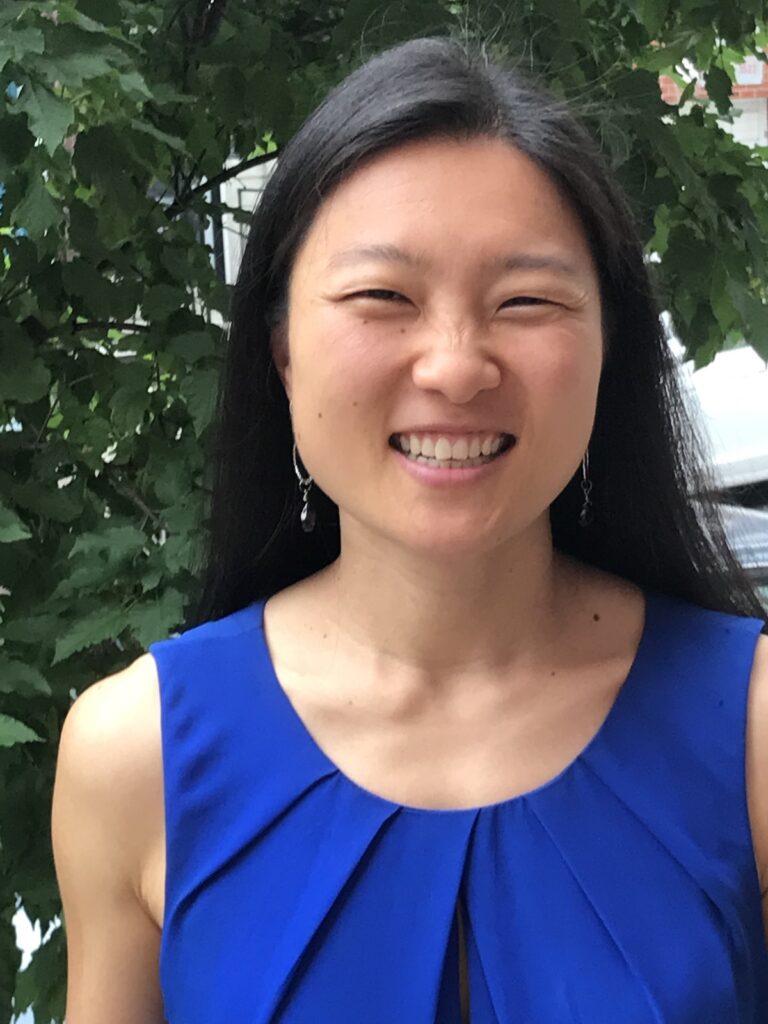
Meredith Seung Mee Buse is an author, educator and Korean American transracial adoptee whose writing has appeared in The Philadelphia Inquirer, Komerican Pie, Diverse Bookfinder, Adoptee Voices and Adoptee Reclaimed. In addition to reading, writing, and connecting with the adoptee and Korean American communities, she loves yoga, cuddling with her cats, and hanging out with her family. Follow her on IG @meredithseungmeebuse or check out her website.