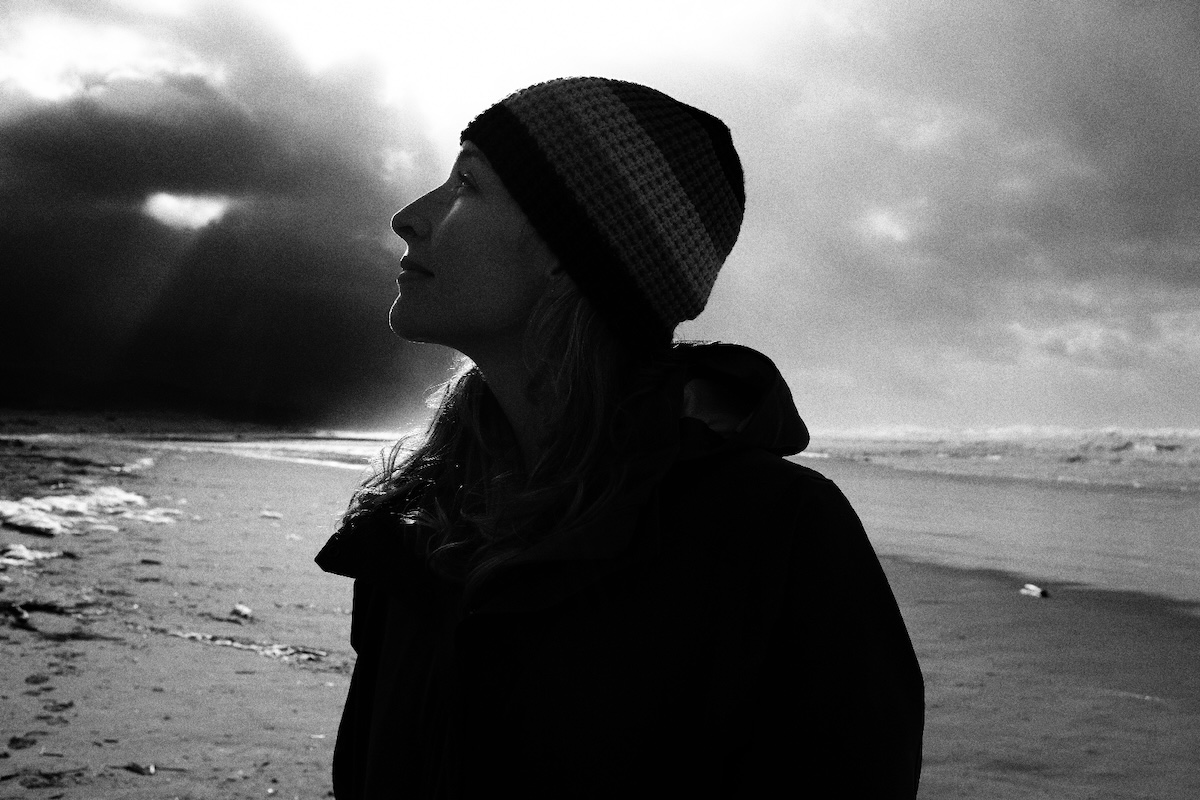
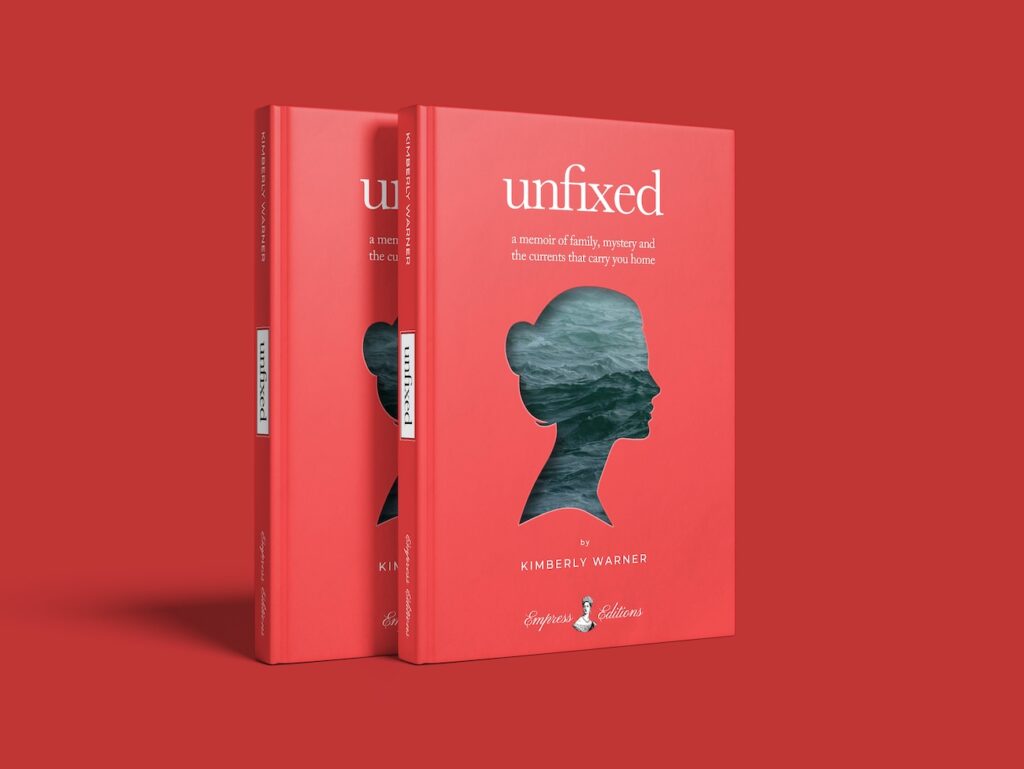
An excerpt from Unfixed: A Memoir of Family, Mystery and the Currents That Carry You Home.
By Kimberly Warner
On Saturday Dave and I are eager to throw off the week’s stress with a spring bike ride along Portland’s waterfront. A twenty-five mile loop on single-speed bikes, the monotony of rubber-on-concrete has become a welcome, if seasonal, ritual for us—four spinning prayer wheels quieting the noise in our heads. Before reaching the waterfront trail, we navigate a few neighborhood streets and then a long stretch on Naito Parkway. It’s a relatively quiet street, mostly lined with trees and residential parking. Dave and I ride in single file, but I keep close, enjoying his occasional tail wag that says, We‘re in this together.
I do not see the car door’s violent kiss. I do not feel my sudden weightlessness or the pavement that follows. I only hear a voice, my voice—unwilled, guttural, coarse, and then the sound of my helmet cracking. I lay in the street wondering, Will we still grill burgers tonight?
As endorphins try to sort out a plan, linear time tangles into a tight, matted ball. Bits of asphalt puncture moments into my flesh—
I hear a young woman behind me. She’s on the phone with her dad, pacing. Clouds above accumulate. The blue behind them, unsure. A young massage student with kind eyes approaches. He offers me a few free sessions. Dave is near but not near enough, his voice in stereo, over there, then over there. The sky is more blue than grey. No, more grey than blue. The young woman approaches. Her eyes aren’t kind. She offers her hand, but to introduce herself, not to help me up off the pavement. My low-angled hand-shake feels silly. Someone tells me to move out of the road. The clouds build, I try on their confidence, but grey wins.
When an ambulance arrives, an EMT prepares a shot of pain medication for the ride. “No thanks,” I say, feeling nothing—dope-happy on my own internal pharmacy. But when the vehicle takes a hard left turn, I yowl. The EMT laughs, asks again and I oblige. When reality turns into a sweet, distant syrup, I hear Dave’s voice under the blaring siren. Dave! There you are! Are you OK? He doesn’t hear my silent call, so I exit my skin to sit shotgun on his lap.
The driver calls out, “Need a vomit bag up here.” But other than asphalt studded hands and a belly full of worry and adrenaline, Dave’s okay. He’d flown over his bike too—not from the car door, but from the sound of my impact, the sudden jolt of realization. I was behind him when it happened. He must have slammed his brakes the moment he heard me hit, his body reacting faster than his mind could catch up.
Together, we were right-side up in the upside down. But time and circumstance want to test this delicate balance.
~
After two fentanyl-filled days at the hospital, I return home with a five-inch pelvic fracture and six weeks of bed rest ahead. But prescribed stillness for bone healing can’t mend what I don’t yet know is breaking. Beneath the surface—quiet, insistent, unnoticed even by me—something has started to sunder. A fault line threading through my identity, carving its way forward before I’m ready to feel it.
The over-stuffed living room sofa becomes my bed. Cushions sag and curdle under my body. Days mush into one another. Horror vacui inspires obnoxious, Sharpie-red circles in my calendar marking time with X-rays and follow-ups. I can’t sit, only recline—any weight on my pelvic bone could shift the non-displaced fracture and send me into surgery. Plus, it kills to sit. Time doesn’t care how many brushstrokes she takes to complete her painting. I am either an irritable bystander watching her sweeping gestures, or I can choose to become the gesture. I give in. I eat, sleep and stare at the safety-orange chandelier on the ceiling. Once upon a time, I thought this homemade light fixture was cool, an emblem of my budding interest in visual arts. It takes only a few horizontal days to realize it’s not cool. Or art.
During the first few weeks, I think about Charlie. I have more than enough time now to bloodhound his—my?— mystery. But the hunt unsettles me—a deep vibration within, constant and electric, like hyperthyroid tremors that won’t still, even with 24/7 bedrest. I try to go slowly but am haunted by the scent of my own blood near. When I receive an email from Wisconsin Public Television—a response to a dozen random inquiries sent and forgotten—I open a link titled, Hunters on Wings, with host Charles Brauer, and watch the twelve-minute segment. Tectonic plates shift within my psyche; a thin fissure forms. The timbre in his voice, familiar. His stature, my own. I dismiss what I see (I must!) as confirmation bias: a mind seeking to confirm what it already suspects. But then there it is, and as unsentimental as it gets. Charlie crouches on the ground, a close-up of his hands pointing at meadow vole droppings. Those. Are. Undeniably. My. Hands. Mom, Dad and Eric all have stubby nail beds, average-length and straight-as-arrow fingers. I have long nail beds, long fingers and crooked pinkies. So does Charlie.
Fear compresses my ego’s geology. The fault widens and I teeter on its edge. To save myself, I put the bloodhound back in his crate.
Instead, I cling to the known, to a narrative with more answers than questions. Bone fracture healing occurs in three distinct but overlapping stages: the early inflammatory stage (first 2 weeks), the repair stage (6 weeks), and the late remodeling stage in which the healing bone is restored to its original shape, structure, and mechanical strength. Fibroblasts and osteoblasts in my pelvis are already connecting broken ends and forming new bone. I will be walking again before summer’s end. That’s a nice, tidy timeline. It feels good to know, to sturdy myself with understanding and finitude.
When I look at my x-rays, I see a lightning bolt crack running nearly the entire length of my foundation. I grasp for metaphor: a fissure of magic leading to other realities, beyond earthly boundaries, like a crack in time. Or the reverse—the light in Georgia O’Keeffe’s Dark Abstraction suggesting spirit pressing into matter, entering the dense world through a fracture. A new day arrives at the crack of dawn, a gateway between night and day, where mythic heroes descend into the underworld and prayers rise toward heaven. Or, as Leonard Cohen sings, “There is a crack in everything, that’s how the light gets in.”
This is the narrative I can get behind.
So with time on my side, I devote hours to an inward, anatomical regard. And more specifically, the pelvis. What an elegant and expressive mass of bone! The reaching span of iliac wings! The bowl shaped acetabulum that allows the femur head to rotate with less than one-tenth the friction of ice on ice! The sacral bone that whimsically joins both wings into the caricature of a butterfly!
I cling to a vision of my new wings brimming with magic—my own matter penetrated by light, a promise of renewal, a metamorphosis underway.
But even a butterfly can sense early seismic activity. I steady myself with metaphor and meaning while an abyss readies to open greedy and wide beneath my feet.
~
Seven weeks later, Dave and I deliver my crutches to Goodwill. One foot in front of the other, bones consent to gravity, but I’m afraid. The center of my body feels fragile — a primal din unnoticed (ignored?) until the animal’s cage broke. I feel timid. Protective. Dave and I are emotionally worn too. During bedrest, I was one-too-many-dependents for a father already carrying the weight of a daughter who, by summer, had officially aged out of the public education system—a milestone that didn’t mark independence, but rather, the beginning of lifelong uncertainty. The question “What’s next?” looms. We try to regain normalcy, but while bones healed, tectonic plates continued to grind and shove under stress. I start swimming laps at the Nike pool. The repetition and linear task of flesh-dividing-water help me gain strength and control over other, less effortless divides.
We travel to Colorado early August to visit family. Despite being upright and walking again, something hasn’t rooted; tentative limbs reach but do not grab. I retreat from Colorado’s dry, too-sunny expanse into the pool—a fluid balm for instability. Submerged, there is nothing to hold onto, nothing to steady or unsteady me. Water joins me in ambiguity.
Our first morning, while Dave and family stitch invisible loops between espresso maker, bathroom, and fridge, I go outside for a swim. I use the word “swim” lightly because today, I spend the majority of time bobbing up and down, mostly down. It’s not enough to feel water briefly splash across my face. I want full immersion. I sit on the bottom of the shallow end, legs crossed, and let water’s body move my body until we are one. I want to be rippled sand on the floor of Lake Winnebago. I want to be smooth rock in Lake Michigan’s great depths. I need to feel home again because up there on solid earth, I’ve lost my ground.
Eventually thoughts of something salty, something crunchy, pull me from my underworld. Food and hunger never fail to tether me to reality. I grab a handful of potato chips, and wander around the house looking for Eric. I need to orbit in big brother warmth. I’m not the only one who feels good in Eric’s presence; his Viking stature is dwarfed by unparalleled presence and heart. I get an extra dose because he’s making up for my childhood of Spock bites, gleeking, and Guantanamo Barbie.
I find him sitting in his office behind an inconceivable stack of stuff. Still wrapped in a wet towel, I move a pile and replace it with my butt. Despite the clutter, I always feel calm and safe in his spaces—his office, garage, and the elaborate Faraday cage/bomb shelter he built are all architectural proxies for his good hugs.
“Hey, I got something for you,” he says while opening a drawer. I smile, not knowing what it is, but return to a countless string of unprompted, big-brother gifts from the past: the Rubbermaid toolbox filled with every handy gadget an unhandy girl might need, the protective amulet for my solo European travels, the tactical hair clip for MacGyver-ing myself out of danger. In an apocalypse, Eric will keep me safe.
He hands me a small 5” x 5” box with a bright graphic on its cover. It reads, Welcome to you.
I know what it is. The apocalypse might be sooner than anticipated.
“Hey, J and I have been messing around with our DNA test results lately. Thought you’d want in on the fun, so I got you a kit.”
Subtext: Who’s your daddy?
Sub-subtext: But really, what are the chances?
“Gulp,” One deceptively simple syllable for the narrative it writes in my gut.
Eric grins, punching my arm. “For my sister-from-another-mister,”
“Har har.” I roll my eyes. “Honestly, what are the odds? I’m more likely the product of immaculate conception than of Mom’s one-night fling.”
Eric smirks, “Well Mom did report having her first sexual fantasy about Jesus.”
“That tracks.”
“The only real mystery,” I say, shaking the box, “is why Dad only gave me the smart gene.”
“Touché.”
We let the joke land where it always has—on the surface, light. A harmless rib at Mom’s Free Love chapter, a family artifact we dust off for our amusement. We laugh only because we know it’s not true.
The bloodhound has been put down. He was a good boy.
I turn the box over in my hands—along the edge, candy-colored chromosomes belie the box’s Pandoric powers. Holding the box that will bomb the joke into silence—once and for all—sends a deep taproot down, through my pruned toes, and into the earth for the first time since the week of the accident.
But unpacking it from my suitcase a week later, the kit no longer resembles a harmless box of Mike & Ikes. I stash it in the medicine cabinet, hiding it behind a large tub of chewable Vitamin C. I don’t want to see it every time I take my vitamins. I tell myself, Wait a while, take the test casually, maybe after a glass of wine or when I’ve completely forgotten about it. It’s no big deal. It will just confirm what I’ve already known for nearly forty years. Dad is Dad. Duh!
An hour later, I march right back into the kitchen, open up the box and spit into a tube.
I receive an email from 23andMe five weeks later; my genetic results are in, including DNA relatives and a basic genetic profile. I open the link and briefly scan a colorful map (more friendliness! So fun! So harmless!) with my European ancestry composition. No surprises other than some Ashkenazi Jewish ancestry that might explain the Israelson surname on Mom’s side. Then I open DNA relatives. Eric Warner is at the top. We share 22% of our DNA segments. That’s a lot! That’s good! See? He’s my brother. So what if we have different nailbeds.
But I read more closely. According to 23andMe, 22% isn’t enough to make him my full brother. Right next to his name, the name I have known for 39 years as my big brother, I read:
Eric Warner: Half-Sibling
~
I tell Dave first. I need his body, his surety, his gravity. For as long as I can remember, I’m more stable in the world when I’m physically attached, flesh-on-flesh, to sentient life. As a kid, Mom and Dad were my hosts, arm or hip pressed parasitically into them. In junior high, when I learned this behavior wasn’t cool or even acceptable, I became a psychic barnacle, orbiting the space of anyone or anything safe and solid. With the roots of a giant Doug Fir, Dave is my lightening rod, my earthing system, my infinite sink for excess charge.
I sit next to him on the bed until he stirs. His lids are heavy with sleep but they register my presence. I roll over on top of him (I’m going to need full-body grounding this time) and wait until he’s alert enough to comprehend me. I don’t want to have to say it twice.
“Eric is my half-brother.” I say it calmly. Dead pan. I’m a terrible actress. When I feel overwhelmed, I go flat. Or worse, emotionally inappropriate, as if my brain blows a circuit, signals all crisscross-applesauce. The corners of my mouth sneak up, ready to crack. My ribcage vibrates, tamping down uncontrollable laughter.
Dave doesn’t say anything. What is there to say? In his head, lights are going on. Puzzle pieces are flying into place. His gut always sensed “something off” about my place in the Warner clan. He pulls me close. I want to stay in his arms forever. As long as my head is pressed against his chest, I don’t need to do anything with this news. But even with the slow rhythm of his heartbeat, my thoughts travel in a thousand unfinished directions. Did Dad know…Did Mom…How could I not know…Did I know? What do I call Dad now…What do I call this is other man…this Charlie? And can we even be certain he’s my father?
I look in the mirror and study my face; I brush my teeth; make a fried egg on toast; feed Kitty Pang—everyday routines but now someone else is doing them. I don’t know how to integrate the results so I don’t. By that evening, survival strategies take over and I convince myself it’s a mistake. Denial, alongside magical-thinking—my sweet, anesthetizing friends.
I reach out to 23andMe for clarification. Corroboration.
Dear 23andMe,
Please interpret my DNA data. I share 22% DNA with my brother. Is this on a sliding scale? Could it still indicate a full sibling relationship? Could we have the same parents but just share a little less DNA than other siblings? What if my DNA was contaminated? How accurate is your data? Was my sample accidentally dropped? Did 38% of my DNA land on the floor, the other half of my half-sibling relationship forever lost in a biohazard dumpster somewhere? Can I get it back?
I fall asleep tallying, grasping, clinging.
Eric and I are both tall. We’re both ashy blond. I’m hairy, he’s harrier. We both like poetry. But he prefers action films; I like psychological horror. I throw things away. He holds on. I like the company of one. He likes the company of many. Dad was tall. Mom says I have Dad’s legs, his lower lip. We both loved science. But Dad was fair-skinned, and I’m olive. Dad leaned toward depression; I lean toward anxiousness. Dad found boundaries confining; for me, they comfort.
I open a reply from 23andMe the next morning. It’s confirmed: 22% is not enough shared DNA to be full-blooded siblings. I screen grab the original result—Eric Warner: Half Sibling—and text it to Mom and Eric.
Their replies reach another recipient. She reads their responses. She answers when they call. She registers their genuine shock and concern. She hears Mom insist there were no other flings, only Charlie. She hears reassurances of steadfast love. But I’m too far away to get the message.
Pathways for dissociation are already primed. One lane whispers, “This is scary. Proceed slowly. Find your feet, find your feelings.” The other shouts, “I think I can, I think I can.” The latter is bold, impulsive, ready to forge ahead with this new information. Ready to walk on coals. Brave positivity with a glittering bow-on-top.
But in the dark den of cellular oblivion, someone else stirs—a lioness twitches her paws in a fitful, apocalyptic dream. Sensing a truth far more dangerous than pretty, she stays in hiding. I try to convince myself it’s no big deal. Nothing has changed. And the truth is, nothing has changed. But my insides don’t agree and logic can’t talk them out of it.
My body goes silent. Cell metabolism slows, preparing itself for a long winter. My nervous system responds in the only way it knows how—popsicle. Outwardly, I share the story with manic excitement. People encourage me to share, write the story down, turn it into a film. It’s wild! It’s beautiful! It’s meaningful! I think I can, I think I can! My stomach says rest, but I don’t. My nerves say slow down, but I can’t. I compulsively continue to share the story with everyone who’ll listen, trying it on like a new pair of stiff denim and each time, wishing them relaxed and full of holes.
It’s unnerving to realize they’re the best fit I’ve ever owned.
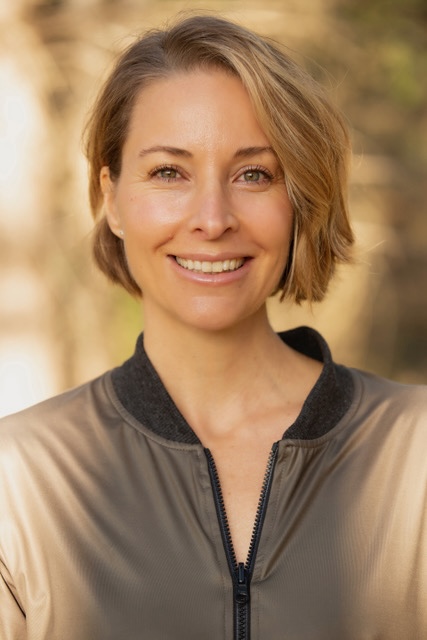
Kimberly Warner is a filmmaker, author, and founder of Unfixed Media, a storytelling platform dedicated to illuminating the lives of people living with chronic illness and disability. With a background in pre-medical sciences and naturopathic medicine, her creative work bridges body and story, science and soul.
In 2019, Kimberly launched the award-winning Unfixed Docuseries, which grew into a dynamic portfolio of films, limited series, podcasts, patient memoirs, and live roundtables. Her projects have been recognized by the Invisible Disabilities Association, Life on the Level, and PBS’s Brief But Spectacular. She’s also the author of Unfixed: A Memoir of Family, Mystery, and the Currents That Carry You Home, forthcoming from Empress Editions in October 2025.
Kimberly’s work explores themes of identity, impermanence, and relational healing through a lens of lived experience—inviting audiences to rethink what it means to be whole. Her stories have reached international audiences through Harvard Medical School, Global Genes, BBC Radio, and Dani Shapiro’s Family Secrets podcast.
She’s a member of the Patient and Physician Advocacy Alliance, a visiting faculty member with Global Genes, and is on the editorial board of the Journal of Health Design. Her current project, Unfixed: The Art of Living in Time, revisits several original documentary participants years later to explore how time shapes our relationship with illness, self, and meaning.
She lives in Oregon and continues to chronicle what it means to live unfixed—through film, essays, and everyday acts of presence.
1 comment
Kimberly Warner is a wonder and I’ve already bought her book and am a loyal subscriber to her Substack. You should too if you’re reading this comment. You won’t be disappointed! Hurrah for Empress Editions that found her!