By Carrie Abbas
November 27, 2020—my first Black Friday purchase ever. I ordered an Ancestry DNA kit, expecting curiosity and fun, a harmless dive into family history. A week later, it arrived. I had spent decades quietly wondering about my roots—the history behind my last name, the family stories, the subtle nudges that kept pricking my curiosity. I first noticed it during a study-abroad trip in Spain in my early twenties, when I met a young man from Morocco with my same last name—Abbas. We looked at each other in disbelief: how could someone with completely different features share my name? I hadn’t known the name’s prominence across Islamic countries at the time. That encounter planted a seed, one that grew over the years through random clues: comments from relatives, family reunion stories, my fascination with the German side of the Abbas family, and my work exploring identity through names. All of it quietly led me to this kit—a small, harmless indulgence in discovering who I truly was.
The results didn’t come for eight long weeks, each day filled with a restless curiosity I could hardly contain. Then one morning, an email notification arrived: my results were ready to view on the website. My hands trembled as I clicked the link. The numbers on that tiny piece of plastic revealed a truth my mother could not bear—a truth that would make her turn her back on me. In an instant, everything I thought I knew about my life—my parents, my family, my very sense of belonging—came crashing down. It was a truth I could not ignore, no matter the cost.
The results shifted everything. I had no German ancestry. None. Instead, more than 30% Scottish. Scroll after scroll of matches on my mother’s side…not a single Abbas on my father’s. Somewhere inside me, something wordless stirred. I had never suspected my dad wasn’t my biological father, but the truth fit like a puzzle piece that had been floating in the wrong box for decades.
I mentioned to my mom my “mystery match”—a 25% connection.
“Your dad is your dad,” she said. Again. And again.
I hadn’t said a word about my dad, but she kept repeating it. Every time, my suspicion grew.
My sister listened sympathetically at first. My brother insisted the kit must be wrong. My dad didn’t know yet; I wanted to shield him from a truth I wasn’t ready to face. His love for me had always been steady and unmistakable; it had been a constant in my life, the one place I could trust. And yet here I was, faced with a life-altering choice: let the questions go and keep the family I had always known, or pursue the truth about my biological father and risk being cast out. I knew my mother would not accept my search, and that if she disowned me, my dad would support her. For the first time, I had to put myself first, to honor my own identity—even if it meant the unthinkable: losing the family I had grown up with, the only one I had ever known.
It didn’t take long to figure it out; we become keen detectives when presented with a few clues. My mystery match turned out to be an uncle, a patient, gentle pastor who helped me navigate the truth discreetly. We narrowed it down to his two brothers. One had passed away. The other—my biological father—was living in Ottumwa, Iowa at the time of my conception, just as my mother was.
This man never said the words aloud, but he made it clear he wouldn’t acknowledge me as his daughter. When his brother offered to send a DNA test, he refused. At first, he responded to a few emails. Then silence. I understood—he had no idea I had existed and wanted to protect his wife. I wished I could meet him, but I couldn’t blame him.
The hardest truth wasn’t my biological father’s distance. It was my mother’s refusal to let the truth be seen. She denied it, refused to speak, grew angry, then hostile, then cold. Finally, she turned the entire family against me. She disowned me, telling me never to call, email, text, or visit again. My dad told me they wouldn’t see us unless I apologized to her. She had told him “her truth”—the only version he would ever accept. I had known this could happen; I had expected it, understood that pursuing the truth would come at the cost of my place in the family. And yet, when it actually happened, it hit me like a freight train.
And the worst part? They took it out on my kids. Birthday cards, Christmas gifts, phone calls, visits—all stopped. That first Thanksgiving without my parents and siblings felt hollow, a quiet absence pressing into my chest. I could hear laughter in my mind, smell the roasting turkey, imagine the clatter of plates at the table that should have been full—and yet the seats were empty. Christmas brought its own ache—lights, ornaments, stockings, all markers of traditions that no longer included my children’s grandparents. The grief hung in the air, invisible but heavy.
Even my sister, my best friend, eventually turned away. After my youngest son—struggling with substance abuse—sent my dad an emotional text, she blocked me, called me names, and blamed me. My brother had already stopped speaking to me, though our relationship had never been as close—we hadn’t talked or texted often, and I’d only seen him a handful of times over the years since we moved away. Still, knowing he, too, had cut me off left an ache I hadn’t expected. That was when I truly felt the bottom drop out.
For most of my life, I had been fiercely independent—living abroad in my teens and twenties, moving my family to another state, building a life far from my parents and siblings. But independence feels different when your family disappears overnight. Suddenly, all that strength feels like loneliness wearing a brave mask.
There were days I couldn’t recognize my own reflection. I had lost the mother I thought I knew, the father who had raised me, the sister who held my memories, and the brother who had shared my childhood. I had lost my history, my identity, and any sense of security I had ever known.
One evening about six months after my discovery, after dinner with my partner, as we walked to the car, I saw a soda cup tossed on the curb—crumpled, dirty, discarded. Something about it struck me with unbearable force, as if it carried all the betrayal, all the loss I had been holding in. I sank to the curb, my hands clutching my face. Ugly, heaving sobs tore through me. My partner knelt beside me, silent, letting me collapse into the grief that had been building like a storm. I didn’t want words. I didn’t want comfort. I needed to feel it, fully, without interruption.
“She threw me away,” I whispered, my voice cracking. “My own mother… she threw me in the trash.” I repeated it over and over, words scraping raw against my throat. I’m a mother—I know the sharp terror of imagining a child lost, hurt, abandoned. And yet here was my mother, doing exactly that. She threw me away, and the weight of betrayal sank deep into my bones.
The grief didn’t end with me. My children felt it, even from a distance. My youngest son sensed my pain in the silences between my words, in nights I stayed awake long after he was asleep. He reached out in his own way, texting my father in frustration and hurt, trying to reclaim some sense of justice for the family we had lost. My middle son, now in the military, carried the absence of grandparents and extended family with quiet resilience, aware of the loss even if he didn’t always express it. My oldest son, usually composed, bore the emotional weight most heavily. He carried the sting of exclusion at family events, including nearly skipping his cousin’s wedding because I wasn’t invited, feeling the burden of explaining my absence.
Somewhere in the middle of that grief, a door opened in another direction. My extended biological family—my Welsh family—found out about me (my uncle had decided it was time everyone knew) and welcomed me with open arms. The first time I looked into the eyes of someone who truly resembled me, so familiar it startled me, I felt a shock of recognition that stole my breath. The resemblance wasn’t just in the shape of our faces or the color of our eyes; it was in the angles, the gestures, the way a smile lifted across the lips. And yet, even as their warmth surrounded me, I didn’t feel it was my home. I didn’t know where my place was anymore—I no longer fully belonged with the family I had grown up with, nor did I entirely belong in this newfound one.
My aunt pulled me into a tight hug, and I froze, overwhelmed. I had barely known physical affection like this. “We don’t need DNA to know you’re ours,” she said softly, holding me as if she could absorb my shock and grief.
Then came the words, one by one: “We love you.” “We’re so glad you’re here.” “You’ve always been part of this family.” Their voices were warm and insistent. The love was immediate and so intense it almost made me uncomfortable. I hadn’t grown up with that kind of affection, at least not from my mother. My grandparents had been affectionate, my dad too, but my mother…I could barely remember her hugging or kissing me.
To feel arms around me that were eager, welcoming, steady—it was overwhelming. I caught my breath, unsure if I could reciprocate, wondering if I had already grown too guarded from recent betrayals. Would I truly fit in here? Could I fully walk through the door, or would I only stick one foot in, afraid to reveal the parts of myself that had been bruised and protected for so long? And yet, there it was: a love that didn’t judge, didn’t demand, a love that quietly declared I belonged.
Their acceptance didn’t erase the grief, but it gave me a place to land. Still, the loss of the family I had always known haunted everything. My middle son asked me one day, “Was it worth it, Mom? Finding out?” He wasn’t judging—he was grieving too, as were all my sons. And even with the pain, the distance, the birthdays and holidays that would never be the same, I knew it was worth it. I could not turn my back on the truth, on myself. Knowing who I am mattered more than preserving a life built on silence.
There have been times, when I drive to Missouri to visit my Welsh family, that I think about taking a detour to my parents’ house. I have no interest in seeing my mother, but the idea of being rejected by my dad is too painful. What if they slammed the door in my face? What if he refused to meet me? I can’t burden my son with relaying messages. Every time I consider it, I reject the thought—I can’t risk being rejected all over again. Some people say I should reach out first. Maybe they’re right. But maybe they’ll never understand what it feels like to have already been thrown away once.
I often imagine the life I would have had if I hadn’t bought that Black Friday kit. I would still have my sister, my children would still have grandparents, we’d still take family trips, spend holidays together, have Sunday phone calls. But I would also be living a lie. I wouldn’t know the truth of my identity. I wouldn’t have met the family who embraced me without hesitation. I wouldn’t have looked into eyes that mirrored mine.
This truth came with a cost so high I’m still paying it. I live in the in-between now—between the family I lost and the family I gained, between who I thought I was and who I actually am, between the life that could have been and the life that is. I’m not sure I’ll ever fully belong to either side. But I belong to myself now. And maybe—for the first time in my life—that’s enough.
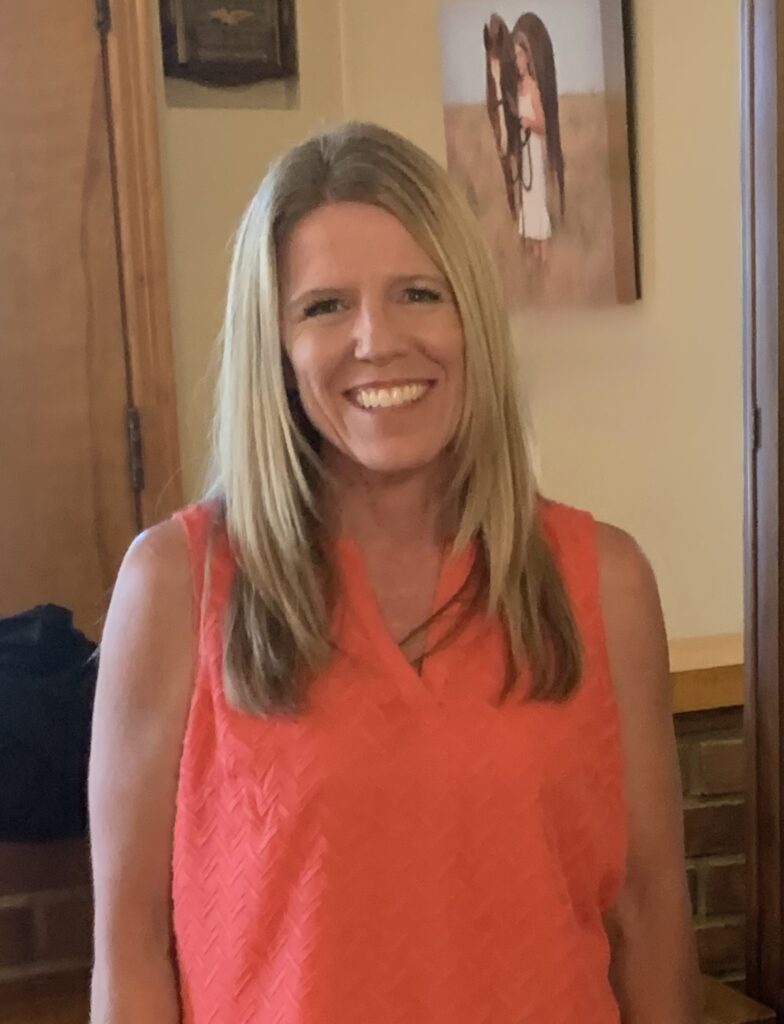
Carrie Abbas is a writer and English–Spanish translator based in Texas. A native of Iowa, she has lived and worked abroad in Spain, Mexico, and China. She holds a master’s degree in TESOL with graduate certificates in linguistics and Spanish translation and interpretation, and degrees in hospitality management and human resource management. Her career has included work in the hotel industry, classroom teaching, and professional translation for a global financial organization. Her published translation credits include the children’s book Flora and the Beautiful Earth. Her writing explores identity and belonging, including her own experiences with DNA discovery. She is the mother of three sons and values family time. She enjoys reading, spending time with her German Shepherd, and long walks in nature