By Dennis M. Clark
I didn’t expect a DNA test to change my life.
It didn’t.
I did expect it to tell me things I didn’t know. What I wasn’t prepared for was how coherent those things would feel.
On an overcast day in late March, I was already late for work when the subway doors closed, sealing me into a car full of damp coats, burnt coffee, and people who looked as if they’d been having the same morning for decades. I spent the ride rereading my DNA results, as if repetition might soften their implications.
The information was fascinating—ethnicity, health risks, traits. Scientifically, the reports claimed to describe who I am.
Ninety percent Italian.
A trace of Persian/Greek.
No Irish.
This was inconvenient information for someone named Clark—the son, as I understood it, of an Irish father and an Italian mother.
I’d taken the over-the-counter DNA test casually, the way you buy a lottery ticket when the jackpot is high and the cashier asks if you want one. Twenty percent off. A display at Walmart. How could I resist? The health data alone felt responsible—especially once your parents are gone and no one can tell you what runs in the family.
The ancestry part was supposed to be background noise.
Instead, it became the soundtrack.
I grew up in Astoria, Queens, in the 1960s, where everyone knew everyone else’s business—even if they pretended not to. You didn’t need Yelp. You already knew which butcher was best by the rabbits in the window, and which bakery sold the best Italian bread by the smell alone. Men played bocce in the park. Women leaned out of windows to call kids home for dinner. Children learned early how to read a room—and later, how to leave one.
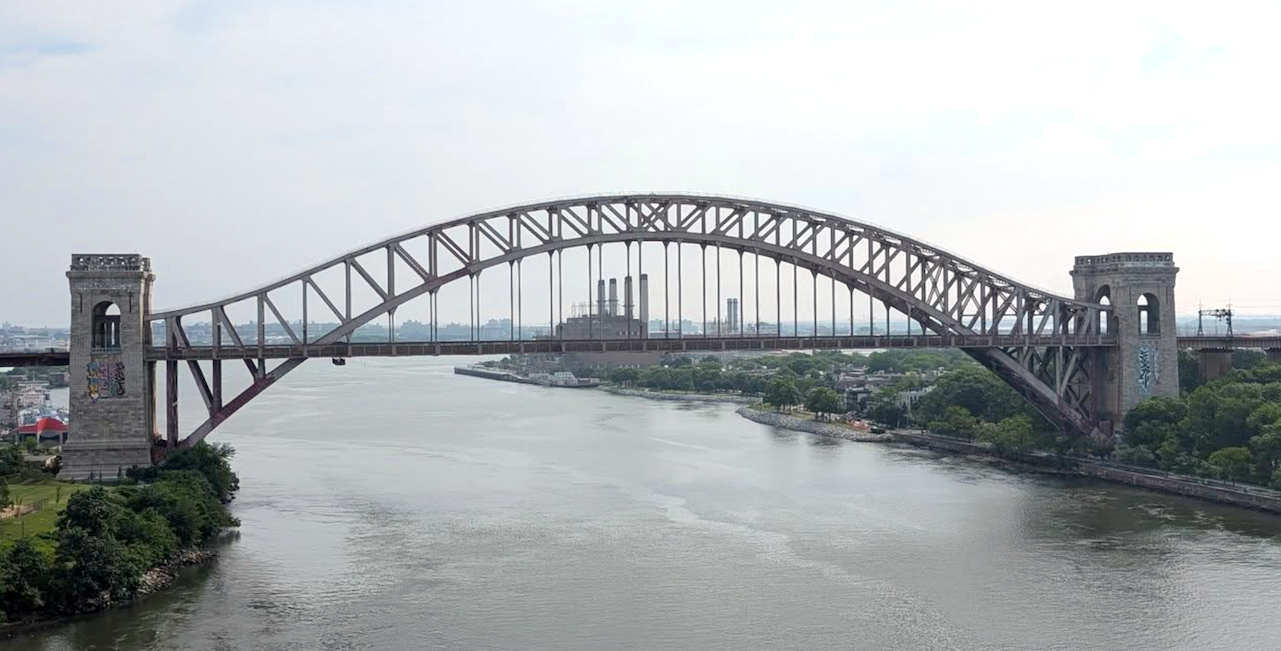
At the center of it all was Queensboro Plaza, where elevated trains crossed above underground subways at the foot of the bridge into Manhattan. Nearby stood the Silvercup Bread Factory, baking the loaves that landed on dinner tables across the city. And on the corner, every day without fail, was a lone pushcart selling Sabrett hot dogs exactly the way you wanted them. Behind it stood Joey Hot Dogs.
Joey was short, loud, mustached, and absolutely certain you’d want onions. Everyone knew him. He knew your name even if you didn’t know his. None of that surprised anyone in Astoria. Joey had been a fixture long before anyone thought to call him famous. He also happened to be my sister Renee’s boyfriend in the mid-1960s. She towered over him, and together they resembled Sonny and Cher.
The neighborhood was full of people like that—men with nicknames, women with stories that shifted slightly depending on who was listening. You didn’t interrogate the details. You absorbed them. Truth was often approximate, but somehow still reliable.
My family fit right in.
My mother, Anita—a first-generation American and daughter of Italian immigrants—worked two or three jobs at a time. Her husband, Frank, from an Irish ironworking family rooted in southeastern Pennsylvania, was more absence than presence. We didn’t ask questions. Questions required answers, and answers required explanations no one wanted to give.
When I was five, our apartment building caught fire on one of the coldest nights in February. It was after midnight. Smoke filled the halls. Firemen shouted names through the dark. I remember being wrapped in a blanket and passed through a window, lowered from a fire truck like luggage. We lost everything—furniture, clothes, photographs, records. Proof.
Survival wasn’t an exception in my family.
It was the condition.
So when the DNA results suggested something didn’t add up, I didn’t panic. I stalled. I reread. I watched the subway pull into Eighth Street in Greenwich Village and felt, unexpectedly, calm.
Something about me had always felt slightly off-register.
Could this be the key?
Ninety percent Italian didn’t align with the story I’d known. If Frank were my father, the Irish map would be lit up. Instead, it was dark. Where was the Irish?
At the office, I called my sisters. I said the results were interesting, but something felt wrong. They laughed at first. Maybe the test was off. Maybe percentages were fuzzy.
But DNA doesn’t improvise.
It reports.
And what it was reporting wasn’t betrayal or scandal.
It was an explanation.
The names in my match list were unfamiliar. Faces looked unsettlingly like mine. Then came a first cousin with a surname my sisters eventually recognized. After days of conversations, a name surfaced—one I had never heard before.
Carmine. A strong Italian name.
“Cakie” was his nickname. He was my biological father.
Frank became my mother’s husband.
That fact didn’t dismantle my life.
It clarified it.
What followed—new siblings, tentative reunions, the realization that certainty is personal, not biological—mattered less than what stayed the same. I was still someone who adapted early, expected instability, and learned to read silence as fluently as speech.
The DNA test didn’t give me a new identity.
It completed one that had always been unfinished.
We met in a diner. In Astoria.
Of course we did.
If Astoria has a neutral ground, it’s a diner—fluorescent, loud, slightly sticky, and designed for conversations that don’t yet know what they’re supposed to be. The Bel Aire Diner had been there forever. You could disappear into a booth and still feel watched over.
My new siblings arrived separately. There were hugs, but cautious ones—the kind that stop halfway through. We ordered coffee. Then lunch. The cole slaw hadn’t changed since the 1960s. The waitress didn’t care why we were there. She had tables to cover and happily took our picture.
There were moments—brief but undeniable—when resemblance broke through conversation. A shared expression. A laugh that landed the same way. A pause that felt familiar. No one said it out loud, but it registered.
The talk stayed light at first. Neighborhood landmarks. Who worked at which bakery or bar. Joey Hot Dogs resurfaced—Cakie’s best friend.
My new brother mentioned how Cakie used to take him for hot dogs on Wednesdays. Joey would look at him and say, “You know you have a little brother, right?” My new brother was too young to understand what that meant. He thought it was a joke. It wasn’t.
My mother’s waitressing job at the Gables came up, where my new siblings had eaten every Friday night. I mentioned Parisi’s bread; my new brother said that’s where he’d gotten his first job.
Then my new sister recalled her grandfather’s wake in 1965—my grandfather. It was held at Quinn’s Funeral Home in Astoria, where their mother worked. A girl her age had approached her and said, “Your father got my mother pregnant.”
That girl was my sister Renee.
That was the dangerous part—how quickly the unfamiliar could feel earned. How the stories weren’t just stories, but strands in the same web.
When we said goodbye, there were no declarations. Just a shared sense that something meaningful had occurred. I went home buoyed but grounded. I hadn’t gained a family. I had gained context. That felt sufficient.
The months that followed brought holidays together, shared meals, and quiet games of what if. I thought often about my mother—about the stories she told and the ones she didn’t. I admired her even more. The burden she carried. Her life was built from motion. Survival required momentum. Silence wasn’t deception.
It was management.
That first Christmas, my new brother and I decided to visit Joey Hot Dogs. He was 83 years old, living in the same place with the same phone number for more than fifty years. Joey confirmed everything. He told us Cakie was his best friend, my brother’s father, and my biological father.
The bond with my new brother grew stronger.
Years later, something changed. My new sister’s husband died, and the family gathered. My new brother didn’t want to attend. There was animosity he held against his brother-in-law, but something else started to surface, too: unanswered questions. He felt secrets had been kept from him by his mother and sister. He didn’t explain further.
Then, in January 2024, he sent me a text very early one morning. He wasn’t sure anymore. He didn’t see the resemblance. He needed to be one hundred percent certain. There had been too much lying in his life.
He hoped I understood.
I did.
I read the message more than once, not to decode it, but to sit with it. There was no accusation—only fatigue. I didn’t respond. There was nothing left to clarify.
The DNA hadn’t changed.
The facts hadn’t changed.
Only the weight he was willing to carry had.
I have not heard from him since. He also stopped all communication with my new sister.
The diner meeting had been real.
So was the distance that followed.
Both could exist without canceling the other.
I didn’t lose a brother. I learned something more precise: explanation is not obligation. Clarity does not demand connection. Certainty, like belonging, is something each of us negotiates privately.
Later, I found myself drawn to others navigating similar discoveries. Through my work with Hiraeth Hope and Healing, I now help facilitate Zoom calls and retreats for NPEs navigating this journey. I’ve seen how differently people respond to truth. Some are undone by it. Some are energized. Most simply want orientation—someone to sit with them while the ground settles.
The DNA test didn’t uncover something hidden.
It illuminated something consistent.
I didn’t become someone new. I became more fluent in myself. I learned that identity isn’t built from certainty alone, but from how we live with what remains unresolved. Some families pass down heirlooms. Others pass down adaptability.
Both are inheritances.
People like to believe truth arrives as a reckoning. Sometimes it does. But sometimes it’s quieter. Sometimes it simply explains why you’ve been standing where you are all along.
I came to the DNA test looking for information.
What I found was orientation.
Some people inherit certainty.
Others inherit adaptability.
I know which one I am.
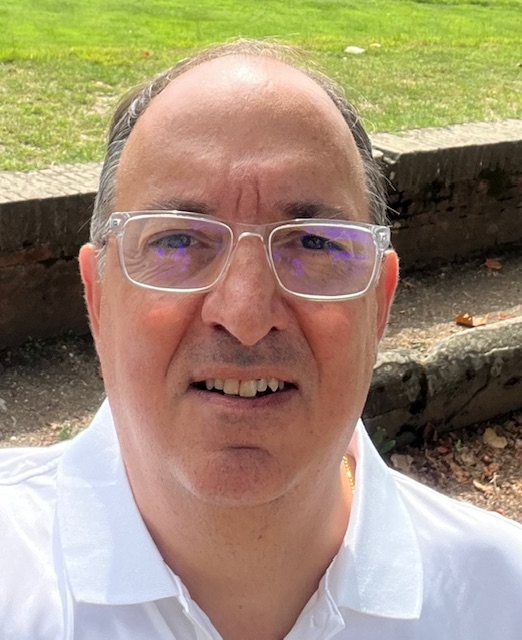
Dennis Clark grew up in Astoria, Queens, and now works in global higher education administration. After a DNA test in later life revealed he was an NPE, he became active in the NPE community and serves on the board of Hiraeth Hope and Healing, a nonprofit offering support and retreats for those navigating family discovery He lives in New Jersey. Look for him on Facebook.
3 comments
Very insightful article.i feel it will be very helpful to others that have experienced similar discoveries.hopeful to see more in the future
Oh the lies we’re told – and expected to believe like scripture from a higher authority.
And so few of us have the privilege of meeting blood relatives, especially parents.
And how devastatingly destructive the revelations are. I’m 52% Irish and haven’t a clue how to be Irish. And I can’t stand the smell of beer. 🥲
Dennis, I too come from a family whose inheritance is adaptability. And both our mothers stayed silent not to deceive but to manage the burdens they carried and to survive and move forward. There is a grace in that, but not everyone is able to see and appreciate it.
I also share your view that identity is built not on certainty but on how we live with what remains unresolved. Your piece reminds me of a sentence from a Rainier Maria Rilke quote that my mother loved and kept on her fridge: “Be patient with all that is unresolved in your heart and try to love the questions themselves, like locked rooms and like books that are now written in a very foreign tongue.”
Thank you for having the courage to share your story with us.