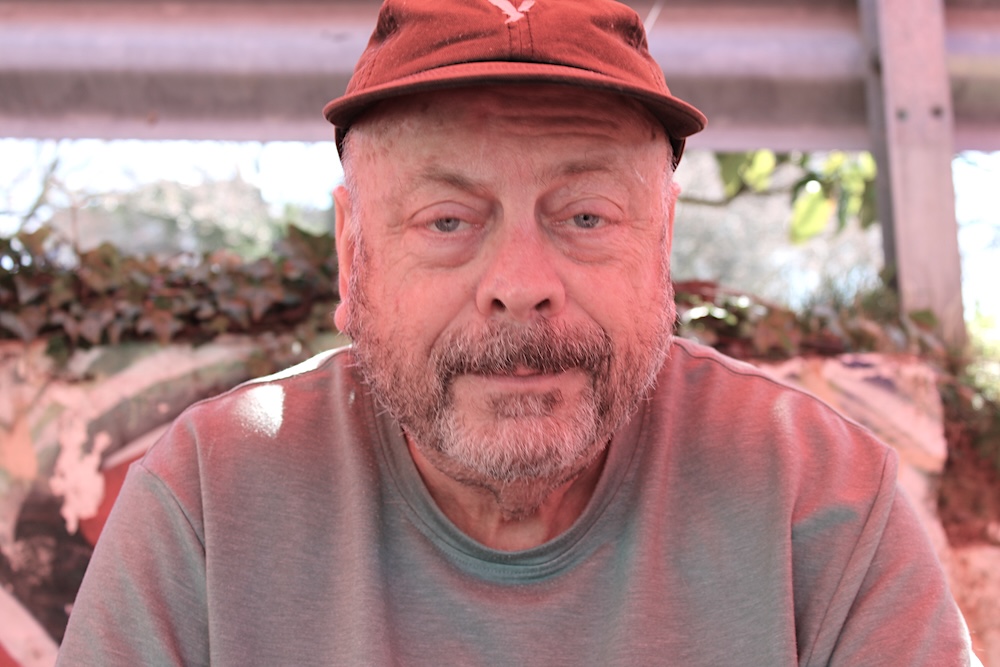
By William Lee Arnette
A couple of years ago I retired to Charlottesville, Virginia, with the idea to rest and do the things I wanted to do rather than working for a living. Although my parents were both deceased, one of those things was to explore the doubts I had about my father’s paternity. He and I didn’t look alike, in particular his height and a bit of Native American blood that gave him black, straight hair and the ability to lay out in the sun for 30 minutes and turn dark brown. I seemingly had none of that.
I never doubted my mother, even though there were things that just didn’t add up. For example, in 8th grade biology I learned two brown-eyed people could not have a blue-eyed child. My eyes are bright blue and theirs were brown. As soon as I got off the bus I hit my mother with this observation while she was preparing dinner. It didn’t go well. I was told that was not true and not to bring it up again. Period! I never brought it up but I never forget it either.
Another event like that was when I asked Mom what time of the day I was born. She paused and thought and said it was early in the morning. “Oh, you were an early bird, around 7 a.m.,” she said. Alright, I was an early-bird. I remembered this fact completely. Then, in high school, she gave me my birth certificate so I could get an after school job and that document reported I was born at 3:30 am in the morning. I didn’t want to bring it up with her but thought it strange. Mom had been pregnant twice before I came along and she lost both babies. So, you would think that the details of her first live-born child would be deeply engrained in her memory.
Although mom had lost several children in pregnancy, she managed to bring my sister to term in 1960. We were raised as brother and sister, but six years of difference is a lot in children’s years. We fought often as kids.
As I approached adolescence with the hormonal surges and insecurities that tend to crop up, I became aware of the “pictures.” A series of three or four pictures taken of me from ages 12 to 14 that made my skin crawl. I looked at them and I said to myself, ‘something is wrong. I don’t look right. I didn’t look like my parents.’ Later, I realized I didn’t look like my cousins whom I rarely saw. They were all living far away and visits were few and far between. I even stopped looking at myself in mirrors. I couldn’t accept the person who looked back at me.
So, in retirement, I ordered and returned back a test kit from 23andme. When the results came in I anxiously looked at my ethnic composition. My mother was English, born and bred. My father of Irish descent with some Native American blood. 23andme had totally screwed up the report. It said I was basically half Italian/Spanish on one side and Scottish/Irish on the other. What incompetence!
Then, I saw the list of DNA relatives. I couldn’t find anyone with my last name or my mother’s maiden name. And it showed two first cousins. A woman named Tammy from Illinois with an Italian background on my father’s side. And another person named “F.P.” from Maryland of Polish and Irish background on my mother’s side. I had been born and raised in Maryland also. My mind was blown at this point.
I sent out messages to Tammy and F.P. Tammy responded but she had no idea how I could be related to them. The last names I asked her about were unknown. F.P. never responded.
Since 23andme was so absolutely mistaken, I decided to redo the test with Ancestry. When I got back the report, it was basically the same ethnicities as 23andme. It also included two new first cousins – Tammy’s sister Jean, and F.P.’s sister, MacKenzie. Okay, maybe 23andme wasn’t so mistaken. At least now, I had a last name to follow up on my mother’s side.
I began working on family trees. Tammy and Jean’s grandparents and great-grandparents immigrated from northern Italy, near the French border, in 1920. Her grandparents had four boys: Tammy and Jean’s father, Marcelino, Savino, Domenick, and Steve. Steve died at 16 in 1942. The other three served in World War II in the Pacific. Marcellino and Domenick were in the Navy, and Savino in the Army Corps of Engineers. I had to find a connection since it looked like one of these men was my father.
The three of them returned from WWII in 1945 to their hometown. Then I found something interesting. In 1947, Domenick reenlisted in the Navy and made a career of it. We lived near a Naval Base in Maryland, the place where my father retired from the Navy on a medical discharge. We got our medical care at the base as well as groceries and other services. I had to find out if Domenick had been stationed at that base. I sent in a request to the National Personnel Records Center and several months later I got a box of around 250 pages of Domenick’s military records.
I nervously went through the pages. And I found it. In 1952, he was reassigned from sea duty to become an instructor at the Bainbridge Naval Training Center, the base near our house. He was there until 1955. I was born in 1954. About a month after I was born, he put in a request to his commander asking to be immediately returned to sea duty but this request was denied. Hmmm. Looks suspicious.
I wrote Tammy and said I thought her Uncle Domenick could be my father. I sent pictures of me as a child and adult. She responded it was probably true. I had the family’s eyes. I also compared Domenick’s high school picture at age 16 with my face at about three years of age. The similarities were so strong even Maury Povich would have been convinced.
I still had the problem of my mother’s side. None of this matched my English-born mother. Through Ancestry’s genealogical records I found out that “F.P.” was Mackenzie’s half-sister, Fara. And they grew up in Port Deposit, a little town right outside the Navy base and less than ten miles from the house I grew up in.
Then I found some information that floored me: my Uncle Robert’s obituary. He was MacKenzie’s father and had been the postmaster in that little town. He also owned the Winchester Bar and Hotel. Robert had been a good friend of my father’s who was also a bartender and worked in a bar down the street from the Winchester. My dad also occasionally worked for Robert when he needed extra help.
I finally found the courage and sent MacKenzie a message. She didn’t respond so after a couple of months I contacted her through Facebook. She apologized for not responding, but she hadn’t looked at Ancestry for a very long time. She said she didn’t know how I could be related but would pass it to her brother, Michael, who was the family historian.
A few days later, Michael called me. We introduced ourselves and spoke the usual pleasantries. Then Mike said, “We know who you are.”
Those words were like a bullet going through my heart. I began trembling. So, I asked the next question, “So, was Helen my mother?” She seemed the most probable candidate on the family tree as she was 32 years old when I was born.
Mike paused, then said, “No, she was your grandmother.”
I was shocked and grabbed my handwritten family tree.
“Your mother was her daughter, Dawn. The family called her by her nickname, Peachy,” Mike continued.
“But, she was only…”
Mike cut me off. “Yes, she was twelve years old when she had you. Eleven when she got pregnant. We think it was a kid from across the river,” he said referring to the Susquehanna River.
He continued, “There’s one more thing you need to know. Peachy died at 17 of leukemia.”
This was almost too much to grasp. “She never had a chance at life, did she?”
We talked more about the situation. Helen had Peachy and two other kids, but Helen was unable to work due to her mental state and Michael’s father, my Uncle Robert, did his best to take care of them. But, he had his own family to take care of also.
“You were really better off being adopted,” Mike said. “That branch of the of the family tree was very unhappy and they died young.”
“Yeah, Jean and Bill took good care of me and spoiled me plenty.”
“My dad told me the story of what happened,” Michael continued. Michael was too young to have ever met Peachy. “He would say – let’s hope that young man finds his way back to us one day.”
I had found my way back to the family but it was too late for Uncle Robert and others who made the difficult decision to put me up for adoption. By this point both Mike and I are crying on the phone.
Then I told Michael my news. My father wasn’t a kid from across the river. He was a sailor stationed at the Navy base and I had already contacted the family. Now how would I tell my father’s side the gruesome details of my birth? Domenick had been everyone’s favorite uncle.
A couple of months later, after Mike informed the family of my reappearance, I went to Port Deposit and had lunch with my mother’s family. Only cousins are left but for the first time in my life I had people tell me I looked like them. It was a new and comforting feeling. There were lots of hugs and tears and after lunch we went to the family cemetery to see where my mother and grandmother and aunts and uncles were buried.
I grew up in a rural county in Maryland. I now know that just about everyone but my adoptive sister and I knew about the adoption. I imagine they were told under the threats of my mother that no one should ever mention it to me. So, I lived in ignorance. I didn’t even know that nice old lady who served me lunch in high school was actually an aunt of mine. (I doubt she knew who I was either.) We would drive by my cousins’ house weekly as we went shopping or to see the doctor on the Navy base. I probably saw them on the street once in a while. We lived far enough apart to go to different high schools.
Both sides of my biological family have accepted that I am who I have claimed to be. I have seen the DNA evidence and “DNA doesn’t lie.” I’ve also gotten my original birth certificate and adoption certificate. I’m very sad that I didn’t have the courage and perseverance to speak up decades ago. I could have met Uncle Robert who was so instrumental in making sure I had a good home to grow up in. Or to have met my mother’s siblings, my Aunt Melody who was a nurse, and Uncle Walter whom everyone called “Freight Train” and was a fireman. And my father’s side of the family where I have five first cousins. If this had happened years ago, we would have had time to establish relationships, enjoy family time, have jokes that only we understood. We could have been family. I’m old now. My time is limited and I fear we’ll never get to be that close.
My sister and I were raised as siblings, but it turned out that each of us is only child. We were estranged for many years, but she and I have reconciled after finding out about the adoption. It helped explain so much of the weirdness that occurred in our household. And, in discussing this with her, I’ve come to realize how manipulative my adoptive mother was. As Kim said upon Jean’s death, “That crazy old lady took a lot of secrets with her to the grave.”
My adoptive mother, Jean, was a wonderful person, but she was very controlling. Jean manufactured an image of a perfect little home. In retrospect, my life was more like the movie The Truman Show with Jim Carrey. Like his character, Kim and I were kept under a glass dome where everyone knew. I can’t even begin to imagine the kitchen table conversations that this situation must have engendered.
I recently solved the last great mystery of my youth. Sometime, late in elementary school, Jean, my mother, took me to the Navy base. The trip seemed routine. We were probably going shopping at the commissary. But after passing through the guard’s gate, she veered off the usual route and pulled up in front of a building. There, waiting for us, was a sailor in his white uniform and a Navy-blue peacoat.
Jean said, “I have to go run some errands and this man is going to baby sit you for a couple of hours.” I must have given her a look that would have stopped most people in their tracks. This was completely out of the ordinary. Mom never left us with anyone that she hadn’t completely vetted on her own. But, I was a compliant and obedient young man and I got out of the car and followed this sailor. If mom told me his name, I didn’t pay attention or forgot it.
I followed him into the adjacent building. It was a dorm and other sailors passed by us with inquisitive looks. He brought me to a room with two beds, not an open dorm as I might have expected. He sat me on one of the beds and brought out a big mason jar filled with coins. “Hey, can you give me a hand here?” He asked. “I need to take these coins to the bank but I have to know how much is here. Can you count them for me?”
I was such a nerd that I loved the job assigned me. He gave me some paper and a pencil and I began sorting and adding up the coins. He stood at the open door and never said much to me, but I did catch him looking at me a few times. I believe he asked me if I wanted something to eat or drink but I said no. Other sailors came to the door and looked in or talked with him in hushed voices.
At some point, he said that my mom was back and to put the coins back in the jar. I gave him the paper with the calculation of the total value of those coins. But, it disappointed me that he didn’t even look at it and just tossed it on the bed.
So, here I am sixty years later wondering who this man was. He had to have been Domenick, my father. Who else could he possibly have been? How could I prove it?
I went back to his military papers. I remembered that there was only one mention of that Navy base after 1955 but it didn’t seem important. I worked my way through those couple of hundred pages and finally found it. It said his records would be sent to the Navy base in Maryland. But I hadn’t looked at it carefully enough. It was a transfer order for Dom, who had just retired from the U.S. Navy in the port of San Francisco, to report to the Maryland base where he would join the Fleet Reserve and receive training.
The date of the page was November, 1966. I was twelve years old and had just entered 6th grade. It seemed to line up with my memory of it happening during the last part of elementary school.
This was earth shattering to me. This meant that I had met my biological father but didn’t know it. It also meant that my adoptive parents knew Dom, as his family called him, and knew who he was. They denied me the opportunity to meet him knowing who he was. Perhaps it was for my own good. Perhaps not.
My birth involved a very serious crime. But it was becoming apparent to me that my mother’s family wanted to keep it quiet both to save Peachy from unwanted attention but also to give me a better life with a new family.
This is my story. The last two years have been some of the best and worst times of my life. I’m writing a book about all of this, not only because the story is so shocking, but also as therapy for myself. I encourage all of you to get a DNA test if you have doubts. Follow up on the information you find and investigate. It may set you free.
Lee Arnette was born in Maryland. He grew up in a stable, loving household. After high school, he went to study at the University of Madrid, Spain, and after two years, transferred back to Georgetown University in Washington, D.C. His career took off after becoming a Certified Public Accountant and with his foreign language skills, worked for many years for international companies and organizations. He retired in 2023 to Charlottesville, Virginia, where he is working on his memoir and tutors Spanish and Portuguese language students.