By Chloe Holloway
There are a few days at the beginning of my life that I cannot account for. I know about the bus station because somebody told me. I know that I was found in Lusaka, Zambia, when I was a few days old, that the police took me to a children’s home, and that at nine months I left the country with the woman who would raise me.
I left Zambia on a single-use travel document. When I took that flight, the tie to the country I had been born in was severed. I became a New Zealander. I was too young to understand what it meant to leave one country and begin a life in another, or that the change had already happened before I could have any say in it.
I don’t know where I was born. I don’t know whether my birth mother travelled to Lusaka, or what was happening in her life at the time. I don’t know how I came to be at that bus station. There are so many things I will never be able to ask her.
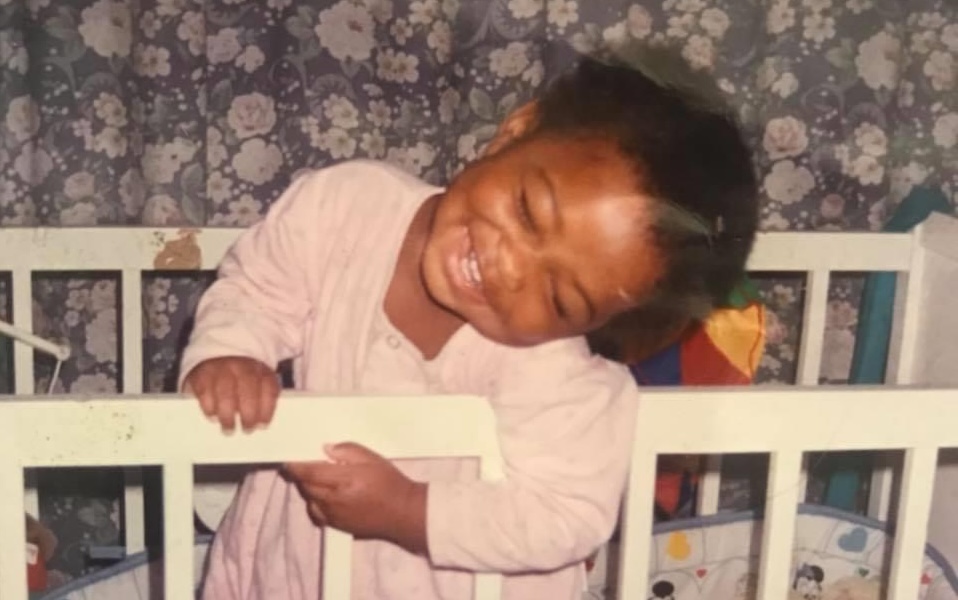
I have a photograph of myself at about nine months old. I find it difficult to look at for too long. She’s so small. So much has already been lost, and she doesn’t even know. She has no idea how much of her life will be shaped by those first months. I look at her and wonder what happened before the photograph was taken, who was there, whether anyone was holding her just before that moment. I can’t get any closer to the answers by looking harder.
To lose your mother is a huge loss. I don’t think being too young to remember her makes it any less so. I have no memories of her voice, no small habits to recall, no ordinary moments that might tell me what it was like to be her child. I cannot remember what I lost, but that doesn’t mean there was nothing to lose. She was my mother, and I was her child. Whatever happened in those first days, that relationship was lost before I was old enough to understand it.
Around my birthday, I often feel unsteady. It tends to start towards the end of February and can carry on well into March. I notice it happening every year, I don’t know what to make of it, and I don’t want to pretend I have an explanation. I just know that this time of year can be difficult for me, even before I’ve properly thought about my birthday.
My earliest conscious memory is of being carried on a man’s shoulders in the house that was home for the first twenty-eight years of my life. It was in Pinelands, Cape Town. I remember the garden after rain, the smell of wet earth, the books around the house. My mother liked weeding. We had a gardener, but she would still go outside and do it herself, and sometimes I went with her. These are the things I remember about being a child there.
My mother travelled often for work. Before she left, she put little magnets on the fridge so I could count the days until she came home. I could see how long she would be away. I still ask people for their flight details when they’re leaving. I want to know when they take off, when they land, where they are in between. I put it all in my notes app. I like knowing where people are when they’re away from me.
My mother worked in humanitarian and disaster-risk fields. She was capable and determined, someone who could get things done in difficult circumstances. I admire her. She raised me in South Africa, a Black child in a white family, in a country shaped by apartheid. There were things she could not know from her own experience, and she couldn’t tell me where I came from because she didn’t know.
I don’t want to make her responsible for that absence. She loved me and raised me. My childhood was full of ordinary things, and I had a mother who showed up for me. But her love couldn’t give me a history she didn’t have, or tell me what happened to my birth mother. I have had to learn to hold those things alongside each other.
There were other people who cared for me when I was young, many of them people of color with families of their own. I was welcomed into those families. I spent time in their homes and communities, where people looked after me, fed me, and taught me things. I was offered belonging over and over again, even if I couldn’t understand it then.
That matters to me. I didn’t grow up without love or without a place to belong. I had a home, and I had people beyond that home who made room for me in their lives. Those relationships shaped how I understood people and community, even if I didn’t have the words for it at the time.
Being welcomed into those families didn’t mean I hadn’t lost my first one. The love I received didn’t undo that loss. I can be grateful for the people who raised me and cared for me, and still wonder about the woman who gave birth to me. I don’t see those things as contradictory.
At school, I was often aware of the things I didn’t know. I was Black, but I had been raised by a white woman. I didn’t speak some of the languages other Black children spoke, and I didn’t always share their cultural references. I could feel the gap between how people saw me and what they assumed about my life. Sometimes I found myself explaining who I was before anyone had actually asked.
I learned to anticipate the misunderstanding, to translate myself. It is tiring to feel that you have to explain your own life to other people, particularly when there are parts of it you don’t fully understand yourself.
For a long time, I thought about adoption through questions of identity and belonging. Those questions are still there, but as I’ve grown older, I’ve found myself thinking more about what happened before I arrived in the life I remember. I keep wondering what it would have taken for me to remain with my first family.
I have to be careful with that question. I don’t know my birth mother’s circumstances. I don’t know whether she wanted to raise me, what support she had, or what choices were available to her. I cannot fill in those gaps with assumptions. I don’t know whether anything could have changed what happened to us.
But I do think we need to look more closely at what happens before a child is separated from their family.
What support is available when a family is struggling? What happens when a parent needs help and there is nowhere to turn? Could practical support, healthcare, housing, protection from violence, or help from relatives and community make it possible for a child to remain safely with their family? Are those options actually available to the people who need them?
Every family’s circumstances are different. There are children who cannot safely remain at home, and situations in which another family is where a child needs to be. I am not arguing that every separation can be prevented, or that I know what would have happened if my own circumstances had been different.
I just think we need to take the possibility of keeping families together more seriously, before separation becomes necessary. We talk about finding children homes, about who can care for them and give them stability. Those questions matter, but I want us to ask what could be done for the family a child comes from, too. What might allow that family to stay together? What support would have to be there, and when?
Family preservation cannot mean keeping every family together at any cost. A child’s safety has to come first, but adoption should not be treated as the only answer to a family in difficulty. And when a child does need to leave their first home, we should be asking what can be preserved: relationships with siblings and relatives, links to their community, their language, their history.
A new home shouldn’t have to mean losing every connection to the life that came before it.
I don’t know whether any of this would have changed my own life. I can’t know. I can imagine a version in which I stayed in Zambia, knew my birth family, and grew up speaking a language I don’t speak now, but I have no idea what that life would have looked like. I don’t want to invent a different history simply because the one I have is incomplete.
I can love the life I had without pretending I know what it replaced. I can be grateful to the woman who raised me and still grieve the mother I lost. I can recognize that adoption can give a child safety and love while asking whether more could be done to support families before separation becomes necessary. I don’t have to choose one of those things over the others.
I think sometimes we talk about adoption as though the child moves from one life into another, and the new life settles the matter. A home is found; a family is made; the story moves on. But a child’s life began before they arrived in that new family. There are people and places that came before, even when the child is too young to remember them. Their lives are changed by separation, too.
My birth mother is not simply the missing piece of my identity. She was a person, with a life I cannot picture and circumstances I cannot explain. I wish I knew her. I wish I knew what happened. I wish there were someone who could tell me more than the few lines with which my story begins.
I return to the photograph. Nine months old. I look at that baby and think about the house in Pinelands, the garden after rain, the magnets on the fridge, the people who would care for her, the questions she would grow up carrying. She has no idea what lies ahead, or how much of her own beginning will remain beyond her reach.
I have lived a life full of love. I have also lost a mother I cannot remember. One doesn’t undo the other.
I want us to take the loss involved in family separation seriously, not as an argument against adoption, but as a reason to look more carefully at what happens before it. To ask what support might allow families to stay together safely, and what connections can be preserved when they cannot. I don’t know what the answers would have been for my birth mother and me. I wish I did.
There is a beginning to my life that I cannot recall. I may never know what happened there, but the fact that I cannot remember it doesn’t mean it doesn’t matter.
My story began before the life I remember.
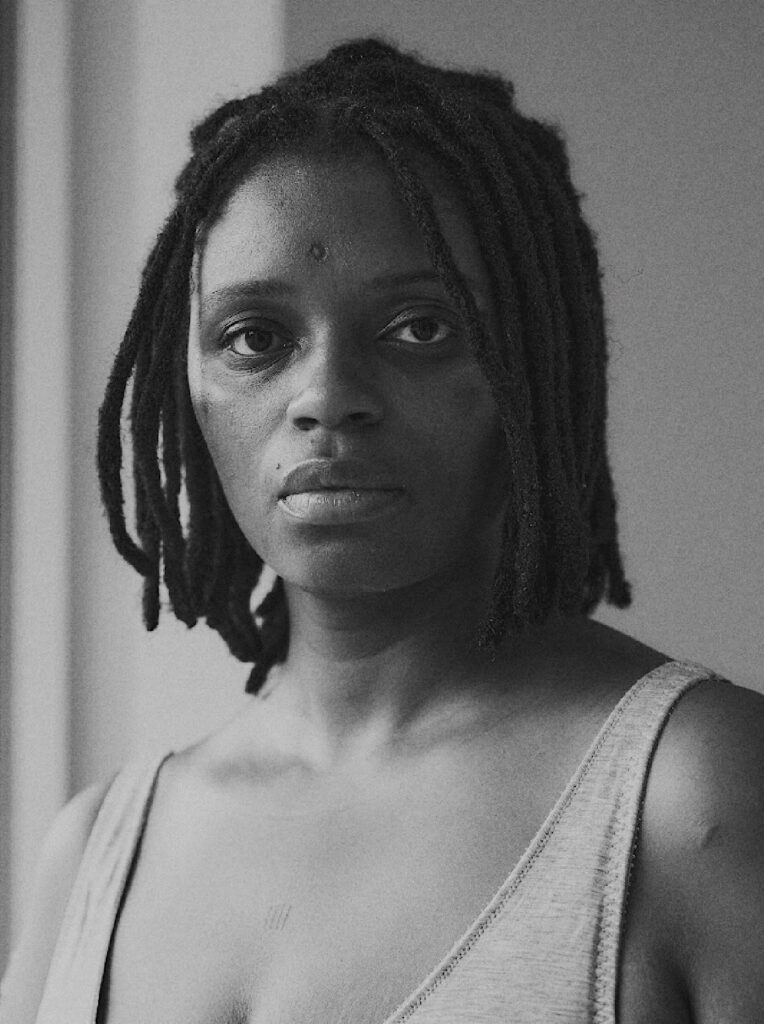
Chloe Holloway is a writer, photographer and creative director born in Lusaka, Zambia, and raised in Cape Town, South Africa. Her work has since moved across photography, creative direction, brand identity and birth work supporting women and families through pregnancy, birth and the transition into parenthood.
She is the founder of Saudade Studio, a creative studio working across photography, brand storytelling and visual direction for independent brands, artists and spaces. Across these different fields, her work has brought her into contact with questions of identity, embodiment, care and the ways people make meaning of their lives.
She writes from a life shaped by movement between countries and cultures, and by the questions of family, origin and belonging that do not always have straightforward answers.
1 comment
Beautifully expressed the both/and of love/loss, the mystery of pre-adoption, and how family preservation / community / cultural preservation is so important.
❤️🩹