• About
    • About Severance
    • From the Editor
    • Submission Guidelines: How to Contribute
    • Contact Us
  • Articles
    • abandonment
    • Adoption
    • Advocacy
    • DNA & Genetic Genealogy
    • DNA Surprises
    • Donor Conception
    • Family Secrets
    • Genetics & Heredity
    • Interviews & Profiles
    • Late Discovery Adoptees
    • Psychology & Therapy
    • NPEs/MPEs
    • Search & Reunion
  • Essays & Fiction
    • abandonment
    • Adoption
    • DNA surprises
    • Donor Conception
    • NPEs/MPEs
    • Late Discovery Adoptees
    • Search & Reunion
    • Secrets & Lies
  • Short Takes
    • Short Takes: Books
    • Short Takes: Events
    • Short Takes: Film & Video
    • Short Takes: People, News & Research
    • Short Takes: Podcasts & Radio
  • Self Care & Coping
    • Coping Strategies
    • Self-Care
  • Speak Out
    • Micro-Memoirs
    • Your Video Stories
  • Resources
    • Start Here
    • Abandonment
    • Adoption
    • DNA & Genetic Genealogy
    • Donor Conception
    • Genetics & Heredity
    • Late-Discovery Adoptees
    • NPEs (Not parent expected) & MPEs (Misattributed parentage experience)
    • Psychology & Therapy & Coaching
    • Search & Reunion
    • Secrets & Lies
    • Self-Care
  • NEED HELP TELLING YOUR STORY?
Severance Magazine
Tag:

transracial adoption

    AdoptionArticles

    KPop Demon Healing

    by bkjax February 20, 2026

    By Danielle E. Marias Ulrich

    I was not a K-pop fan, so as a tired parent of a two-year-old, I was reluctant to spend my limited “me time” on an animated movie with such a committing title. However, for me, a transracial Korean adoptee, KPop Demon Hunters (KDH) delivered an on-point representation of my own Korean adoptee-related trauma, pain, and healing that unexpectedly brought me tear-filled catharsis.

    KDH’s accumulation of accolades feels endless. It is Netflix’s most streamed film ever; it has a platinum, Grammy-winning soundtrack; it won two Golden Globes and has two Oscar nominations, its sequel is already in production; and KDH costumes captured Halloween. The celebration of the film echoes the Korean wave (hallyu, 한류), the world’s fascination with Korean culture (BTS, Squid Games, kimchi, skincare). The global shift from the racism I grew up with in the 90s to today’s embrace of Korean culture is mind-blowing. Many have expressed similar sentiments, including Korean Canadian Maggie Kang, director of KDH and Korean American Arden Cho, the speaking voice of Rumi—the lead singer of the film’s fictional K-pop group HUNTR/X and the film’s half human-half demon protagonist who is ashamed of and rejects the demon part of her identity.

    A narrative historically left out of mainstream Korean cultural discourse is that of transracial Korean adoptees—those of us born in Korea and adopted internationally as babies. The history of the decades-long Korean adoption industry is painful, and Korean adoptee voices largely have been overlooked by western and Korean governments, adoption agencies, adoptive families, and non-adoptees. KDH is an inspiring celebration of Korean culture. True to the film’s message with Rumi facing her demon identity, to fully celebrate Korean culture, it’s necessary to acknowledge and face the complicated parts. 

    One Korean adoptee friend astutely likened my near-religious experience watching KDH for the first time to my version of psychedelic assisted therapy. The last time I felt as validated in my experience was when the Atlanta spa shootings were denounced as acts of anti-Asian hate. This time however, my catharsis originated not from a response to violence, but from the film’s themes of self-empowerment and self-love (I still tear up when I listen to the film’s final song “What It Sounds Like”).

    The film’s existence is a celebration of Korean culture. I feel relieved to hear kids on the playground pretending to be HUNTR/X members Rumi, Mira, and Zoey, speaking Korean, and donning Korean fashion, rather than pulling the corners of their eyes back and chanting ‘ching chong’ slurs. I now live in a Montana town that supports two Korean restaurants, neighboring Lucchese and western Americana watering holes. I am hopeful that my son may not face the same severity of racial bigotry that I did. In other ways, the dissonance between my childhood and today is jarring. My Koreanness used to be weaponized, fetishized, and tokenized, and now is celebrated, which can make me feel frustration, indignation, and gaslit. Nonetheless, today we not only embrace Korean culture, but diverse identities and cultures like never before. My toddler’s books center different types of family structure (Love Makes a Family) and the beauty of human diversity (We’re different, We’re the Same), including embracing our Asian features (Eyes That Kiss in the Corners) and traditions (The 12 Days of Lunar New Year). Additionally, today’s digital age has connected the world. While I anxiously hope that K-12 norms around screens and social media will improve by the time my son reaches that age, I no longer expect someone to ask if I’m from North Korea or China or if I can understand their derogatory imitation of an Asian language. Unlike when I was growing up, no longer can racist bullying be excused as ignorance.

    While KDH’s themes of embracing identity in all of its complexity make the film broadly relatable, the parallels between the systemic rejection of patterned demons by the KDH universe and the systemic rejection of Korean adoptees by the US and Korea are noteworthy. Korean adoptions began during the Korean American War as a way to export orphaned mixed-race babies often with Korean moms and American soldier dads. The combination of  bolstering Korean American diplomacy and their economies, the cultural rejection of single mothers with babies out of wedlock, and the western white savior complex, led to transracial adoptions of Korean children exponentially increasing and peaking in the 80s.

    The traumas that Rumi and I endured as babies have had reverberating impacts. Like Rumi rejecting and hiding her patterns that divulge her demon identity, I internalized systemic rejection by hating and blaming myself for being rejected by Korea, the US, and my biological family. Growing up, I felt racial dysphoria, dissociated myself with anything Asian, and hid my Korean adoptee heritage by assimilating with white American culture. However, like Rumi, I still felt like an imposter, harboring shame for not being white enough, American enough, Korean enough, for not being like everyone or anyone else. Both Rumi and I denied and hid the shameful pieces of our identity that ‘other’ us.

    For both Rumi and Jinu (the secondary antagonist, fellow demon, and Saja Boys leader whose shame stems from his family’s forced separation), their healing started from finding community in each other, both bearing the burden of demon shame. Similarly, the Korean adoptee community has been crucial to my healing. Fellow Korean adoptees understand the shame for existing, the denial of our Koreanness, the pressure to assimilate, the rage towards the Korean adoption industry and governments, the frustration with the gatekeepers of our human rights, the sadness for being erased, and the despair for our lost origins. One acquaintance cathartically epitomized these feelings in three words: “burn it [Korean adoption industry] down.”

    Rumi acknowledges in the song ‘Free’ that “we can’t fix it if we never face it,” which enables her to embrace her demon identity, wield her patterns as a superpower, and defeat sovereign demon Gwi-Ma. For me, these lyrics reflect my healing journey on individual and institutional levels. Individually, I now acknowledge that being a transracial Korean adoptee is not my fault, no longer blaming myself for decisions made beyond my control. Though I regret growing up rejecting myself and Korean culture, I give myself grace for doing what I felt I had to to survive. Like Rumi celebrating her demon patterns, I now embrace being Korean and transracially adopted as central to my identity and humanity.

    Institutionally, steps have been taken to start reckoning with the trauma of Korean adoption. In May 2025, an investigation by the Truth and Reconciliation Committee found that the Korean adoption industry (including Korean and western governments) violated Korean adoptees’ human rights. In October 2025, Korea’s president made the country’s first public apology to Korean adoptees for this abuse. In December 2025, Korea’s government announced intentions to end international adoptions of Korean children due to widespread human rights violations. That these steps occurred in the same year that KDH debuted has made the film inextricably linked to my healing. While only first steps, this recognition of wrongdoings could forge a path towards repairing and reconciling this traumatic part of Korea’s history. Increasingly, Korean adoptees are sharing their experiences through memoirs (All You Can Ever Know, by Nicole Chung), podcasts (The Janchi Show), documentaries (PBS’s South Korea’s Adoption Reckoning), support groups (KAAN), birthland tours (Me & Korea), non-profit organizations (AdopteeBridge), and international gatherings (IKAA). Our language for talking about adoption has started evolving. We have begun the shift from solely prioritizing adoptive parents, adoption agencies, and Korean-American diplomacy to now considering the human rights of adoptees. Therapists now specialize in adoption-related trauma. There is greater support for open adoptions and maintaining connection with the adoptee’s first family. While these are steps in the right direction, room for improvement remains.

    Like Rumi not fully understanding the origins of her half human-half demon existence with unanswered questions about her demon father and demon hunter mother, the origins of my existence remain unknown too. Was I abandoned, wanted, loved, planned, and/or a result of violence? Do I have a sibling? Are my parents alive? Do they or does anyone know that I exist? Do I have a family history of [insert genetic disorder here]? I have searched for my birth family unsuccessfully. However, one search is not enough. We must repeatedly search through varied approaches like visiting Korea in person, submitting a missing person’s report, and posting my information with local news outlets (all while contending with the language and cultural barriers) because finding answers often depends on luck, especially regarding the accuracy and accessibility of one’s adoption records and who one works with. These efforts are costly, time-intensive, and physically, mentally, and emotionally exhausting. I have an annual calendar reminder that then joins my weekly to-do list (grocery shopping, vacuuming, buy winter jacket for my son, do birth search) on top of supporting my family and pursuing my career. I am learning to accept that this wound may never fully heal or even scar over because I have to pick off the scab regularly each time I search. While my origins may remain unknown forever, I hope the KDH sequel will teach us more about our favorite characters’ origins. My Korean adoptee friend is rooting for Zoey to be a Korean American adoptee, having been the only HUNTR/X member who grew up in the US. We can hope.

    Regardless of the KDH sequel and what the future holds for Korean adoptees, I feel proud that we as Korean adoptees finally are speaking up and sharing our experiences towards acknowledging our humanity and helping with our healing. I feel validated that Korean culture is embraced today, hopeful for a brighter future for the next generations, and encouraged that we now have films like KDH that help us embrace all of Korean culture, including the Korean adoptee experience.

    Note: I do not speak for all 200,000+ Korean adoptees. Each Korean adoptee’s experience is unique, and I present only mine here.
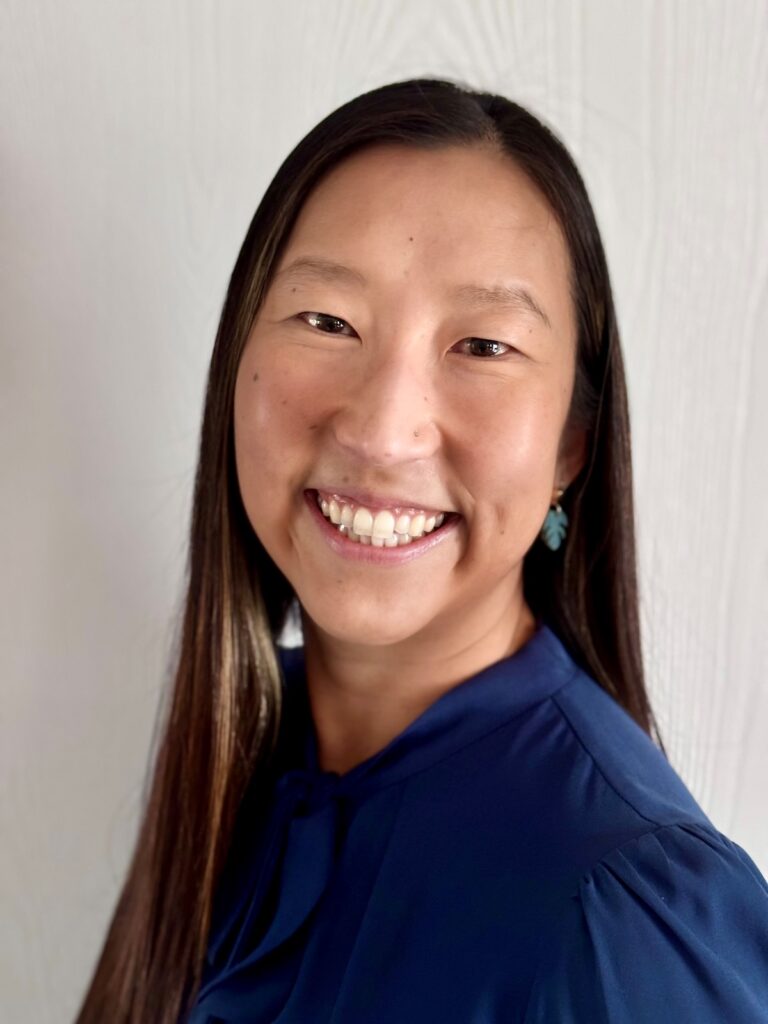
    Danielle E. Marias Ulrich is a transracial Korean American adoptee and plant biologist who enjoys spending time outside on foot, mountain bike, skis, or boat with her husband and toddler. 

    February 20, 2026 0 comments
    0 FacebookTwitterThreadsBluesky
  • Essays, Fiction, Poetry

    Baby Birds and Middle Schoolers

    by bkjax October 17, 2022
    October 17, 2022

    I saw a baby bird on my walk recently: long legs, tiny body, fluffy feathers, and barely moving. It had fallen from its nest on the sidewalk, frantically chirping for its mother. I watched it for some time. As I bent down to pick it up and put it to safety, it hopped closer to the tree’s edge, hiding in the monkey grass. The mother bird finally chirped back, calling out to her baby. I left it alone since she knew where it was, safe in the monkey grass, camouflaged from predators. My oldest child, Noah, just started sixth grade, which is middle school where we live. At the prospect of this occasion, I have had myriad of emotions since the beginning of this year. I could not name what it was, but now I know: it is fear. I am scared for Noah, much like the mama bird who was chirping for her baby, hoping it was close by and away from danger. Noah’s strong, extroverted personality will not allow him to stay hidden. Middle school scarred me, as it does with most. The taunts and ridicule for being an adopted Korean made my middle school experience hell with no fire. I stuck out in my mostly White middle school in Alabama with no chance to blend in, although that is what I desperately wanted. Noah and I approach life in the same way. However, whereas I was completely unprepared for middle school,  Noah was ready for sixth grade and has been for the past couple of years. Even through the COVID-19 pandemic school years, he showed signs that he was prepared academically and mentally for whatever challenges middle school would bring. For instance, Noah reads on a Lexile Level for college and career readiness and is also learning Spanish and Korean. In 1996, I was not ready for middle school, and I am the one who is not ready now. With many of my parental moments, there is a mix of joy and sorrow. Joy because Noah has made it to 11 in one piece, and sorrow because my circle of influence is much smaller than it used to be. I am losing him bit by bit with each passing day as he forms his own sense of self and the person he is growing to be. Parenting in general is a challenging adventure. Parenting as an adoptee brings another layer of complexity that I did not foresee as a newlywed dreaming of the prospect of motherhood. I did not realize that many of the struggles I faced as a child, such as identity and belonging, would be issues my own children would face too but in different ways. I am not one of those mothers who cries with each achievement: cutting teeth, crawling, toddling, walking, talking, potty training, starting preschool or elementary school. I was happy to put each of these occasions behind me because I knew once achieved, something new would take its place. But Noah starting middle school has made me cry multiple times, which has surprised me. Sadly, I do not have a mother, birth or adoptive, to call and ask, Is this reaction normal? To feel this scared? To feel this ill equipped? Melancholy mixed with a side of bittersweet makes me wonder if my birth mother ever longed to see what I have accomplished. Or does she view me as a forever baby trapped in 1985? Was there a “before” time, before I was a problem or a burden, and an “after” time when I was no longer there that chronicles her life and keeps her trapped too?

    Read more
    1 FacebookTwitterThreadsBluesky
  • BooksShort Takes

    A Life In Between

    by bkjax May 21, 2022
    May 21, 2022

    Born a member of the Confederated Salish Kootenai Tribes on the Flathead Indian Reservation in Montana, Vicki Charmain Rowan was adopted at two by a white couple who renamed her Susan. Already, at two, it was as if she were a child divided. Harness has spent most of her life straddling two worlds, never having a secure footing in either, learning early that “It hurts to be an Indian” in the world in which she lives. Her extraordinary memoir, Bitterroot: A Salish Memoir of Transracial Adoption, is evidence that one can pluck a living thing from the soil in which it grew and plant it elsewhere, and though it may survive, surviving isn’t the same as thriving. Her account is a reckoning of a bitter isolation and a harsh record of a tenacious search for a sense of belonging. It’s a story streaked with a particular kind of loneliness, the kind that takes hold not in solitude but among people in whom the author can’t see herself reflected. Raised by a mentally ill mother and an alcoholic father, Harness sees herself as different from those around her, and she’s acutely aware that she’s perceived by them to be different, not only by the townspeople, but even by her father, whose lexicon is laced with ethnic slurs and who speaks derisively about Indians, describing them as gold diggers, deadbeats, “goddam-crazy-drunken-war-whoops.” She’s aware she’s not the cute little blond-haired blue-eyed girl her father says he always wanted. And at the same time that she feels hatred toward him, she’s aware of a self-loathing coiling inside herself. She encounters few people who looked like her growing up, and she’s reminded at every turn that she doesn’t fit in. She lives in a kind of a gap between cultures where a question took root early: what did it mean to be Indian if she wasn’t raised in an Indian family? “The Indians don’t want me; the whites don’t accept me. They push me into each other’s court, always away from them. I am isolated; I am in-between,” she writes.

    Read more
    0 FacebookTwitterThreadsBluesky
  • Short Takes: People, News & Research

    Matthew Charles: Poet and Transracial Adoptee

    by bkjax April 6, 2022
    April 6, 2022

    matthew charles is a poet, podcast host, and educator. We talk to him about the experience of being a transracial adoptee (TRA), his emergence as a poet and activist, and the importance of self-expression. In your bio, you use the phrase “racially marooned.” Can you talk about what that choice of words means to you and how it describes the experience of being a transracial adoptee? The popular term I’ve heard other transracial adoptees use is “racially isolated” but I coined “racially marooned” because I feel it more viscerally evokes a sense of void in regard to lack of racial mirrors. I have a poem I wrote called “Closed Transracial Adoption is | God’s Gift” where I write, “i’m the first landmass that drifted from Pangea / you don’t understand how alone i feel.” You’ve written that as a child you experienced life as if a veil covered your eyes. What did you mean by that and what happened to cause the veil to drop? As a transracial adoptee whose body was raised racially marooned, I was acculturated into whiteness, made to believe that there were my kin, and my allegiances. Yet I was also rejected daily by whiteness through micro and macro aggressions. Realizing that even though my body was literally purchased by whiteness I had no purchase in whiteness was an apocalypse, of sorts. It freed me to practice Sankofa—a Ghanaian symbol that means, “to retrieve.” I had to retrieve the Black essence of who I am in order to reorient myself in the world—not as a(n adopted) child of whiteness but as a doubly displaced African. Hip-Hop was formative for you as an adolescent and you were a performer. What happened that caused you to shift to poetry? I’d always practiced writing Haikus to sharpen my ability to say a lot with not many words, so in some senses I was already interdisciplinary. However, at 17 when I was recording music in Saint Louis I lost my voice. I’d end up not able to speak for three years. This vocal disability still affects me to this day. It was in that purgatory that I more consciously altered my craft to poetry because I was afraid I’d never be able to perform or tour again. When you began to express yourself—first in Hip-Hop and later in poetry—did you immediately take transracial adoption as your subject, or did that happen later? No, I didn’t use rap to talk about myself. I used rap to project a false image. One of the reasons I shifted to poetry was because how I engaged with the genre of Rap felt constricting. I’d felt like I couldn’t be vulnerable. Themes of adoption began appearing in my work as early as 2018 but I didn’t set out to create a body of work with adoption as the central theme until my newest and as of yet unpublished book of poetry, meet me in the clearing. Did you ever study formally or was Hip-Hop all the education you needed? I taught myself all of the forms of Creativity that I practice—poetry, rap, essay, memoir. Is poetry as much a means of survival as an artistic expression? I wouldn’t be alive today if I didn’t have my art practice. As i write in “To Pimp An Adopted Butterfly,” art is one of my most enduring and longstanding relationships, and it has helped me know myself, and in the process of knowing myself it has saved my life countless times. Similarly, are poetry and activism synonymous for you? Do you see your artistry as a form of activism? While I don’t see them as synonymous, my artistry often is laced with activist intent. But the first goal in my creative process is to create something meaningful to me. In art and in activism, who are your influences? Who are the most important voices among transracial adoptees—poets or otherwise? Who do you listen to? Who do you admire? When it comes to art I like Lucille Clifton, Hafiz, Jay Electronica, and Joy Oladukun. But I’m not sure who the most important voices are for TRAs. Voices I’ve been most impacted by are Dr. Daniel ElAwar, Rebecca Carroll, and Hannah Jackson Matthews.

    Read more
    0 FacebookTwitterThreadsBluesky
  • Short TakesShort Takes: Books

    Surviving the White Gaze

    by bkjax April 1, 2022
    April 1, 2022

    Rebecca Carroll, author, cultural critical, and podcast host, was adopted at birth by a white couple and raised in a predominantly white community in rural New Hampshire, where, as the only black resident, she’d see no one who looked like her until she was six years old. Her father was a high-school art teacher and her biological mother, Tess, had been one of his students. When Tess became pregnant by her older boyfriend who lived in Boston, the teacher and his wife adopted her daughter. Growing up in this white family in this white community, she had no touchstone for what it meant to be black, no mirror of her own blackness to reflect and illuminate who she was. And worse, no one cared. Her only point of reference as a child was Easy Reader from The Electric Company, whom she fantasized was her father. When she first encountered a black person in real life—her ballet teacher—she wondered, “Did she know Easy Reader from The Electric Company? Did she go home at night to live inside the TV with him and the words and letters he carried around with him in the pockets of his jacket?” As she grew older, Carroll was aware of being seen by this teacher in a way her parents did not, yet she was also aware of the differences. “I felt small pangs of fragile awareness regarding who I might be, what my skin color might mean. There were days when I wanted to be, or believed I was, black just like Mrs. Rowland, but it also seemed as though I would have to give something up in order for that to remain true.” She was increasingly aware that unlike her teacher, she moved through the world with the “benefits afforded by white stewardship.” As a transracial adoptee, Carroll had to hurdle barrier after barrier merely to become authentically who she was always meant to be. And considering that the most formidable obstacle to her ability to truly recognize and finally claim her identity as a black woman was her family—both her adoptive parents and her white birthmother—it was an extraordinarily lonely struggle carried out by a force of one. How, isolated in an overwhelmingly white world, could she know what it meant to be black? While Carroll’s adoptive parents were largely oblivious to her need to understand, absorb, and assert her racial identity, her birthmother, Tess, aggressively denied her daughter’s racial and cultural heritage. When they began a relationship, 11-year-old Carroll was curious about and soon enamored of her mother, but learned there was a cost to the relationship. She carried that burden for a long time, making excuses and ignoring her intuition as her birthmother did everything possible to torpedo her growing attempt to construct an understanding of herself as a black woman—gaslighting her, subjecting her to blatantly racist comments, and effectively dispossessing her of the right to her own blackness. She straddled two worlds, ill-fitting in one and made to feel like an imposter in the other.

    Read more
    0 FacebookTwitterThreadsBluesky
  • AdoptionEssays, Fiction, Poetry

    To Pimp an Adopted Butterfly

    by bkjax March 16, 2022
    March 16, 2022

    As a transracial adoptee raised by a white family in a small racist town in Oregon, I’ve always known that being Black meant being different. My Black body was both a cocoon and a womb, working overtime to birth and metamorphosize my self. I used to long for my father. The one whose seed impregnated the woman I was told I looked like—the woman whose picture I’d never seen. Looking like a ghost can be a kind of curse. As a child, I fantasized that my Black body was a descendant of African royalty. That one day, a man with skin like the soil would knock on the door of my adopters’ home and tell them he’d come for me. He’d tell them flowers grow best in the soil and most eagerly when they are watered. He’d tell my adopters that he was my soil and he wanted to be my water, too. Being a Black boy without a Black father is a common experience, but it hits different when the Black child is a transracial adoptee and lives in a town with almost no other Black people. Adoption scholars call this phenomenon “a lack of racial mirrors.” How was I to imagine who I was? Who I could be? Who I might desire to be—without a robust intimacy with Black people? My three most enduring and long-standing relationships with Black people are myself, my twin (with whom I was adopted), and Hip-Hop. I discovered Hip-Hop at 12. Before that, I’d heard friends rave about Eminem, but I was so disconnected that when Eminem was at the height of his career between ’05 and ‘10 and I heard people talking about him, I thought they meant the M&M’s from the candy commercials were putting out albums. I couldn’t fathom why anybody would be interested in music made by animated candy. I mean, really! Eventually I’d discover that Eminem was, in fact, a real human. I never connected with his music but it inspired me to probe Hip-Hop. As a West Coast kid, that meant I discovered folks like Snoop Dogg, NWA, and Tupac. Coming into contact with their music was the first time I was experiencing Blackness or Black cultural productions. Even though I couldn’t relate to their stories of gangbanging, drug dealing, partying, and hood life, the kinds of pressure the music placed on me was immediate and life altering. These gangsta rappers became my stand-ins for the Black father I longed for.

    Read more
    4 FacebookTwitterThreadsBluesky
  • AdoptionEssays, Fiction, Poetry

    Holt Motherland Tour 1987

    by bkjax October 29, 2021
    October 29, 2021

    The return flight was most memorable. A six-month-old boy slept in my lap for 18 hours, never crying once. He was not my baby and legally no longer belonged to the woman who gave birth to him. On many papers signed by governments and agencies on opposite sides of the world, he belonged to a family in the United States. I was 19, and my thoughts and memories reeled back and forth through time. I reflected upon the experiences and challenges I had encountered as an Asian adoptee in America, and I wondered about the known and unknown possibilities his future would hold. As I thought about his journey to the other side of the world, I silently cried. Did anyone notice? No one said a word. My tears fell on and off through the course of the long night. We were flying together in limbo, he and I leaving one home on the way to another, though I felt neither place was truly ours to claim. Was this only my story? Would it be his too? In the summer of 1987, after I completed my first year of college, my adoptive parents generously sent me on the Holt Motherland tour. Holt international was an Evangelical Christian adoption agency founded by Harry Holt and his wife Bertha in 1953. Harry Holt is credited with creating the logistic and legal pathway for the intercountry adoption of Korean children to families in the United States. The Motherland tour was an effort by the Holt organization to create an opportunity for adult Korean adoptees to learn about their Korean heritage and visit their “homeland.” I did not ask to go on the tour, but when it was offered, I readily accepted. Growing up in the 1970s and 80s, I did not have much access to Korean culture. My parents were not the kind who celebrated or shared the beauty and culture of the country I and my two adopted siblings had come from. I recall meeting Bertha Holt on two occasions for large gatherings when I was very young. The evangelical church community my adoptive parents belonged to recruited new members throughout the Long Island, New York suburbs. Their church members adopted roughly 100 Korean children. I have a picture in my mind of us all posed in a hall with Bertha wearing a hanbok. Somewhere on Long Island, in a box of my now-deceased parents’ photos, it may be hidden. Unlike most Korean adoptees dispersed into the white American population, I was raised among many other Korean adoptees and their families. When my parents’ church devolved into a conservative, Sephardic, Kabbalistic, messianic cult, I was in first grade. I was told we do not pray to Jesus anymore. I and two of my brothers were put in its private religious school until sixth grade, where half of the children in my class were Korean adoptees. Yet we never talked about being adopted. My best friend was a Korean adoptee, as was her sister. I and my adopted siblings talked quietly, privately, about many things, but never about our lives before adoption or our families on the other side of the world. We, according to my adoptive mother, were God’s will in her life, her mission. Thus, I was named Amy Doreen—beloved gift of “God.” Amy is a common name among Korean adoptees. When I was a child, I imagined it made me special. As a teenager, I held on to the name of “love,” hoping if I embodied it, it would come to me. As I grew up, I came to find the name silly and ill-fitting. Amys were pretty, sweet, and bubbly, cherished—they were something that was not me. Inside, and occasionally outside, I was mean, cutting with words, hungry, lonely, awkward, uncomfortable in my skin, angry, and always afraid. I cursed myself, as I was cursed at, and felt cursed. Being “God’s gift” was always a chain.

    Read more
    0 FacebookTwitterThreadsBluesky

Severance is a community for NPEs (people who’ve had a “not parent expected” experience), adoptees, and others who've been severed from biological family. It was founded and is edited by B.K. Jackson. Click here to learn more about the magazine, here to learn about the editor, and here for information about how to share your stories. Severance has no subscription fees, does not accept advertising, and includes no AI-generated copy for affiliate links.

https://www.youtube.com/watch?v=fZM6m_GJhr8

What’s New on Severance

  • We Meet Again
  • She Threw Me Away
  • Secrets
  • Knowing You, Knowing Me
  • KPop Demon Healing
  • Explanation is Not Obligation

After a DNA Surprise: 10 Things No One Wants to Hear

Tags

abandonment adoptee adoptees adoptee stories adoption advocacy biological family birthmother books DNA DNA surprise DNA surprises DNA test DNA tests donor conceived donor conception essay Essays family secrets genetic genealogy genetic identity genetics grief heredity Late Discovery Adoptee late discovery adoptees Late Discovery Adoption meditation memoir MPE MPEs NPE NPEs podcasts psychology Q&A rejection research reunion search and reunion secrets and lies self care therapy transracial adoption trauma

Recommended Reading

The Lost Family: How DNA is Upending Who We Are, by Libby Copeland. Check our News & Reviews section for a review of this excellent book about the impact on the culture of direct-to-consumer DNA testing.

What Happens When Parents Wait to Tell a Child He’s Adopted

“A new study suggests that learning about one’s adoption after a certain age could lead to lower life satisfaction in the future.”

Janine Vance Searches for the Truth About Korean Adoptees

“Imagine for a minute that you don’t know who your mother is. Now imagine that you are that mother, and you don’t know what became of your daughter.”

Who’s Your Daddy? The Twisty History of Paternity Testing

“Salon talks to author Nara B. Milanich about why in the politics of paternity and science, context is everything.”

What Separation from Parents Does to Children: ‘The Effect is Catastrophic”

“This is what happens inside children when they are forcibly separated from their parents.”

Truth: A Love Story

“A scientist discovers his own family’s secret.”

Dear Therapist: The Child My Daughter Put Up for Adoption is Now Rejecting Her

“She thought that her daughter would want to meet her one day. Twenty-five years later, that’s not true.”

I’m Adopted and Pro-Choice. Stop Using My Story for the Anti-Abortion Agenda. Stephanie Drenka’s essay for the Huffington Post looks at the way adoptees have made unwilling participants in conversations about abortion.

Archives

  • March 2026
  • February 2026
  • January 2026
  • November 2025
  • October 2025
  • August 2025
  • July 2025
  • June 2025
  • May 2025
  • April 2025
  • March 2025
  • February 2025
  • January 2025
  • December 2024
  • November 2024
  • October 2024
  • September 2024
  • August 2024
  • July 2024
  • June 2024
  • May 2024
  • April 2024
  • March 2024
  • February 2024
  • January 2024
  • November 2023
  • October 2023
  • September 2023
  • August 2023
  • July 2023
  • May 2023
  • April 2023
  • March 2023
  • February 2023
  • January 2023
  • December 2022
  • November 2022
  • October 2022
  • September 2022
  • July 2022
  • June 2022
  • May 2022
  • April 2022
  • March 2022
  • February 2022
  • December 2021
  • November 2021
  • October 2021
  • September 2021
  • August 2021
  • June 2021
  • May 2021
  • April 2021
  • March 2021
  • February 2021
  • January 2021
  • December 2020
  • November 2020
  • October 2020
  • September 2020
  • August 2020
  • July 2020
  • June 2020
  • May 2020
  • April 2020
  • March 2020
  • February 2020
  • January 2020
  • December 2019
  • November 2019
  • October 2019
  • September 2019
  • August 2019
  • July 2019
  • June 2019
  • May 2019

Privacy Policy
Terms & Conditions

@2019 - Severance Magazine

Severance Magazine
  • About
    • About Severance
    • From the Editor
    • Submission Guidelines: How to Contribute
    • Contact Us
  • Articles
    • abandonment
    • Adoption
    • Advocacy
    • DNA & Genetic Genealogy
    • DNA Surprises
    • Donor Conception
    • Family Secrets
    • Genetics & Heredity
    • Interviews & Profiles
    • Late Discovery Adoptees
    • Psychology & Therapy
    • NPEs/MPEs
    • Search & Reunion
  • Essays & Fiction
    • abandonment
    • Adoption
    • DNA surprises
    • Donor Conception
    • NPEs/MPEs
    • Late Discovery Adoptees
    • Search & Reunion
    • Secrets & Lies
  • Short Takes
    • Short Takes: Books
    • Short Takes: Events
    • Short Takes: Film & Video
    • Short Takes: People, News & Research
    • Short Takes: Podcasts & Radio
  • Self Care & Coping
    • Coping Strategies
    • Self-Care
  • Speak Out
    • Micro-Memoirs
    • Your Video Stories
  • Resources
    • Start Here
    • Abandonment
    • Adoption
    • DNA & Genetic Genealogy
    • Donor Conception
    • Genetics & Heredity
    • Late-Discovery Adoptees
    • NPEs (Not parent expected) & MPEs (Misattributed parentage experience)
    • Psychology & Therapy & Coaching
    • Search & Reunion
    • Secrets & Lies
    • Self-Care
  • NEED HELP TELLING YOUR STORY?
Severance Magazine
  • About
    • About Severance
    • From the Editor
    • Submission Guidelines: How to Contribute
    • Contact Us
  • Articles
    • abandonment
    • Adoption
    • Advocacy
    • DNA & Genetic Genealogy
    • DNA Surprises
    • Donor Conception
    • Family Secrets
    • Genetics & Heredity
    • Interviews & Profiles
    • Late Discovery Adoptees
    • Psychology & Therapy
    • NPEs/MPEs
    • Search & Reunion
  • Essays & Fiction
    • abandonment
    • Adoption
    • DNA surprises
    • Donor Conception
    • NPEs/MPEs
    • Late Discovery Adoptees
    • Search & Reunion
    • Secrets & Lies
  • Short Takes
    • Short Takes: Books
    • Short Takes: Events
    • Short Takes: Film & Video
    • Short Takes: People, News & Research
    • Short Takes: Podcasts & Radio
  • Self Care & Coping
    • Coping Strategies
    • Self-Care
  • Speak Out
    • Micro-Memoirs
    • Your Video Stories
  • Resources
    • Start Here
    • Abandonment
    • Adoption
    • DNA & Genetic Genealogy
    • Donor Conception
    • Genetics & Heredity
    • Late-Discovery Adoptees
    • NPEs (Not parent expected) & MPEs (Misattributed parentage experience)
    • Psychology & Therapy & Coaching
    • Search & Reunion
    • Secrets & Lies
    • Self-Care
  • NEED HELP TELLING YOUR STORY?
@2019 - Severance Magazine