
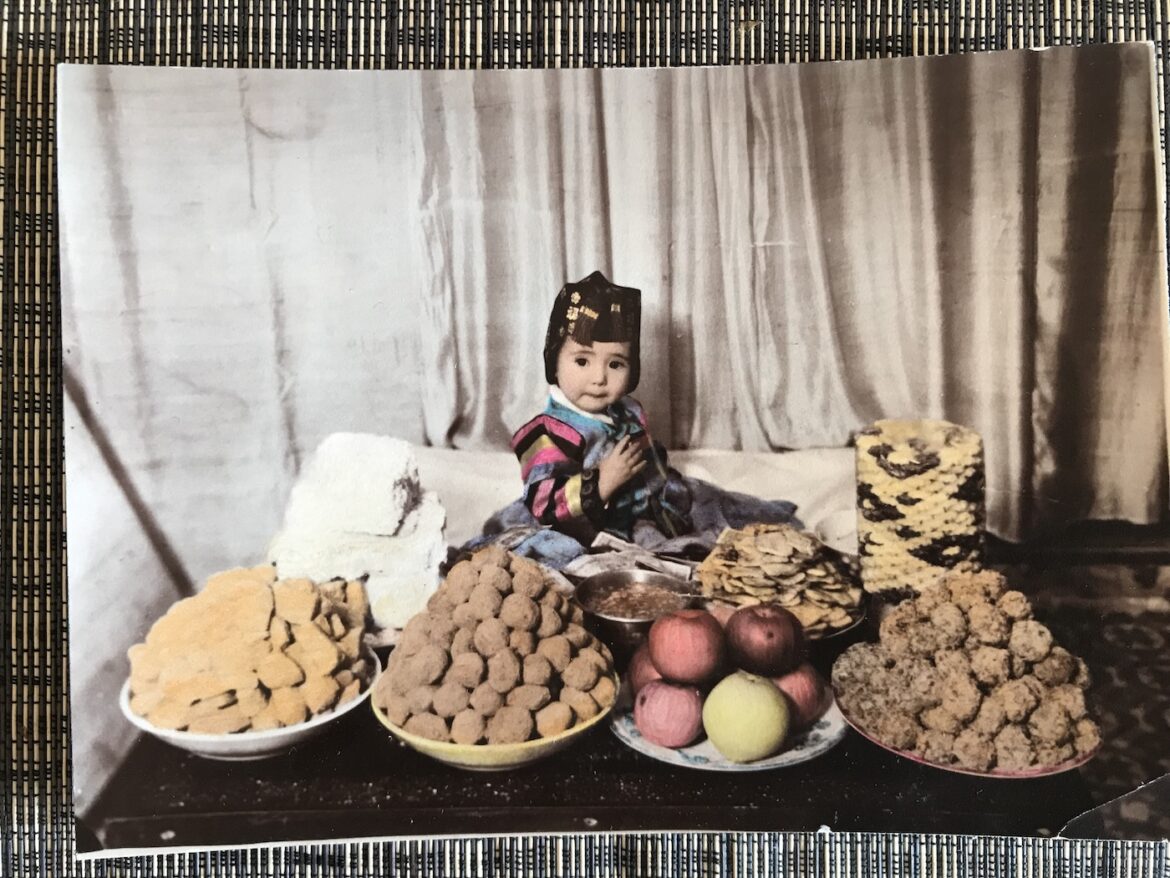
A G.I. baby, I was born in Korea on Christmas1952, toward the end of the war. The polio epidemic circling the globe hit me in 1955, leaving me unable to walk. Stanley and Helen Evans adopted me and brought me to the States in 1956.
I left behind a country where I had no civil status since a child derives that from their father, and mine decamped back to the States soon after my birth. Koreans saw mixed-race children as a mongrel race, an affront to the racial purity they so prized. My disability added to the list of my deficits—I would be a burden on the country’s social and medical resources. Korea was only too glad to see my departing back. The land of my birth had repudiated me; I couldn’t look to my adoptive parents to discover my inherited traits. But my birth parents, I was convinced, could hold up a mirror in which I would see myself reflected clearly.
I had last seen my birth mother, Soon Ja, when I boarded an America-bound plane at Gimpo Airport in 1956. She flew back into my life at another airport, San Francisco International, when I was 20 years old. My adoptive mother had located her and sponsored her to come to the US with her 5-year-old son and 15-year-old daughter, my half siblings. I see the three of them emerge from customs, dragging multiple huge immigration suitcases and a red futon. My eyes rake her face like a searchlight, panning for shared features—same prominent brow, same squarish face, same rounded features. She comes through the barrier, bows to my adoptive mother and greets my adoptive sister and me with smiles. American-style hugs are not yet part of her repertoire. She doesn’t single me, her daughter, out for special attention; in fact, in the following days she shows more warmth to my adoptive sister than to me, addressing comments and questions in her direction rather than mine. She is so cool that I wonder if she has the facts straight—I am her daughter. I realize that this is totally illogical—she had sent a little girl with polio to America, and my braces and crutches easily identify me.
I returned home from my college campus as often as I could those first few weeks to get to know my new-found family. Soon Ja remained distant to me, and when I felt the urge to ask about myself—What was I like when I was little? Was I lively? Was I willful?—I bit my tongue, not wanting to presume too intimate a relationship or appear too self-centered. I realize now what a fine line she was walking—too much warmth might appear as if she were reclaiming me, might threaten my adoptive mother.
One day, she came into my bedroom carrying clean laundry while I was still in bed, ready to buckle on my braces and get up. She caught sight of my legs, put the pile of laundry on the dresser and dropped down to the side of my bed. She put her hands on my exposed calves, kneaded them and cried, saying “They say they fix you’ legs!” After a few minutes she stood, wiped the tears away with the back of her hand, recomposed her face and started to put the laundry up. We returned to our wary politeness, but she had acknowledged me, finally.
Those rare times when Soon Ja and I were alone, we would gather in the kitchen around the yellow linoleum table. She would take a cigarette out of the pack, turn on the gas stove, light the cigarette on the flame, and settle back on a yellow chair, her eyes squinting against the smoke and the past she conjured.
These are the moments when she recounted her life—her large family, most left in North Korea; an older sister who had died of a burst appendix during the war; a gifted younger brother who had been kidnapped and pressed into military service by the North Koreans when they overran Seoul; the Korean man who had moved in with her after I left, of whom the only traces were the two children he fathered and her nose, broken in a beating. “Nothing about him straight!” she would say of him with narrowed eyes, shaking her head.
One day, seated at that yellow kitchen table, I asked tentatively, “What was my father like?” I knew that to ask about the man who had left her with a new-born might place her in a quandary: share her sense of betrayal or instead present a father I could derive a sense of pride from?
She looked at my face and made a downward movement from the bridge of her nose past her chin. “You jus’ like.”
She had only a few facts and stories to share—a family settled in Troy, New York, proud of its Irish past. The refrain “So smar’” recurred—Harry had won a competition that carried a monetary prize for being the best enlisted man in his unit, she recounted. A recognition of the “best” enlisted man? That struck me as implausible. I became aware that Soon Ja was curating a portrait of Harry for me, a version of him that responded to my hopes and wishes. I was a student at Stanford; Soon Ja wanted to assure me that I came by my academic success honestly. Her efforts revealed a delicacy that departs from what I came to know of her character—blunt and too overwhelmed by working multiple jobs to strategize about how to spare another’s feelings.
These hazy facts, a first name and a last name garbled in the transliteration from English into Korean, were all I knew of my birth father.
***
I had joined 23andMe in 2015 and would open the “relatives” tab every few months only to find dozens of 4th and 5th cousins, all too distant to provide any leads to my paternal parentage. One day in late 2018, I opened the site in my desultory fashion to find a female first cousin pop up among my relatives, a close enough relation to perhaps serve as a lead. I sent a cagey message that day—do you have any K—s or C—s in your family?—offering the jumbled last names passed on to me. She replied that she did not. In my follow-up message, I slapped my cards down on the table: I had been born in Korea in 1952, was looking for my birth father, whose first name was Harry. Three days later, I opened my work email to find the following message:
I apologize if you are the wrong Christine Evans, but are you on 23 and me with a Korean mother and an unknown American father? If you are this Christine, I’m a cousin on your father’s side and could help you in your queries.
My 23andMe cousin-once-removed had shared my message with her computer literate son, who was able, from the few clues included on the site, to chase me down at my workplace. On the phone later that day, and during a few more exchanges, he started to fill in the blanks. My birth father was, miraculously, still alive at 88-years-old. I came into possession of a well-filled-in family tree and some photos. I saw my father for the first time—in a Polaroid taken at about age 30, he is smiling widely and open-mouthed at the camera with a pork pie hat perched jauntily on his head. Yes—those were my nose, mouth and chin.
My 23andMe cousin-once-removed was willing to serve as a go-between. She called Harry: Would he be open to speaking to me? No, he would not, he replied. He didn’t want to open up the Korea thing. Her son passed this refusal to me on the phone: a punch to the gut, it took my breath away.
I stewed, mourned, processed with friends for several weeks. At the end, I decided, fuck that, this is my life, too. Harry can just man up; if he wants to reject me, he’s going to have to do it directly, to my face, rather than through an intermediary. I wrote him a letter: “I feel I had such good luck in both finding you AND discovering you are still alive. Given that, I felt it would be a shame not to get in touch with you to let you know a bit about my life.”
Two days after posting it, at work, I saw that one of Harry’s four children was calling me. I answered with a tentative “Hello,” half expecting him to tell me to get off the family lawn and let his poor 88-year-old father live out his last years in peace. Instead, we had a warm conversation, much like those I had over the next week with each of my three other half siblings and Harry’s wife. The siblings had all known I existed: his wife, during the couple’s knock-down drag-outs, would throw his “Korean baby” in his face, loud enough for the children to hear. I got the sense that they were all surprised I had survived infancy.
His wife related that he cried for a full six months after his return from Korea; then, the tears stopped, and at Christmas, while I was celebrating my first birthday, they married. What kind of parent had he been, I asked my half-siblings: “a good provider” they each, separately, replied. Harry was an alcoholic into mid-life, and his boys remember white-knuckle car rides with him on dark roads. If he was a problematic parent to his own, he mentored many other children as the town’s dedicated ice hockey coach.
I drove up to meet the family that summer. An apple-green KIA Soul pulled into the parking lot of my half-brother’s restaurant, where we were going to have our first family meal. Harry stepped out, wearing plaid shorts and a golf shirt. I examined his face—a ruddy complexion, thin white hair and cornflower blue eyes. Age had washed away any defining features in which I could read his character or recognize myself—he was an elderly white man, indistinguishable from many others. I smiled, stuck out my hand, and said heartily, “Well, it’s been a long time.” No sobs, no falling into each others’ arms. I was determined that this time our relationship would unroll on my terms.
I see my soft mouth in Harry’s four children; I hear my loud, skirling laughter in theirs. I share with my two Korean half-siblings my strong forearm and rich humor. I am grateful that both birth parents bequeathed to me their physical toughness.
***
Soon Ja’s daughter, my Korean half-sister, has a child with cerebral palsy severe enough that she cannot speak, move or feed herself. Soon Ja felt a passionate, tortured connection to this girl. She left all of her modest estate to ensure her future care, causing a rupture between my half siblings, which has not healed in the 15-odd years since her death.
In my version of Soon Ja, her dedication to her disabled grand-daughter, her passionate connection to her, allowed her to compensate for the devotion and care she was unable to give to me.
In my version of Harry, I imagine that his loss of Soon Ja and me, his first family, served as the pivot of his life, the reason behind his alcoholism and indifferent parenting. It cannot be accidental that he gave his youngest daughter my name.
I know that both my constructions are self-serving: they situate me at the dead center of my birth parents’ lives rather than at the far periphery.
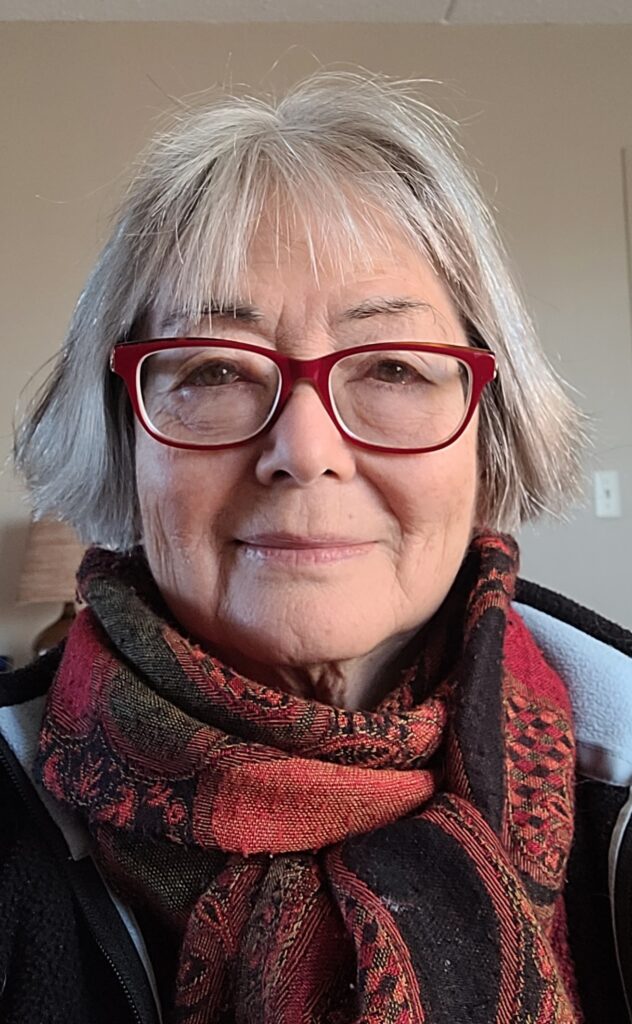
Christine Evans retired from a career as an academic and college administrator. She publishes articles and book chapters regularly, and her book on the French philosopher Simone Weil The French Historical Narrative and the Fall of France: Simone Weil and her Contemporaries Face the Debacle (Lexington) came out in 2022. Her pieces have appeared in The Washington Post (“This is what polio does: Giving up on the vaccine is madness”) and The Boston Globe (“Airline mishaps and accessible travel: A wheelchair user’s story”). She lives in Somerville, MA.