
By Margo Warren
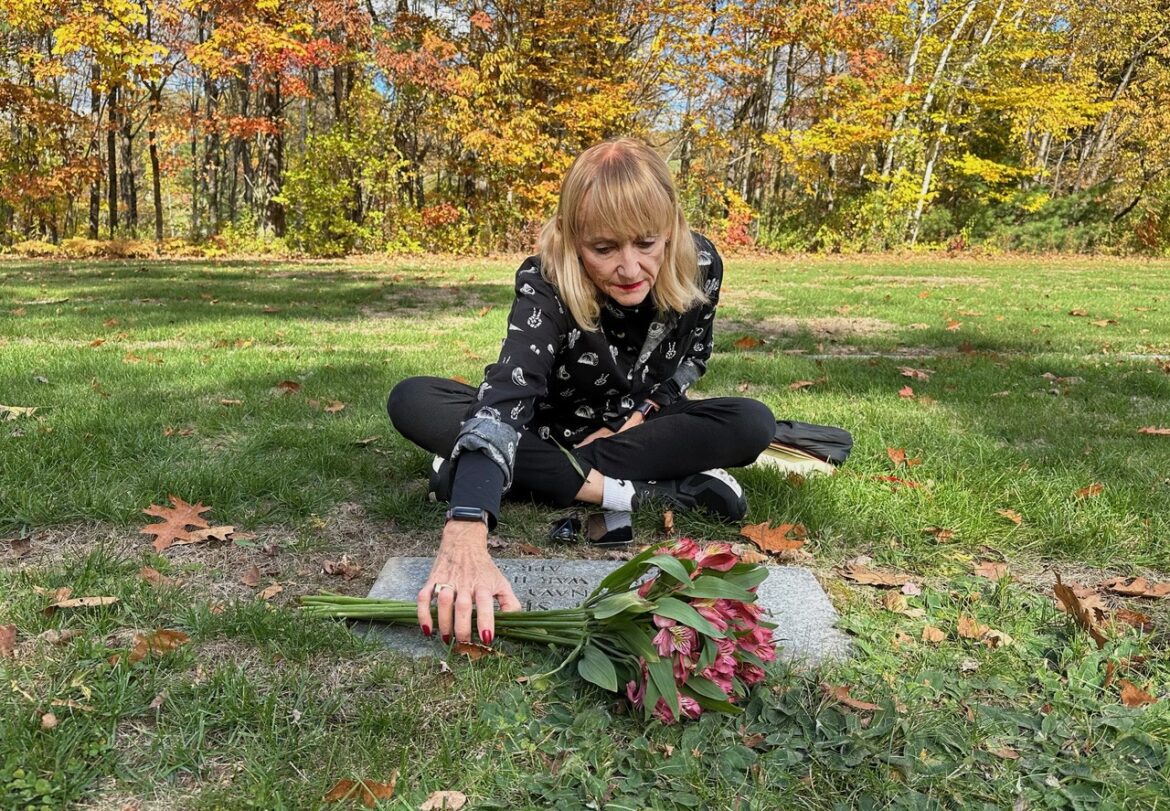
I’ve spent years searching for my birthmother, but rarely with directions of such military precision. I walked around the Maine Veterans Memorial Cemetery on a warm October day, looking for Section R, Row 7, Site 41. I found her headstone and sat down to say hello.
“Margaret F. Shelly
Y1 US Navy World War II
August 4 1923 April 8 1997”
We had never been formally introduced. I hadn’t been this close to her since she held me as newborn.
Peggy and I parted when I was weeks old. I don’t have the precise date of our separation, but it had to be before December 8, 1954, when she married Harold Rory Ennis in Portsmouth, New Hampshire. I was 29 days old whey they tied the knot.
The story goes that Peggy’s sister called my biological father Peter Warren and said, “Come and get the baby. Peggy can’t take care of her.” In what I consider a heroic move in the 1950s, my father, a 37-year-old divorced businessman from Portland, Maine, swept in and took me away.
In the Evergreen cemetery, about an hour away from Peggy’s resting place, the parents who raised me, Peter and Lynn Warren, are buried with a secret they thought they had smuggled into their graves. They never told me Lynn was not my birthmother. I learned about Peggy when I was 38 years old.
Lynn and Peter underestimated my curiosity, determination, and skills as a detective. I found the truth after going through their belongings a year after they died. The beautiful platinum diamond ring I inherited from my mother had a micro engraving, “From Peter to Lynn October 3, 1955.” I was born November 9, 1954. There were baby books with doctored dates. There were no photos of mother and baby, but there were a few baby pictures of me and my father.
I decided to ask my older cousin Paula what she knew. We were visiting her in Hartford, and she was preparing Seder dinner in a kitchen steaming with the aromas of brisket and chicken broth. I nervously told her what I’d found and said, “Paula, do you know what was going on?”
Paula, with her back to me, gripped the stove until her knuckles turned white and said, “All that happened so long ago. I think you should just put it behind you.”
The aromas turned stale; my stomach turned to stone.
Three days later she flew to our home in Washington, D.C. carrying the bombshell. Lynn was not my birthmother. I listened in shock, picking up a few phrases: “Your father had a fling.” “Young Irish girl, Peggy Foley.” “Poor family.” “Alcoholic.” “I begged them to tell you.”
It was like being on an elevator that was crashing to the ground. Now I had to question every aspect of my life. I had to reexamine every fact. I had to fill in the subtext of the stories my parents told me.
I felt every emotion on the color spectrum, red-hot rage, yellow terror, deep dark blues.
I made a hurried trip to New England to talk to my parents’ octogenarian friends and relatives who could tell me the truth. They excused my father’s behavior by saying he was on the rebound after his divorce. They assured me Lynn was madly in love with me from the moment she saw me. They told me to thank God Peggy Foley was smart.
I put the search on a long hold. I had two children under the age of 4, I had a job, I had a husband who traveled for work. I was too busy learning how to be a mother to go looking for one I hadn’t known existed. Having children showed me one thing—I could never have done what Peggy did, giving up her babies.
But once the kids were off to college and I was able to focus on the secret again after 20 years, I turned into a human search engine. I raked through Facebook until the pages bled, I used every tool on Ancestry.com, I paid for two people-finder sites, I called probate courts and hospitals, I hired a private investigator, I almost reached the end of the internet.
I used to think the old section of Portland, Maine was charming, with its cobblestones pockmarking the streets and the inescapable fishy fragrance. My views changed when I learned my birthmother had grown up there in what was then the Irish ghetto.
A cousin filled me in on Peggy’s early life. Her Irish immigrant parents, James and Margaret Foley, lived with their five children in a small apartment without heat or running water. James, with a sixth-grade education, worked as a longshoreman to feed his family. Margaret, who spoke only Gaelic, was so desperate to return to Ireland that she jumped out of a window in a suicide attempt and was institutionalized.
Peggy’s oldest sister, Mary, stepped up to take charge of the family and advised Peggy to go into the Navy as soon as she finished high school in 1941.
Peggy became a Yeoman First Class, working in Washington, DC with hundreds of other young women. She learned dictation, typing, and stenography skills that she used the rest of her life. She looked smart in her wool uniform and heavy stockings with seams. But after these disciplined years in the military, her life became messy.
Back at the gravesite, I brushed the leaves off Peggy’s headstone. It felt like brushing bangs off of someone’s fevered forehead. “Poor little Peggy, poor little thing,” I said.
After a stint at a teachers’ college, Peggy got her first job in Hartford, Connecticut. She got pregnant by a married man who wouldn’t leave his wife. She gave birth to David who gave new meaning to the term bouncing baby boy. According to his non-identifying adoption information, his first 18 months were spent bouncing around, in and out of foster care. She wanted to take care of him but could not. He was finally adopted by what he calls “a cultured and educated couple” from Vermont. David was my DNA surprise; he and I are close, we are both editors and we both love Triscuits.
David was the first of six children Peggy would give up.
Four years later I was next.
Digging deeper in my box of explosives, I was stunned by a revelation on the Maine probate court website. “Complaint. Insane Person. State of Maine.” “A reputable physician, Frank Broggi certified in opinion Margaret Rita Foley is insane; and that the safety and comfort of said Margaret Rita Foley [and that of interested others] will be promoted by committing [her] to the Augusta State Hospital.”
I felt sick recognizing my father’s handwriting on the complaint. My father had his girlfriend Peggy, my future mother, committed to a state mental asylum. She was 29 years old.
After she was released months later, my father started seeing her again. Friends said, he felt sorry for her. He must have felt more than sorry because that’s when he impregnated Peggy, a woman whose system was swimming in the antipsychotics of the 1950s and shaken up by electric shock therapy in the hospital.
Peggy left me behind with my father and took off for California with her husband, Rory, a Navy man, who, according to the marriage license, was six years younger than she. He had been stationed in Portsmouth, New Hampshire, where I was born. They moved to Los Angeles and had four more children. After their fourth child, the sixth child Peggy had given birth to in 11 years, I learned in letters from her second husband that Peggy snapped and ended up in the psychiatric unit of the Los Angeles Veteran’s Hospital. She left her weeks-old baby boy, Ross, on a pool table, sent a note to Rory telling him where to find him, moved to Maine for her mother’s funeral and didn’t return for years.
Rory was an alcoholic and ill-prepared to singly raise small children. I learned from my half-brother Ross that he as a baby had been farmed out to a neighbor who took care of him until he was four years old. Ross and his three siblings all bear the scars of their unsettled childhood.
In 1966, Peggy returned to California and married a Russian immigrant 25 years her senior, Peter Petrovich Mihailov Shelly. They lived in Santa Monica Beach, then aswirl with free spirits, hippies and beach bums. Peter “my crazy Russian” as Peggy called him, didn’t approve of the wild new social order and spent years prying her out of trouble during her manic bouts.
In one of his letters to his son, Mr. Shelly writes: “Of the friends Peg brings home, one couple I chase out by stick, one type with help of police, the third I watered with hose, the fourth after sharp talk, and the fifth one by reporting to police who arrested him. He had full pockets of drugs and a gun.”
Based on Peggy’s letters, which I got from her niece, she may have experienced a kind of redemption during the last 10 years of her life. She moved back to Maine once Mr. Shelly died. She was sane and sober. Peggy had always been an artist. Now she was painting watercolor seascapes and showing her work in local galleries. She had friends. She was watching her health, walking, dieting, managing her blood pressure and cholesterol. Peggy prayed with rosary beads, she meditated to Gregorian chants, she read fiendishly and loved going to the movies. Her sisters forgave her; her nephews and nieces adored her.
Peggy was especially close to her niece Kathleen. She showered her with love and affection and adoration and was every bit the mother she couldn’t be with her own children. Kathleen is four years younger than I am and we share an eerie closeness. I can almost experience Peggy’s love for Kathleen as transference. We looked alike as children, we both have the same nose, we had our firstborn sons days apart, neither of us has had a drink since the 1980’s.
It took me years and years to connect with Kathleen. I call her Saint Kathleen because she was the first person to share first-hand knowledge about Peggy, her mannerisms, her sense of humor, her stories. Kathleen let me copy Peggy’s letters, her photos, artwork. When we finally met, we talked for three hours.
I got lucky with the parents who raised me. I adored my father Peter Warren, six feet four inches of jazz-age cool, and he adored me. My mother Lynn was so devoted to me, so loving and kind that I never had a doubt she was my “real” mother. I think of what an amazing woman she was to agree to adopt the baby of her husband’s ex, kind of crazy, girlfriend. And then agreeing to leave Maine and move to Tucson, Arizona where they could escape the “scandal” and rebrand as a nuclear family.
But what they did to me by keeping the secret wasn’t fair. I hadn’t planned to spend the second half of my life searching for my identity, all without a word of help from the people who were there.
In a meeting with Peggy’s nephews last summer, my cousin James said, “Peggy was a hot ticket. Sure, she was a little eccentric, but what a sweetheart.”
As I sat at Peggy’s grave, I felt overwhelming gratitude. She is the sine qua non of my existence. Without Peggy no Margo. And what a life it’s been.
I wanted to tell her about my loving husband, Darr, who’s been by my side for 50 years. I wanted to tell her about her adorable grandsons, one of whom is an artist, and both of whom, thanks to Darr’s genes, are more Irish than I am.
I am almost the same age as Peggy was when she died. I’ve known about her for about half my life, time I’ve spent bringing her to life.
Our visit was more like a hello than a goodbye. Finally, we meet again.
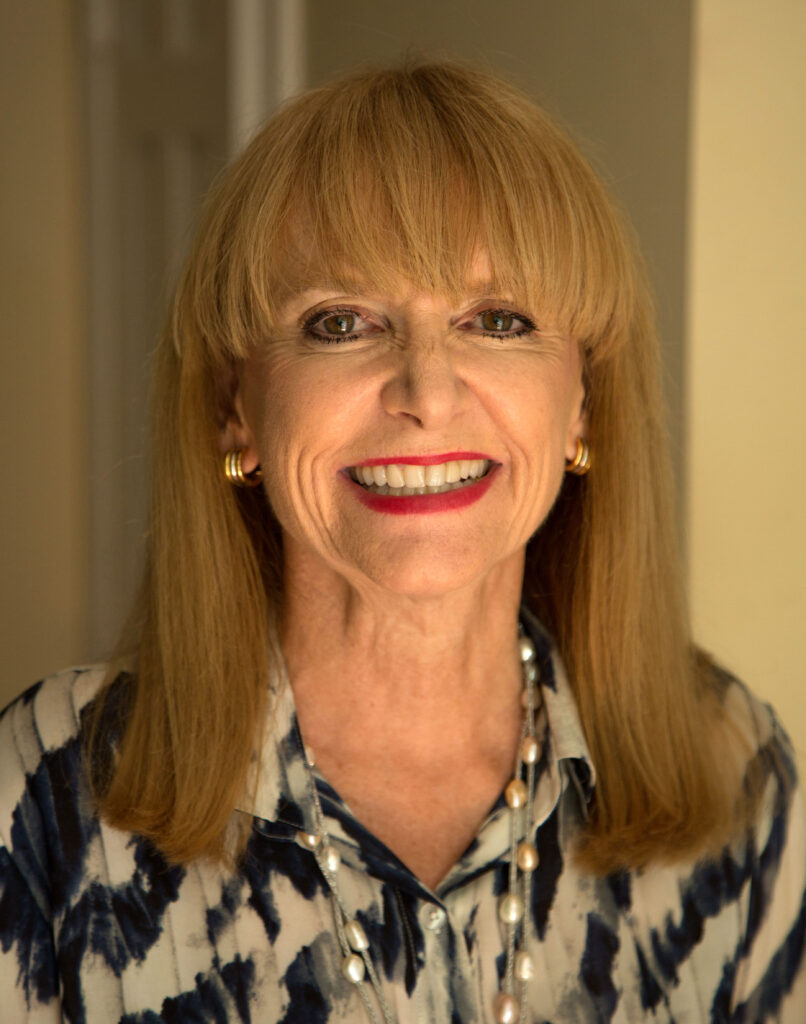
Margo Warren is a writer in Bethesda, Maryland working on completing a memoir. She was born in Portsmouth, grew up in Tucson, Arizona, and spent summers in Maine. She falls into three categories: late discovery adoptee, NPE, and DNA surprise. She retired from a communications career at the National Institutes of Health. She and her husband have two adult sons. She has a travel blog MargoOnTheGo. More of her writing can be found at Margo-Warren.blogspot.com.