• About
    • About Severance
    • From the Editor
    • Submission Guidelines: How to Contribute
    • Contact Us
  • Articles
    • abandonment
    • Adoption
    • Advocacy
    • DNA & Genetic Genealogy
    • DNA Surprises
    • Donor Conception
    • Family Secrets
    • Genetics & Heredity
    • Interviews & Profiles
    • Late Discovery Adoptees
    • Psychology & Therapy
    • NPEs/MPEs
    • Search & Reunion
  • Essays & Fiction
    • abandonment
    • Adoption
    • DNA surprises
    • Donor Conception
    • NPEs/MPEs
    • Late Discovery Adoptees
    • Search & Reunion
    • Secrets & Lies
  • Short Takes
    • Short Takes: Books
    • Short Takes: Events
    • Short Takes: Film & Video
    • Short Takes: People, News & Research
    • Short Takes: Podcasts & Radio
  • Self Care & Coping
    • Coping Strategies
    • Self-Care
  • Speak Out
    • Micro-Memoirs
    • Your Video Stories
  • Resources
    • Start Here
    • Abandonment
    • Adoption
    • DNA & Genetic Genealogy
    • Donor Conception
    • Genetics & Heredity
    • Late-Discovery Adoptees
    • NPEs (Not parent expected) & MPEs (Misattributed parentage experience)
    • Psychology & Therapy & Coaching
    • Search & Reunion
    • Secrets & Lies
    • Self-Care
  • NEED HELP TELLING YOUR STORY?
Severance Magazine
Tag:

donor conception

    ArticlesInterviews & Profiles

    Q&A with Author and Host of the Podcast Inconceivably Connected, Nick Ludwig

    by bkjax May 29, 2026

    Tell us a little about yourself apart from your role as a podcast host? 

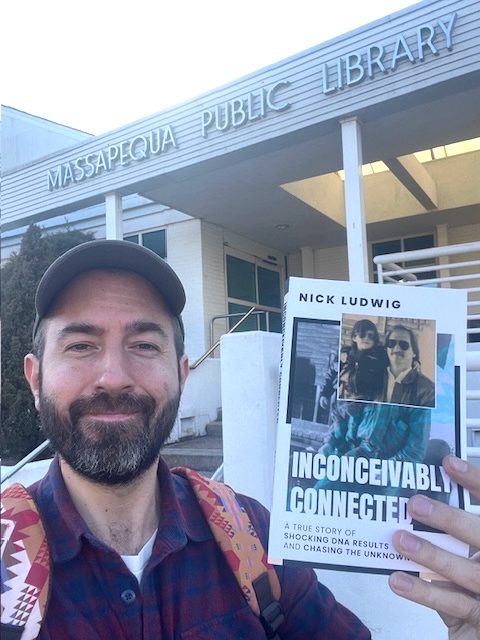
    I’m just going to rattle some things off because there’s a lot! I’m a big music nerd (Spoon is my favorite band) and have DJ’d at a number of nightclubs in Brooklyn, NY. I’m a diehard New York Knicks fan and love playing basketball. I prioritize traveling off the beaten path when I’m fortunate enough to do so and most recently spent a month exploring the Amazon Jungle and Sacred Valley of Peru. Thai and Mexican food are my favorites. I wrote a book about my DCP (donor conceived person) discovery called Inconceivably Connected: A True Story of Shocking DNA Results and Chasing the Unknown. I’ve worked in restaurant technology sales for about 12 years and once built a mobile app for users to redeem complimentary appetizers at restaurants all over New York City. My wife, Ana, and I live near my hometown in Long Island, New York. I’ll leave it at that for now!

    When did you learn you were donor conceived? What were the circumstances and how did it affect you?

    I found out the day after I turned 36 years old … and it was the shock of my life. My younger siblings bought me a 23andMe kit for my birthday, and once my parents were informed this was my gift, they sat me down to let me know there’d be a chance for surprising results if I took the test. Receiving this information changed nothing and everything at the same time. My first thoughts were focused on my parents and how they must’ve felt to have harbored this truth for my entire life. In a way, I found myself parenting my parents in the earliest moments because I could see how fearful they were that this big reveal could somehow break our bond. The reality is we’re closer than ever now. But in the moment, after I assured my love for them, things became quite blurry. I remember replaying all of my life and slowly began to realize how this news could actually make some sense. I don’t feel too out of place in my family, but there are enough differences between me, my dad, and my paternal extended family that things began to click a bit more. I now had explanations for why I’m a little bit different, and I was okay with that. I remember saying, “This is kind of cool, actually… regardless of the results, I get to dig deeper into who I am now.” At the time I said that, I don’t think I’d considered some of the heavier emotions that would come with this entire process … but the point remains true. For some reason, I seem to be attracted to the unknown. 

    Did you search for biological family after that discovery, and if so, what was that experience like?

    I very quickly became aware of connections to 13 new half-siblings (and counting, potentially). I also quickly received an email from a half-sister showing correspondence between the donor and another one of my new half-sisters, where some key family and medical information was shared by the donor. Beyond that, there’s been no communication between the donor and any of us. After several weeks of letting the dust settle from my discovery, I began meeting up with a few of the half-siblings who were open to it. The experience was as trippy as it gets – catching flashes of my own face in the face of others who were essentially strangers, seeing the similarities in mannerisms, interests, and personalities. It’s been a wild ride but one that I immediately knew I wanted to experience in full. The more I know of these people, the more I can understand myself. About half of our group continues to touch base periodically, with a few of us making time to meet up every now and then. 

    How do you describe your podcast?

    Simply put, it’s a storytelling podcast for donor-conceived people. There are no rules or guidelines for guests other than to openly express as much or as little of their lived experience as they feel comfortable with. As the host, I’m there to ask the appropriate questions and prompt further contemplation, but other than that, my mantra is “the less I speak, the better.”

    How did the podcast come about? What was the inspiration?

    I put my book out in February 2025, a few months before launching the podcast. Amidst some of the confusion experienced upon the truth coming out and trying to make sense of it all, all I really knew to do was to write in my journal about all the unusual feelings and emotions that were coming up. It was never my intention to write a book, but at a certain point, I realized I had enough content to actually piece one together. The writing and publishing process was so therapeutic for me that I began to wonder how I could extend that feeling to others. Then I realized a podcast could offer an outlet for people to openly express their own versions of the DCP experience, and thus, the podcast was born. I had no idea what I was actually doing (sometimes I still don’t!) and am especially grateful to the earlier guests who put their trust in me without having any idea what the final product would look like.

    Can you describe one or two of your favorite episodes?

    I really don’t like choosing favorites when it comes to the highly personal and sensitive stories I’m privileged to hear. I know that’s not the answer you’re looking for, but the truth is they’re all my favorites. I’m so proud of every guest who steps up to the plate to put the truth out into the open, and it’s the expressions of fearless honesty that I specifically set out to capture when I decided to launch the podcast. Every single guest has answered that call. I will say, so far there is only one episode that has brought me to tears (I can be a tough nut to crack) … but I’ll let you try to figure out which one it was!

    What’s your goal with the podcast? What do you want listeners to come away with?

    I want guests to feel empowered by sharing their stories. I want to create a safe space where donor-conceived people have a chance to take control back of the narrative; to clear the air; to continue to process their emotions in a way that feels healthy. I want anyone who listens to understand that the truth does, indeed, set us free. And perhaps most importantly, I want this community to serve as an example of how to cultivate empathy, because too many of the world’s problems seem to stem from a lack of it. 

    What’s been the reaction so far?

    You know, before I started the podcast I put posts up on Reddit and Facebook to see if anyone was willing to share their story on a totally unknown and new platform like this. I was expecting maybe 2 or 3 responses. But within 24 hours, I had over 30 people who filled out the detailed guest form I created. It was at that moment I knew creating this podcast wasn’t a choice anymore—it felt like it was now my responsibility. Long Island’s Newsday eventually caught on to what I was doing and did a feature story on the podcast as well as the experiences of several other members of our community in the New York area. The podcast audience continues to steadily grow and has listeners in over 100 different countries. In a strange way, it feels like I’ve randomly stumbled into my life’s most important work.

    What if anything has surprised you in the course of doing the podcast or that you’ve heard from a guest?

     The infinite range of the donor-conceived experience is what continues to boggle my mind. For some people, it’s identity shattering. For others, it makes everything make sense. It can tear families apart or it can make families stronger. It can spark creativity and open new doors or it can create endless confusion and keep us from moving forward. Some become fully transparent, others lean deeper into denial. The point I’m getting at is I never, ever know what to expect from each story, and I think that’s what makes this subject matter so compelling. I often find myself asking what are the key factors that contribute to how DCPs respond to late-discovery? I have an idea of what those answers are for me, but they could be completely different for someone else. It’s my hope that as the podcast’s collection of stories grows larger, we can begin to more confidently point to the triggers that connect to certain types of outcomes. 

    As you listen to your guests, what feelings or concerns are most commonly expressed?

    I’ll start with the positive because it’s the most consistent: discovering and getting to know new half-siblings is almost always the biggest reward that’s expressed. I often ask what’s been the greatest positive of the donor conceived experience and it’s almost always the new connections to half-siblings that gets mentioned. And I echo that myself. Those we are connected to by DNA give us a fuller context into who we are ourselves, and context is everything.

    On the end of what’s most challenging, it’s often more complex. DCP almost universally feel deprived of a basic human right to know where we come from. Many of us don’t have an accurate medical history. There’s fear of accidental incest. There’s plenty more to mention here, too. The concerns still far outweigh the rewards, which is all the more reason why DCP voices need to continue raising the volume on our experiences. Change is unlikely to occur unless the boat gets rocked a little bit! 

    Tell us about your book, Inconceivable Connected: A True Story of Shocking DNA Results and Chasing the Unknown?

    The book was my attempt to draw connections between the most “unknown” or “taboo” elements of my life experiences and how approaching them all with an open heart and open mind can lead us to deeper wisdom and understanding. After genuinely having my mind blown by my donor-conceived discovery, I found myself feeling like I was standing back on mostly solid ground rather quickly … and the book had me examining why that might be. Part 1 lays out my discovery itself and some of my insights around it. Part 2 takes the reader into the minds of the people most closely involved in my story by way of transcribed interviews. And Part 3, despite perhaps “going off the deep end” a bit, illuminates areas of my life that are linked by the choice to confidently approach the unknown rather than shy away from it.

    Why did you feel the need to write it? 

    I felt like I needed to reintroduce myself; to say out loud who I really am, after all. But I also needed a written record of the ultimate plot-twist to my life; it was all just too crazy to not have it fully documented. I was also looking out for the future 70-year-old version of myself who would want to remember what this period of time in my life was like. And I had this deep urge to conduct a thorough analysis of how we could possibly have gotten to this point where, at 36-years-old, I’m all of a sudden not biologically linked to my dad. I love that it’s become part of my story now, but it’s still beyond my full comprehension in some ways. But ultimately, and most importantly, I knew writing and releasing the book had the power to heal. Not just me, but my whole family. 

    Why do you think it’s important for people to share their stories?

    The older I get, the more I realize lived experience is our greatest teacher. All the certifications, the academic studies, the readings … that’s all great. But there’s no replacement for lived experience. For late-discovery donor-conceived people especially, we have a lived experience that is highly unique … and when it comes to stories, it’s the highly unique ones that people tend to give their attention to. So, if we’re able to garner peoples’ attention … and we have the unique lived experiences, then we have a chance to be teachers. Donor-conceived people are an empathetic group, and as I mentioned before, it’s my belief that a little bit of empathy can cure many of the world’s problems. So, why wouldn’t we aim to share that? Why wouldn’t we put more of that out into the world? Storytelling isn’t just important to me—it’s bigger than that. I believe it’s my duty to share my story as an evolving human being.

    How important do you think community is for donor-conceived people and what purpose does it serve?

    It’s absolutely vital. The DCP experience can be tremendously isolating and lonely at times, and I don’t think we should ever underestimate the power of connecting with others who can understand it firsthand. After attending the Untangling Our Roots Conference in Atlanta earlier this year, I was able to fully realize how valuable it can be to be amongst those who can personally relate to what we all go through. No one—NO ONE— is alone in this experience. And if for anyone looking to come together with others in our community, the first Inconceivably Connected Summer Retreat will take place in Bethel, New York from August 28-31st. More information can be found here—we’d love to see you there!

    Are you looking for participants and if so, how should they contact you?

    Always! Anyone interested in being a guest can fill out this form, and I’ll do my best to be in touch with them ASAP!

    Any closing thoughts?

    I think it’s important to note that none of what you just read about my experience had ever been on my radar prior to three years ago. In 2023, I would’ve laughed at anyone who suggested I had it in me to write a book. I would’ve rejected the notion that I could host and produce an internationally-reaching podcast. I would’ve said I’m not the person equipped to lead any sort of community gatherings. 

    So, do I think I was predestined to be in the position I’m in now? I’m not sure I’d go that far. But I do think life has a funny way of opening up certain lanes for us to venture down. And when I notice the signals that a new path is forming, you can bet I’ll be choosing to explore what potentially awaits me. The possibilities are too enticing. The potential reward is too valuable. This is how I grow, and I’m lucky enough to share it now. 

    Check out Inconceivably Connect’s website, look for the podcast, and follow on Facebook and Instagram. 

    May 29, 2026 0 comments
    0 FacebookTwitterThreadsBluesky
  • ArticlesDonor Conception

    Yesterday’s Science Fiction is Today’s Science

    by bkjax May 28, 2026
    May 28, 2026

    When I was 49 years old, my stroke-recovering

    Read more
    1 FacebookTwitterThreadsBluesky
  • Short Takes: Events

    The First Inconceivably Connected Retreat

    by bkjax May 26, 2026
    May 26, 2026

    The first Inconceivably Connected Retreat will be held at

    Read more
    0 FacebookTwitterThreadsBluesky
  • ArticlesDonor ConceptionNPEs/MPEs

    Q&A with Daniel Groll

    by bkjax April 11, 2022
    April 11, 2022

    Conceiving People: Genetic Knowledge and the Ethics of Sperm and Egg Donation, by Daniel Groll, is a fascinating exploration of attitudes about whether donor offspring are entitled to knowledge of their donors, but the issues and questions it raises are pertinent to adoptees and NPEs/MPEs as well. Comprehensive and academic in approach, it may be challenging to readers not well-versed in philosophical discourse, but it’s key reading for anyone with a stake in the debate over access to genetic knowledge. And although Groll ultimately stands against anonymity in donor conception, some NPEs and MPEs may take exception to some of the arguments that lead him there. Therefore, we asked him to address some of those arguments, and he readily agreed. Severance was the target of a critical article last year in a publication called Real Life that accused it of numerous transgressions, including promoting bionormativity. It insisted that the magazine’s content poses genetic family as measured by DNA as “the norm against which all forms of family should be judged.” It further states that if we view the genetic family as something from which one can be severed, non-genetic family “will inevitably be understood as secondary, extraneous, and even pathological.” Additionally, it charges that those of us looking for genetic information are indicating that “biogenetic kinship is the most true, essential, and valid form of family” and that such a belief places queer families in “legally precarious positions but undermines the larger value of ‘love makes a family’ for all families.” The argument rejects the idea that there can be a desire to know one’s genetic history that is apolitical. Clearly, I don’t believe Severance makes any such assertions, and based on having heard hundreds of stories and experiences, it’s obvious that most of us grew up with non-genetic families. I, for example, was raised by a man who was not my father. He was my family. I didn’t wish to have another father, but I did wish to know who my by biological father was. I didn’t imagine my biological family would be a better family, or a more real family. I simply wished, as I believe most people who lack this information do, to know from whom I got my genes. My question is, how does simply wanting that information valorize traditional families or diminish nontraditional families? Before I answer this, I just want to explain my connection to the issue of donor conception since people inevitably wonder about it. I am a known donor to close friends who have two children. The children know both who and what I am in relation to them. Our families are in regular contact. From the get-go, everyone agreed there would be no secrets and that we all need to be open to how their children understand their experience and let that guide us. Maybe the fact that I’m a donor will cause some of your readers to stop reading, but I hope not.

    Read more
    0 FacebookTwitterThreadsBluesky
  • ArticlesDonor Conception

    Q&A With Peter Boni

    by bkjax March 28, 2022
    March 28, 2022

    In 1995, when Peter J. Boni’s mother experienced a stroke after open heart surgery, the walls she’d built to hold back a secret for nearly half a century crumbled. In rehab, she began to tell visitors what she never told him—that his father wasn’t his father, that he’d been donor conceived. And so began a quest to learn the truth of his origins and the nature of the societal forces that led to the circumstances of his birth—the subject of his new book, Uprooted: Family Trauma, Unknown Origins and the Secretive History of Artificial Insemination. Roughly halfway through his narrative Boni says, “Never doubt my resolve.” But his dogged determination is evident from the first page. Early on, it’s clear that after serving as a US Army Special Operations Team Leader in Vietnam, he was the go-to guy in his business sphere, where he was a successful high-tech CEO/entrepreneur/venture capitalist and more—and he tore into his personal mystery with the same can-do attitude—a tenacity that fueled him through the 22 years it took to solve the puzzle of his parentage. Uprooted is comprised of four parts that add up to exceptional storytelling. It’s compelling memoir of a troubled childhood with an unwell father, a determination to succeed, and the challenges of grappling with the emotional fallout of his family’s secrets. It’s also an exhaustive and insightful account of the history of assisted reproductive technology; a cogent indictment of the flaws of the largely unregulated, multi-billion-dollar industry; and a rallying cry for advocacy with a prescription for change. Boni’s scope is ambitious and he succeeds on every level. Donor conceived people will see themselves reflected in his moving testimony about the consequences and repercussions of the inconvenient truth of donor conception. Many will feel seen and heard as he describes genealogical bewilderment and the roiling emotions aroused by the revelation of family secrets, the shattering of comfortable notions of identity, and the lack of knowledge about his genetic information. It’s a must-read not only for donor conceived people but also for donors and recipient parents as well as fertility practitioners, lawmakers, behavioral health providers, and anyone contemplating creating a family through assisted reproduction. While the actors in a deeply flawed industry who are motivated solely by profit aren’t likely to be swayed by Boni’s arguments or embrace his suggested reforms, Uprooted may fuel a wildfire of advocacy that has the potential to give rise to meaningful legislation, transparency and accountability, and a true cultural shift.

    Read more
    0 FacebookTwitterThreadsBluesky
  • ArticlesDonor Conception

    When the Truth Finally Comes Out

    by bkjax October 22, 2021
    October 22, 2021

    As a professional coach* working with donor conceived adults, parents, and donors, I’ve observed a common issue among many donor conceived clients seeking support: feelings of anger or disappointment that their parents kept the truth of their conception secret from them for so many years. Because there may be disruption in the relationship between these adults and their parents, one or both parties seek coaching to help them work out their differences and adjust to the newly challenging reality. My donor conceived clients of all ages typically discover the truth of their conception either from their parents or from having taken a DNA test. Less commonly, they find out from a person other than a parent. Donor conceived people are often confused as to why their parents didn’t think such information was vital enough to share with them much earlier on. Indeed, many donor conceived people feel that knowing the identity of both biological parents is a basic human right for multiple reasons (psychological, cultural, and medical); they therefore feel violated and betrayed by their own parents for denying them this right to their complete family heritage—information that most others take for granted. Donor conceived people sometimes point out their parents’ hypocrisy in having chosen gamete donation over adoption for the purpose of establishing a biological connection to at least one parent and later complaining when their adult child shows interest in the typically anonymous biological parent. Should biological relatedness only matter to parents but not to children? The parents may say things like, “It shouldn’t matter. Love is all you need, and you received that.” Yes, but we also need to make sense of our traits and know where we came from so we can form healthy adult identities, not to mention our need for an accurate family medical history. Equally hypocritical, some parents enjoy doing genealogical work on their own family trees but criticize their adult donor conceived children for also valuing and investigating their true and complete heritage. Parents’ explanations for their failure to disclose the manner of their children’s conception are often confusing. For example, they may say, “We couldn’t find the right time,” or “We thought it would be better for you not to know.” They may state that they didn’t want to layer on additional challenges when their children were going through difficult life events, such as going to college, or when there was trauma, loss, or divorce in the family. These justifications may or may not be excuses to avoid the difficult “telling conversation.” Sometimes, donor conceived people recognize their parents’ good intentions, but the problematic secret, which they consider a major lie, may overshadow those good intentions. Many feel there were numerous opportunities over the years for their parents to tell the truth. There are several psychological reasons why parents may keep such secrets. Recipients of donor sperm may experience denial, as some may have lied to themselves for years by believing that the donor sperm didn’t “take,” while theirs (or their partners’) did. (Egg donation doesn’t afford the same opportunity for denial, since in vitro fertilization is necessary.) And in the past, fertility professionals encouraged such denial by mixing the sperm of two men—donor and intended father—or by telling heterosexual couples to have sex the night of the artificial insemination. Even today, most fertility professionals aren’t well informed about secrecy’s negative effects on donor conceived people and their family lives, being only concerned with running their businesses and achieving results.

    Read more
    2 FacebookTwitterThreadsBluesky
  • ArticlesDonor Conception

    The Emotional Life of Donor Conceived People

    by bkjax April 23, 2021
    April 23, 2021

    It’s not news to donor conceived individuals that they have feelings about the manner in which they were conceived—feelings that may never occur to, or be acknowledged by, others. According to a new study published in the Harvard Medical School Journal of Bioethics and discussed in a recent article in Psychology Today, not do individuals experience significant distress upon learning they were donor conceived, they think about the means of their conception often. The authors of the new study reviewed existing literature and recognized a dearth of research concerning how donor conceived people feel about learning of their status, about the ethics of assisted reproduction, how their sense of identity is affected, how they’ve coped, and more. Rennie Burke, Yvette Ollada Lavery, Gali Katznelson, Joshua North, and J. Wesley Boyd developed a survey with questions about these issues and Dani Shapiro, author of the Inheritance: A Memoir of Genealogy, Paternity, and Love about her own discovery donor conception discovery, to help them recruit respondents. The response rate was 96.6, with 143 demographically diverse respondents, most from the United States, and the majority of whom were conceived through anonymous sperm donation. Among the findings: 86.5% believed they were entitled to non-identifying information about their donors 84.6 experienced a “shift in their ‘sense of self’” after learning they were donor conceived 48.5% sought psychological support 74.8% wished they knew more about their ethnicity 63.6% want to know more about their biological parent’s identity Highlights of the researchers conclusions are that increased attention to counseling is important, anonymous donation should be discouraged, and donor medical history should be provided to offspring, and the full potential implications of DNA testing should be considered before individuals proceed. J. Wesley Boyd, MD, PhD, took time to discuss the research.

    Read more
    1 FacebookTwitterThreadsBluesky
  • Donor ConceptionEssays, Fiction, Poetry

    My Father the Filmmaker

    by bkjax February 3, 2021
    February 3, 2021

    Whenever I tell this story, there’s always the same reaction: “I don’t know what to say.” And who am I to blame them? How could they? I wouldn’t either. Sometimes, I still don’t. I’ve always known. From my earliest waking memories, I knew I was special; I knew that he was special too. Because he was a donor, and I was a donor child, in our unusualness I had a bond with this mystery man. But I didn’t know who he was, and he didn’t know I existed. When you’re a donor child with a single mother by choice, something can happen. There’s a certain void. An abyss. Not a crater, because that would imply something was once there. You feel empty. You feel lonely. You didn’t have a choice. In this situation, everybody but you had a choice. Let’s backtrack. It’s April 2018, and I’m lying on my stomach, stretched out on the stone-cold floor of St. Luke’s Episcopal Church, on a retreat. Only three months until my 18th birthday. We were told to take some time to write and meditate. I’d been meaning to write this letter. Now I finally have time to do it. “Dear Dad.” No, that’s not right. Wait, yes it is! “I love you!” “Please love me!” “Please…want me.” Want me, goddammit. I never sent the letter. My 18th birthday arrived. Finally. I reached out to California Cryobank. The deal is that you get three tries to reach out; if the donor never responds, you aren’t allowed to facilitate contact ever again. And the donor has a right to his anonymity. Anonymous until 18. But he still has a right to turn you down when you turn 18. Such a bright age, 18. Shiny, almost. Full of promise and potential. Hope for the future.

    Read more
    0 FacebookTwitterThreadsBluesky
  • ArticlesDonor ConceptionNPEs

    An Update on Teuscher vs NW Cryobank

    by bkjax June 29, 2020
    June 29, 2020

    Usually, when we think about people opening a Pandora’s box by taking a direct-to-consumer DNA test, we’re thinking about NPEs (not parent expected)—people who learn through such a test that their parent(s) is not genetically related to them. But now donor-conceived (DC) people are wondering if when they test they’re opening a different sort of Pandora’s box. The decision in a legal case called Teuscher vs NW Cryobank in January 2020 caused some members of the DC community to pause before spitting into that little vial. If you’re considering a test for you DC child (under the age of 18), it’s important for you to know the ruling should not affect your decision. First, let’s talk about terms. NPE is used here to broadly to include anyone who learns their parent(s) is not their genetic parent(s). This can be due to donor-conception, adoption, a tryst, or an assault. The term DC is used here because it’s the most widely used, even though the term “donor” conceived is very problematic. Most DC people were not conceived by a donation. Assisted reproduction is an industry. People were paid for their sperm or eggs. A better term hasn’t emerged yet. “Donor” disguises the complex issues that arise from creating a human in this fashion. Maybe “dealer conceived” is better if we try to stick with the DC initials.  But I digress. A short overview of the facts of the Teuscher case: Danielle Teuscher gave birth to a daughter after conceiving with the use of sperm (Donor #2744) purchased from NW Cryobank. She specifically requested an open ID donor so her child at 18 years old could know who her genetic father was. When her daughter was four, Teuscher purchased a direct-to-consumer DNA test with 23andMe to learn about her daughter’s genetic health factors as well as her ethnicity.

    Read more
    8 FacebookTwitterThreadsBluesky
  • ArticlesDNA SurprisesFamily SecretsNPEs

    After A DNA Surprise: 10 Things No One Wants to Hear

    by bkjax June 19, 2019
    June 19, 2019

    Until recently, most people likely haven’t encountered someone who’s been knocked off balance by a DNA test result, so it’s understandable they might not appreciate the magnitude of the impact. But it’s just a matter of time. Mind-blowing DNA revelations are becoming so common that some DNA testing companies have trained their customer service staff representatives to respond empathetically. While those employees may know the right thing to say, here, in the real world, the people around us often haven’t got a clue how it feels — like a punch to the gut. If you’ve become untethered from your genetic family, you might get a second surprise: some of your friends and loved ones may be remarkably unsympathetic, often infuriatingly judgmental, and sometimes even hostile. It’s clear that although DNA surprises have become ubiquitous, social attitudes haven’t kept pace, and a stigma remains.

    Read more
    37 FacebookTwitterThreadsBluesky
  • BooksShort Takes

    Lost and Found: Dani Shapiro’s “Inheritance”

    by bkjax June 19, 2019
    June 19, 2019

    Author Dani Shapiro has explored family secrets from every angle in an exceptional decades-long writing career that until now yielded five novels and four memoirs. Revisiting those works, it’s tempting to believe everything she’s experienced and written has been prelude to her 10th book, the bestselling “Inheritance: A Memoir of Genealogy, Paternity, and Love.” In an earlier memoir, for example, “Still Writing: The Perils and Pleasures of a Creative Life,” she describes herself in childhood as having been strangely aware unknowns were waiting to be discovered.

    Read more
    4 FacebookTwitterThreadsBluesky
  • Film & VideoShort Takes

    Exploring DNA Journeys Through Documentary Film

    by bkjax June 19, 2019
    June 19, 2019
    Read more
    3 FacebookTwitterThreadsBluesky
  • AdoptionArticlesGenetics & HeredityNPEs

    No Family Medical History? How DNA Testing Might Help

    by bkjax June 19, 2019
    June 19, 2019
    Read more
    1 FacebookTwitterThreadsBluesky
  • AdvocacyArticlesDonor Conception

    Advocacy Snapshot: Courtney Tucker and the U.S. Donor-Conceived Alliance

    by bkjax June 19, 2019
    June 19, 2019
    Read more
    1 FacebookTwitterThreadsBluesky
  • AdoptionArticlesDonor ConceptionLate Discovery AdopteesNPEsPsychology & Therapy

    Implicit Memory: How the Imprint of Early Trauma Influences Well-Being

    by bkjax June 19, 2019
    June 19, 2019

    Infants and babies taken from their birthmothers tend to perceive that severance as a danger, a threat to their wellbeing. The physical sensations associated with being removed from their mothers and the consequent feelings of being unsafe are stored in the body and the mind as implicit memories — remnants of trauma that remain and can cause distress throughout life. But because individuals don’t understand these as memories — that is, as narratives they can express — they may not identify their experiences as traumatic or link their distress symptoms to these early preverbal experiences.

    Read more
    1 FacebookTwitterThreadsBluesky
  • DNA surprisesDonor ConceptionEssays, Fiction, PoetryNPEs

    An Open Door

    by bkjax June 19, 2019
    June 19, 2019
    Read more
    1 FacebookTwitterThreadsBluesky
  • Speak OutYour Video Stories

    Your Video Stories: Cassandra Adams

    by bkjax May 30, 2019
    May 30, 2019
    Read more
    1 FacebookTwitterThreadsBluesky

AN ANTHOLOGY OF LITERARY ESSAYS ABOUT ENCOUNTERING UNKNOWN CLOSE FAMILY

Order the Anthology Here:

Severance is a community for NPEs (people who’ve had a “not parent expected” experience), adoptees, and others who've been severed from biological family. It was founded and is edited by B.K. Jackson. Click here to learn more about the magazine, here to learn about the editor, and here for information about how to share your stories. Severance has no subscription fees, does not accept advertising, and includes no AI-generated copy for affiliate links.

https://www.youtube.com/watch?v=fZM6m_GJhr8

What’s New on Severance

  • Q&A with Author and Host of the Podcast Inconceivably Connected, Nick Ludwig
  • Yesterday’s Science Fiction is Today’s Science
  • The First Inconceivably Connected Retreat
  • Even on the Island, They Were Still Waiting
  • Finding Dawn
  • What I Choose to Nurture

After a DNA Surprise: 10 Things No One Wants to Hear

Tags

abandonment adoptee adoptees adoptee stories adoption advocacy biological family birthmother books DNA DNA surprise DNA surprises DNA test DNA tests donor conceived donor conception essay Essays family secrets genetic genealogy genetic identity genetics grief heredity Late Discovery Adoptee late discovery adoptees Late Discovery Adoption meditation memoir MPE MPEs NPE NPEs podcasts psychology Q&A rejection research reunion search and reunion secrets and lies self care therapy transracial adoption trauma

Recommended Reading

The Lost Family: How DNA is Upending Who We Are, by Libby Copeland. Check our News & Reviews section for a review of this excellent book about the impact on the culture of direct-to-consumer DNA testing.

What Happens When Parents Wait to Tell a Child He’s Adopted

“A new study suggests that learning about one’s adoption after a certain age could lead to lower life satisfaction in the future.”

Janine Vance Searches for the Truth About Korean Adoptees

“Imagine for a minute that you don’t know who your mother is. Now imagine that you are that mother, and you don’t know what became of your daughter.”

Who’s Your Daddy? The Twisty History of Paternity Testing

“Salon talks to author Nara B. Milanich about why in the politics of paternity and science, context is everything.”

What Separation from Parents Does to Children: ‘The Effect is Catastrophic”

“This is what happens inside children when they are forcibly separated from their parents.”

Truth: A Love Story

“A scientist discovers his own family’s secret.”

Dear Therapist: The Child My Daughter Put Up for Adoption is Now Rejecting Her

“She thought that her daughter would want to meet her one day. Twenty-five years later, that’s not true.”

I’m Adopted and Pro-Choice. Stop Using My Story for the Anti-Abortion Agenda. Stephanie Drenka’s essay for the Huffington Post looks at the way adoptees have made unwilling participants in conversations about abortion.

Archives

  • May 2026
  • March 2026
  • February 2026
  • January 2026
  • November 2025
  • October 2025
  • August 2025
  • July 2025
  • June 2025
  • May 2025
  • April 2025
  • March 2025
  • February 2025
  • January 2025
  • December 2024
  • November 2024
  • October 2024
  • September 2024
  • August 2024
  • July 2024
  • June 2024
  • May 2024
  • April 2024
  • March 2024
  • February 2024
  • January 2024
  • November 2023
  • October 2023
  • September 2023
  • August 2023
  • July 2023
  • May 2023
  • April 2023
  • March 2023
  • February 2023
  • January 2023
  • December 2022
  • November 2022
  • October 2022
  • September 2022
  • July 2022
  • June 2022
  • May 2022
  • April 2022
  • March 2022
  • February 2022
  • December 2021
  • November 2021
  • October 2021
  • September 2021
  • August 2021
  • June 2021
  • May 2021
  • April 2021
  • March 2021
  • February 2021
  • January 2021
  • December 2020
  • November 2020
  • October 2020
  • September 2020
  • August 2020
  • July 2020
  • June 2020
  • May 2020
  • April 2020
  • March 2020
  • February 2020
  • January 2020
  • December 2019
  • November 2019
  • October 2019
  • September 2019
  • August 2019
  • July 2019
  • June 2019
  • May 2019

Privacy Policy
Terms & Conditions

Preorder anthology here

@2019 - Severance Magazine

Severance Magazine
  • About
    • About Severance
    • From the Editor
    • Submission Guidelines: How to Contribute
    • Contact Us
  • Articles
    • abandonment
    • Adoption
    • Advocacy
    • DNA & Genetic Genealogy
    • DNA Surprises
    • Donor Conception
    • Family Secrets
    • Genetics & Heredity
    • Interviews & Profiles
    • Late Discovery Adoptees
    • Psychology & Therapy
    • NPEs/MPEs
    • Search & Reunion
  • Essays & Fiction
    • abandonment
    • Adoption
    • DNA surprises
    • Donor Conception
    • NPEs/MPEs
    • Late Discovery Adoptees
    • Search & Reunion
    • Secrets & Lies
  • Short Takes
    • Short Takes: Books
    • Short Takes: Events
    • Short Takes: Film & Video
    • Short Takes: People, News & Research
    • Short Takes: Podcasts & Radio
  • Self Care & Coping
    • Coping Strategies
    • Self-Care
  • Speak Out
    • Micro-Memoirs
    • Your Video Stories
  • Resources
    • Start Here
    • Abandonment
    • Adoption
    • DNA & Genetic Genealogy
    • Donor Conception
    • Genetics & Heredity
    • Late-Discovery Adoptees
    • NPEs (Not parent expected) & MPEs (Misattributed parentage experience)
    • Psychology & Therapy & Coaching
    • Search & Reunion
    • Secrets & Lies
    • Self-Care
  • NEED HELP TELLING YOUR STORY?
Severance Magazine
  • About
    • About Severance
    • From the Editor
    • Submission Guidelines: How to Contribute
    • Contact Us
  • Articles
    • abandonment
    • Adoption
    • Advocacy
    • DNA & Genetic Genealogy
    • DNA Surprises
    • Donor Conception
    • Family Secrets
    • Genetics & Heredity
    • Interviews & Profiles
    • Late Discovery Adoptees
    • Psychology & Therapy
    • NPEs/MPEs
    • Search & Reunion
  • Essays & Fiction
    • abandonment
    • Adoption
    • DNA surprises
    • Donor Conception
    • NPEs/MPEs
    • Late Discovery Adoptees
    • Search & Reunion
    • Secrets & Lies
  • Short Takes
    • Short Takes: Books
    • Short Takes: Events
    • Short Takes: Film & Video
    • Short Takes: People, News & Research
    • Short Takes: Podcasts & Radio
  • Self Care & Coping
    • Coping Strategies
    • Self-Care
  • Speak Out
    • Micro-Memoirs
    • Your Video Stories
  • Resources
    • Start Here
    • Abandonment
    • Adoption
    • DNA & Genetic Genealogy
    • Donor Conception
    • Genetics & Heredity
    • Late-Discovery Adoptees
    • NPEs (Not parent expected) & MPEs (Misattributed parentage experience)
    • Psychology & Therapy & Coaching
    • Search & Reunion
    • Secrets & Lies
    • Self-Care
  • NEED HELP TELLING YOUR STORY?
@2019 - Severance Magazine