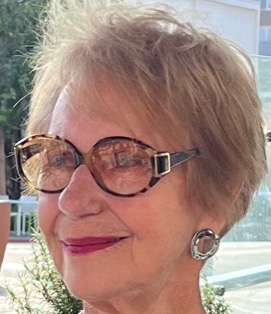

By Lynette Hinings-Marshall
Every Sunday at four in the morning, he picks her up and they drive to Surfer’s Paradise to beat the traffic. By sunrise they are out on their boards. He teaches her to wait for the wave pocket that generates the most speed. She paddles furiously, stands, feels the rush of endorphins. The shared euphoria makes her heart soar.
Their new love feels boundless, woven from perfect moments that make their hearts sing. Her life in Brisbane is perfect, until their happiness is shattered when she becomes pregnant.
Australia in the 1960s has no tolerance for unmarried mothers. Both parents refuse them marriage. Her mother sends her to a private maternity hospital, away from the critical eyes of their community. She is surrounded by married women giving birth, which deepens her despair. She doesn’t question why her mother chose this particular hospital. She never questions her mother.
She finds solace in the two other unmarried mothers. One is nineteen, from South Africa, carries her own haunting burden: her brother drowned while in her care on a day trip to Muizenberg Beach, and her father—driving home in fury—turned to her with the words she cannot unhear: “It’s your fault he’s dead.”
The other woman, a married New Zealander pregnant by another man, has come to Australia to protect herself from a small community in Parnell. She becomes her anchor, answering endless questions about childbirth. She stands beside her in the hospital doorway as she strains to see the distant lights of her home, just a nine-minute drive away.
Her mother and the father’s mother are in the room when labour begins.
Her daughter arrives on a Tuesday. Full of grace. She has only seconds — a glimpse, a shape, the brief fact of her — before the room rearranges itself around an absence. The baby is gone before she fully understands she was there. She looks at the place where her daughter was. She looks at the faces around her, reading them for something she can’t find.
Her mother’s voice: “She’s not one of us.”
She has always known, in some part of herself, that this was coming. Knowing changes nothing. She lies in the dark that night with the strange, physical ache of empty arms and tries to find the edges of what she is feeling. She can’t. It is too large and too shapeless and she is too tired and it doesn’t matter because there is nothing to be done.
Then the door opens.
The nurse is quiet, unhurried, calm in a way that she will later recognize as deliberate — the particular calm of someone who has decided to do something and made their peace with the consequences. She is carrying her daughter. She places her in her arms without ceremony or explanation, and she — who has been holding herself together through sheer necessity for hours — comes apart completely and quietly as her breast milk soaks her nightdress.
Her daughter’s face. You cannot know, before, what it will be — the absolute and immediate recognition of someone you have never met. She holds her and tries to slow time through the force of wanting to, which does not work.
When the nurse returns the baby to the nursery, she doesn’t sleep.
The next morning she finds the nurse before breakfast. Please, she says, just once more. She calls her boyfriend from the payphone in the corridor and keeps her voice even: can you bring a camera to reception? Just leave it at the desk. She doesn’t explain.
That night, her daughter is placed in her arms again, and this time she has a camera.
She photographs her in the low light — her sleeping face, her curled hands, the small perfect weight of her. She photographs her daughter the way you photograph something you are afraid of forgetting: desperately, and with the knowledge that no photograph will be enough. These stolen minutes are already ending. They are the most painful of her life. They are the most beautiful.
Both things, completely. All at once.
A week after the birth, she reaches her breaking point. She cowers under the high hospital bed and shouts that she will not sign. She begs, screams, cries.
Decades later, the sight of old-fashioned hospital beds still brings her back to that moment in September 1963—her teenage self, trembling with despair, begging her mother to relent.
The memory of her mother’s words, spoken above the echo of her footsteps as she crosses the room to the door, still gives her pause to this day:
“Stop.” She raises an imperious hand. “I don’t need your signature.”
Her daughter is adopted without her written consent. She sleepwalks through the days, in a state of numbness, aching for the baby she was forced to give up. Obedient to her mother’s command to keep it secret—she confides in no one, not even her best friend.
She and the baby’s father talk endlessly of finding their child after they marry, but her unrelenting distress eventually becomes too much for him. He says goodbye. The pain of losing him feels insignificant against the raw, searing loss of her child.
The ache won’t abate. Some days, she wants to scream, to sob, to do anything that releases her from the physical ache for her child.
“You created this problem,” her mother says. “Now find a way to forget what you’ve done.”
One afternoon in late November, two months after the birth, she arrives at her best friend’s house for the world-wide broadcast of JFK’s funeral procession—the flag-draped casket, the six grey horses, the riderless black horse alongside. When three-year-old John Kennedy salutes his father’s coffin, her own pain floods to the surface without warning. Under the guise of mourning with a world that has lurched into insecurity, she wails for her daughter.
The secrecy is absolute. Her mother has orchestrated it so thoroughly that even her brother and sister don’t know. When her older brother celebrates his daughter’s birth—her mother celebrates her ‘first grandchild’—while she is made to stand alongside her and smile. The weight of it is suffocating.
On the worst days, she takes a tram to the city and haunts the baby clothing section of the David Jones department store, peering into every pram, desperate to glimpse her daughter’s dear face.
In 1984 her heart rate quickens. A memory surfaces from more than twenty years earlier: a week after giving birth, she had promised her daughter: I will find you when you turn 21. She had kept the promise until 1983, when a private detective searched for six months and came up empty. She spent her daughter’s 21st birthday alone in her new home in Denver, crying over a gold locket with her daughter’s photograph.
Twenty-one years later in 1984, boarding her flight to Denver, she hopes America’s more accepting attitude toward unmarried mothers will help her find her daughter. The promise echoes as she leaves her homeland forever.
She carries her own quiet grief. The persistent ache of not knowing where her daughter is—now an adult—sits with her always.
In 1989 a letter from the Australian government sits opened on her kitchen table in Denver. Despite privacy laws, a kind government employee has suggested she write to Jigsaw, a self-help group specializing in reuniting parents and children. “I will find her, she vows after mailing her letter to Jigsaw. That night the familiar dreams about being lost return.
In 1990 her childhood friend opens her front door in Brisbane and they fall back into each other the way old friends do, with the easy relief of people who have never quite had to become strangers. There are children in the hallway, photographs on the walls, the evidence of a life built steadily and with intention. she looks at it all and feels something she can’t name.
She tells her lifetime friend about her own daughter over coffee. She hadn’t planned exactly when to tell her — only that she would, that she had come back to Australia partly for this. She watches the warmth in her friend’s face change as she listens. When she finishes, her friend is quiet for a long moment.
“Why didn’t you tell me?”
It is not an angry question, though there is anger in it somewhere underneath. It is the question of someone who thought they knew the whole story and has just discovered a room they were never shown. She doesn’t have an answer that is good enough.
The silence sits between them. Then her friend’s eyes fill, and hers do too, and without anything further being said they are simply two women crying together over something that should never have been allowed to happen — a baby born in secrecy, a mother sent home empty-handed, a loss the world had insisted on calling a solution.
Later, in her Brisbane hotel room, she replays her friend’s careful parting words. It’s been twenty-seven years. You have to be prepared for the possibility that you won’t find her.
She stares at the ceiling and considers this for exactly as long as it takes her to decide she won’t accept it. Not tonight. Perhaps it is irrational. Perhaps her friend is right to be cautious, to want to protect her. But she has survived this long on the belief that her daughter is out there and findable and waiting to be found, and that belief is not something she is willing to trade for the cold comfort of managing her expectations.
She turns off the light. She holds to it in the dark — that faith, stubborn and bright and entirely hers.
She will find her.
It is 1992, her American husband is opening a bottle of champagne after returning from her birthday dinner at the Barolo Grill when she notices the flashing message light on their home phone. Expecting birthday wishes, she presses play.
She has to replay it several times.
The call is from her friend and past-business colleague in Sydney, and his voice is barely contained excitement. “We’ve found her. Call me.”
Her hand trembles on the phone. She sits down on the nearest chair. She stands up again. She doesn’t know what to do with her body. She calls him.
He is as excited as she is. His name is on every form she has completed at the recommendation of Jigsaw, the adoption agency. They had encouraged her to have a trusted friend act as intermediary for the first contact with her child.
He says he will fly to Brisbane to meet her daughter the next day.
Her husband watches and waits as she puts down the phone. He hands her a glass of champagne.
I found her! Oh my God, I’ve found her!” She stops. Her hand goes to her mouth. “I didn’t even ask her name.”
She and her husband look at each other for a moment, and then she begins to cry—not in grief, in a relief so deep it has no name. She has been carrying this weight since she was a teenager. She has carried it through two marriages, a divorce, two countries, two careers built from nothing, and almost thirty years of September 24ths. She has been carrying it tonight, at her birthday dinner, when she was laughing and did not know she was still carrying it.
She is not carrying it anymore.
Lynette has lived and worked in ten countries, driven by a lifelong belief that the deepest understanding of the world comes not from visiting it, but from inhabiting it. She is the author of How to Become an Entrepreneur in Tourism (1993) and Travel with the Dream Makers (2015), and spent several years as a travel writer for an American publication. Her flash fiction has been published internationally, most recently in Travel: An Anthology of Microlit (2022). She holds a PhD in Philosophy and lives on the Mornington Peninsula in Australia.